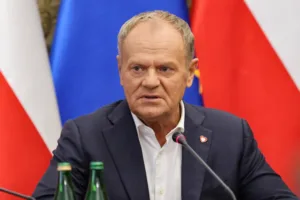

Polish Prime Minister Donald Tusk has called an emergency meeting of his cabinet and the security services following two violent knife attacks in schools and a separate incident in which an attack was prevented, and claimed that his government was being constrained by the opposition-aligned President Karol Nawrocki from being able to prevent online hate which may be behind the attacks.
Tusk, who leads Poland’s centre-left government, on October 8 responded to three incidents in schools within two days that left one female janitor stabbed to death and others injured.
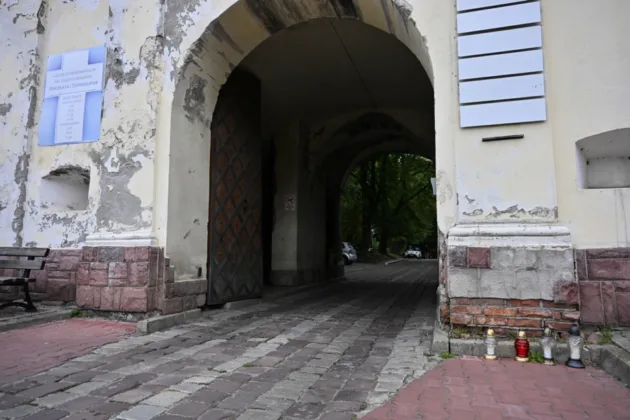
A 37-year-old school janitor died after a 15-year-old former pupil went on a knifing spree at a primary school northeast of Warsaw on the morning of October 8, just a day after a machete attack at another Polish school left nine people injured.
The 15-year-old attacked three school employees, killing one, with a knife at the John Paul II primary school in Leszczydół-Nowiny, a village in the Wyszków district some 50 kilometres northeast of Warsaw. He was restrained by the school’s headmaster, who was himself among the injured, and handed over to police.
The attacker has been detained and will appear before a family court as he is a minor.
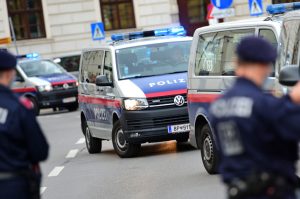
In a separate incident the previous day, October 7, police detained a 17-year-old in the town of Sierpc, in Mazovia province, central Poland, who planned to carry out an attack at a school and had two knives found in his backpack. Police swooped on the apartment in which the 17-year-old lived after he told classmates he planned “to do something bad”.
Investigators also seized his mobile phone, in which they found searches for information regarding the planned attack. Interior minister Marcin Kierwiński, who made the case public on October 8, said the teenager’s devices showed he had searched for how to organise a “bloody event”. The two knives, he said, had been prepared in order to carry out an attack.
Also on October 7, a 19-year-old assaulted schoolmates and teachers with a machete at a vocational school complex named after Adam Chętnik in Ostrołęka, in northern Mazovia province, injuring five students, two teachers and two other people. The attacker was also hurt. Students barricaded themselves inside classrooms and police detained the suspect about 25 minutes after the alarm was raised, near the municipal beach on the river Narew a few hundred metres from the school.
Prosecutors said police later reported that they had found a homemade explosive device in his backpack that the assailant had attempted to detonate at the school. According to prosecutors the backpack was already in the computer room of the school and only due to the responsible actions of the teacher and the students was it thrown out of the window after smoke had begun to billow out of it. The 19-year-old was also carrying an axe and a knife.
On September 28, a 13-year-old was detained by police after telling a fellow online gamer that he was planning an attack on his school in the village of Książki, Kuyavian-Pomeranian province, north-central Poland. He reportedly confessed to having killed cats and said that he wanted to attack random people with a cleaver in the school halls. Officers found a bayonet in the schoolbag he had packed for class and a cleaver at his home. A juvenile court later placed him in a young offenders’ educational centre.
Police spokeswoman Katarzyna Kucharska said the motive for the attacks is still unknown, but that there was information about an alleged online “challenge” to commit acts of violence which the Central Cybercrime Bureau is checking.
“Since all this plays out online, officers fighting cybercrime are indispensable and key here,” she said.
Poland’s national police headquarters has announced increased patrols and preventive checks around every primary and secondary school.
Officers will pay particular attention to people behaving suspiciously in the vicinity of schools and who could pose a potential threat to students, teachers or other staff.
The developments have caused shock in Poland, a country where such violent incidents are normally rare. “We are seeing a radicalisation of young people,” said education minister Barbara Nowacka, who urged more controls of online content.
In September, the security services detained three teenagers accused of being part of online groups promoting neo-Nazism and violence. One was charged with planning an attack on a school and a mosque.
But there have also been examples of Islamic radicalisation too. In 2025, a 19-year-old student was detained after it was determined he was planning an Islamic State-inspired attack on a Christmas market and in February 2026 an 18-year-old was charged over claims he planned to attack a school, also inspired by the Islamic State.
Tusk in the afternoon of October 8 intervened, revealing to reporters that the 15-year-old who killed the school janitor wore a helmet with a camera and intended to film the knife attack.
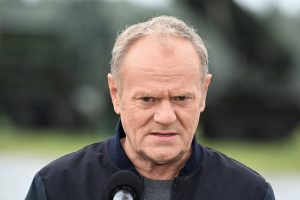
“We are dealing with a juvenile killer who had a helmet with a camera. His intention was to film this action with a knife,” Tusk said at an emergency meeting of ministers and security chiefs.
He added that he feared “a grim phenomenon of imitation” fed by the internet, including online challenges, gaming and media promoting freak fights.
“The cult of violence has become ubiquitous,” he said, calling on police to ensure officers appear inside every school at least once a day.
Tusk also said authorities could not have blocked the crime had the teenager streamed it online. “We were not given this legal tool,” he said, referring to a cybersecurity bill vetoed in January by Nawrocki, who is aligned with the opposition Conservatives (PiS).
He was referring to legislation which was opposed by Poland’s Right and vetoed by Nawrocki because it gave government officials rather than the courts the power to stop online content.
Both the opposition Right and the President argued that the legislation went well beyond what was contained in the EU’s Digital Services Act (DSA) and that it was possible to stop online content which depicts illegal acts, including abuse and degrading behaviour, under existing legislation.
The DSA establishes rules governing online platforms and the handling of allegedly illegal content. Although it has been in place in the EU since February 17, 2024, Poland has yet to agree its national procedures on the matter, a delay that leaves it exposed to fines from the Court of Justice of the European Union (CJEU).
Speaking on the YouTube channel Kanał Zero, Paweł Jabłoński, an MP for former PiS prime minister Mateusz Morawiecki’s breakaway Development Plus (Rozwój Plus) parliamentary club, told viewers that “it was outrageous for the Prime Minister to use the occasion of a tragedy to score political points off the opposition and to mislead the public as to how government legislation rather than better security could stop such tragedies.”
Nawrocki responded to Tusk by criticising the attempt to make the tragedy a political football.
“In the face of such tragedies, there is no place for exploiting human suffering for political attacks. The safety of the Polish people is a fundamental duty of the state,” Nawrocki said on X.
The head of the President’s political office, Paweł Szefernaker, used stronger language.
“In the face of tragedy, the state should act: protect children, support schools, strengthen security and identify the real causes of violence. And what does Donald Tusk do? He tries to shift the blame onto the President and the veto. This is not leadership. This is political madness,” Szefernaker wrote, urging politicians to put their disputes aside.
“There are moments when political calculations must be set aside and we must stand with families, teachers and pupils. Quite simply. Basic human decency demands it,” he added.
PiS leader Jarosław Kaczyński asked whether the incidents may have been inspired by external forces but did not cite any evidence.
“Another attack at a school and a fatality… This is clearly not a coincidence. The question is whether these attacks are part of Russia’s hybrid warfare, because similar situations have already occurred in Lithuania, and the inspiration came from Moscow,” claimed the PiS leader, adding that it was “an open secret” that there were Russian websites encouraging young people to perform violent acts.
But he blamed the Tusk government for trying to shift the blame for their security failures onto others.
“This is not the first time that Donald Tusk and the current coalition have tried to exploit a tragedy and the death of a person for political gain. The safety of children, teachers, and school employees should be a priority. Unfortunately, this is yet another area in which Tusk’s state has failed, and there are victims as a result,” argued Kaczyński.
The Sejm, Poland’s lower house of parliament, at Tusk’s behest, later on October 8 passed a bill that would allow the authorities to swiftly block online content, with most of the opposition abstaining rather than voting against. It went through by 242 votes to 61, with 136 abstentions, and now goes to the Senate.
If the legislation is ultimately approved by the President it will allow courts and government officials to restrict access to illegal content including materials linked to criminal activities, fraud, child sex abuse and hatred.
Internet service providers, including online platforms, will be required to restrict access to content covered by such orders.
Users whose content is restricted will be able to seek its restoration if they believe it was blocked incorrectly, though they must first use the platform’s own reporting system.
The head of Poland’s Office of Electronic Communications (UKE) will maintain a register of websites used to distribute illegal content.
Orders restricting access to illegal content can be challenged in a regular court, which will determine whether the material actually violates the law. The legislation therefore does not make such orders automatically enforceable before they can be challenged in court, government officials have said.
In particularly urgent cases, authorities will be able to give orders immediate effect. Prosecutors, police, the National Revenue Administration and Border Guard will be able to request expedited blocking of illegal content, including material involving the sexual exploitation of children, identity theft, fraud and copyright violations. An amendment tabled by PiS and Poland 2050 extends immediate effect to pornography involving children or animals.
But it is the inclusion of “hatred” as a category which will cause concern that it could be used to block political opponents, religious organisations and campaigners against political orthodoxies of the age from expressing their views.
Zbigniew Bogucki, head of the presidential chancellery, said the new text differed little from the one Nawrocki vetoed, and that the President would sign a good law if one reached his desk.
The Tusk government is also working on separate measures which would block children from social media and it has already banned the use of smartphones in schools.
Meanwhile, Nowacka has announced a new effort to strengthen school safety procedures in emergency situations.
The programme, developed jointly with the interior ministry, will be modelled on an existing school safety initiative conducted in cooperation with the defence ministry, Nowacka said, adding that every school should hold at least one session this year focusing on emergency safety procedures.
The education ministry will also distribute a safety guide for children and teenagers covering various threats and ways young people can respond to them. The guide will be aimed at students in first through seventh grades of primary school and will come in two age-specific versions. Some 7,500 heads of schools and nursery schools are to receive training under the programme, which has a budget of 45 million zloty (€10.3 million).