




About 70 per cent of recent asylum applicants among migrants who entered the Spanish North African enclave of Ceuta in late July have claimed persecution in their countries of origin because of their sexual orientation, according to Spanish media reports citing police sources.
The figures were reported by Spanish newspaper ABC on October 16 and subsequently covered by El Faro de Ceuta and international media. Police reportedly suspect that information circulating among migrants about the grounds for asylum could be influencing the explanations given in applications.
According to ABC, about 95 per cent of the applicants concerned are Moroccan nationals. Police sources cited by the newspaper said only five cases in which persecution linked to sexual orientation was invoked had been accepted on that specific basis.
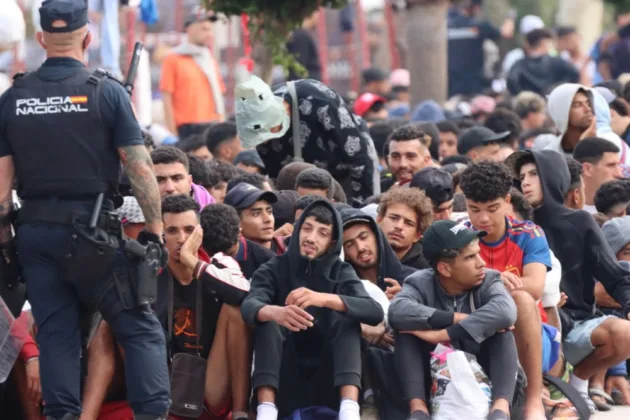
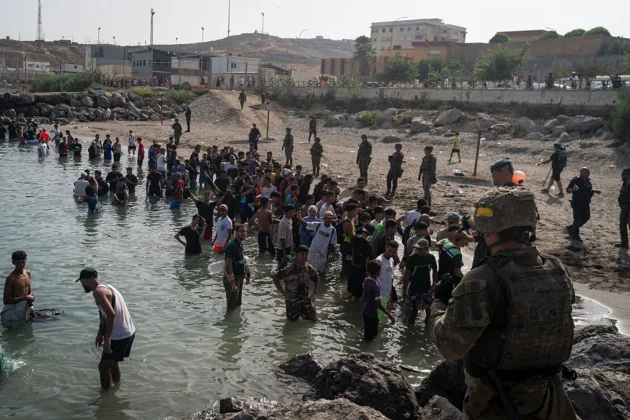
The claims follow the largest irregular crossing in the enclave’s history. Spain’s Interior Ministry put the number of irregular entries in late July at about 72,000, with some 70,000 people returning to Morocco within days.
Asylum has since become central to what happens next. A Supreme Court ruling of June 29, 2026 barred summary returns of migrants who reach Ceuta by swimming, and anyone who lodges an application for international protection cannot be sent back until it has been examined and refused.
The allegations have prompted questions about the assessment of asylum claims. Though suspicions that applicants may be adapting their accounts to improve their chances of obtaining protection do not, in themselves, establish fraud or prove that the claims are unfounded.
Homosexuality remains criminalised in Morocco under Article 489 of its Penal Code, which provides for prison sentences of between six months and three years for same-sex sexual relations. Some Moroccan nationals may therefore have legitimate grounds to seek international protection in Spain.
Spanish authorities must assess each application individually, examining whether the applicant faces a well-founded risk of persecution if returned. Applicants do not necessarily need to demonstrate that they have already been arrested or physically attacked.
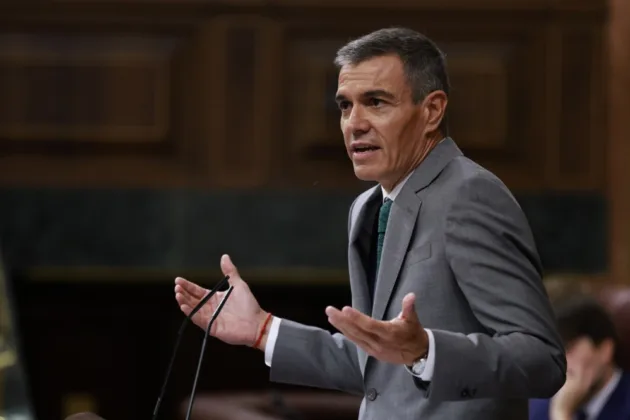
On October 16, El Faro de Ceuta reported that Spanish interior minister Fernando Grande-Marlaska stressed that asylum decisions must be based on the individual circumstances and evidence presented in each case.
Speaking to reporters in Ceuta that day, Grande-Marlaska said claims of this kind had to clear an evidential threshold.
“This application must be subject to reasonable, objective and clear proof,” he said. “We are not dealing with a mere allusion.”
The process also presents particular challenges when assessing claims involving sexual orientation. There is no single physical test for establishing someone’s sexual orientation, and decisions must not rely on stereotypes or demands for intimate evidence.
That standard is set out in EU law. The Court of Justice of the European Union ruled in 2014 that asylum authorities cannot base credibility findings on stereotyped notions of homosexuality, and in 2018 that they cannot order psychological tests intended to establish an applicant’s sexual orientation.
The scale of the caseload remains significant. Grande-Marlaska said on October 16 that almost 1,200 applications had been admitted for processing and about 700 resolved.
In a report published on October 22, El País said about 1,500 asylum applications had been submitted following the mass arrivals on July 30 and 31. More than 900 had been rejected and 180 approved, including cases predating the latest arrivals.
Of those approved, about 50 involved Moroccan nationals and rested mainly on persecution linked to sexual orientation or gender identity, according to the same reporting. Spain’s Interior Ministry has not provided detailed breakdowns of the decisions by individual grounds for protection.
The figures underline the challenge facing Spanish authorities: Identifying unfounded claims without denying protection to people who genuinely risk persecution.
The reported 70 per cent figure remains an account of the grounds cited in applications, rather than proof of widespread abuse of the asylum system.