







It has emerged that Spain’s Interior Ministry provided a special security detail for Morocco’s intelligence chief during his summer holiday on the Costa del Sol, days before the Ceuta invasion.
Spanish daily ABC reported on November 26 that about a dozen officers from the Guardia Civil and the National Police were assigned to protect Abdellatif Hammouchi in late July. Citing highly reliable police sources, the newspaper said the operation centred on a luxury villa on Trocadero beach in Marbella, Málaga province, southern Spain.
Hammouchi heads both the General Directorate for Territorial Surveillance (DGST), Morocco’s domestic intelligence service, and the General Directorate for National Security (DGSN), which runs the country’s police. According to the report, he stayed at the villa with seven family members and around 10 other people, including his own security staff.
The Spanish officers were said to have reinforced the protection already provided by his entourage, after Hammouchi asked for discreet surveillance during his stay. The Interior Ministry, led by Fernando Grande-Marlaska, had not confirmed the operation at the time of writing.
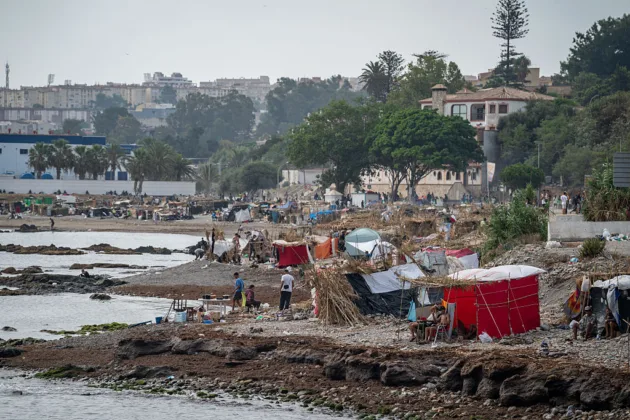
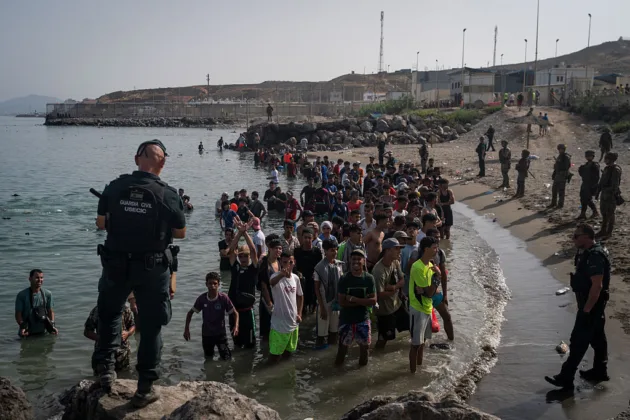
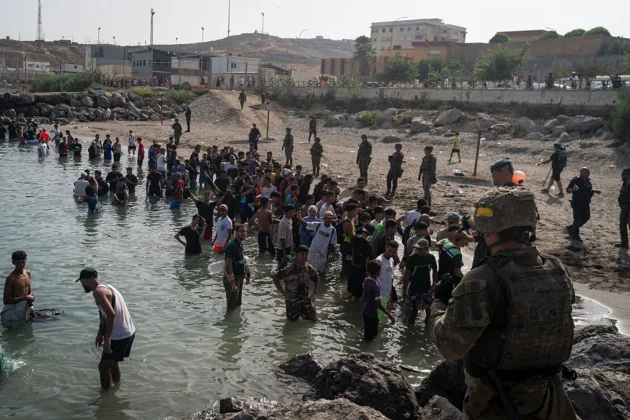
On July 30 and 31, some 72,000 people crossed from Morocco into Ceuta, according to Spanish authorities. Most were later sent back.
In August, a hacker group calling itself Jabaroot leaked data on around 70,000 Moroccan security personnel and accused Hammouchi and royal adviser Fouad Ali El Himma of planning the mass crossing. The claims have not been independently verified and Rabat has denied orchestrating the influx.
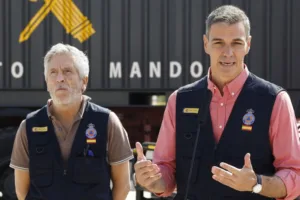
Grande-Marlaska has consistently defended Morocco as a reliable partner on migration. On November 11, 2025, he awarded Hammouchi the Grand Cross of the Order of Merit of the Guardia Civil, the force’s highest honour for foreign figures, at a ceremony in Madrid.
The minister’s own mobile phone was infected with Pegasus spyware in 2021, an operation widely attributed in the Spanish media to Moroccan intelligence. Rabat has always denied using the software.
Contacts between Spain’s security chiefs and their Moroccan counterparts have drawn scrutiny before. In August 2025, Moroccan media published photographs of National Police director Francisco Pardo dining with his bodyguard during a holiday in Asilah, northern Morocco.
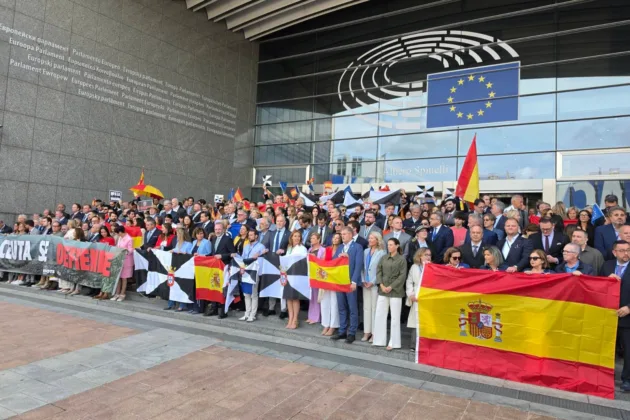
Brussels has also kept faith with Rabat. The European Commission said in September that EU funding for Moroccan border work would continue despite the invasion, describing the kingdom as a strategic migration partner.
That support includes an indicative package of €500 million for 2021-2027. Madrid, for its part, has asked the EU for €35.6 million to extend the breakwaters at Ceuta’s El Tarajal and Benzú border points.