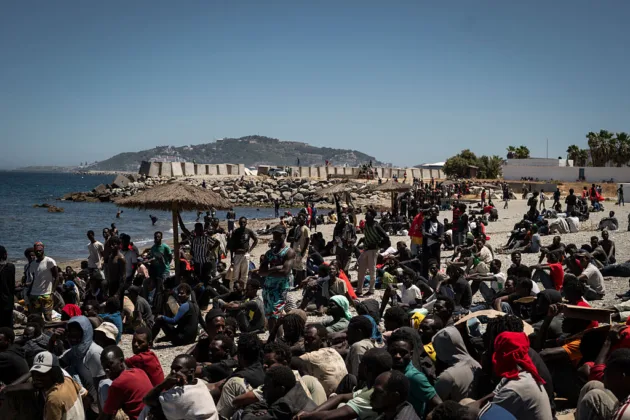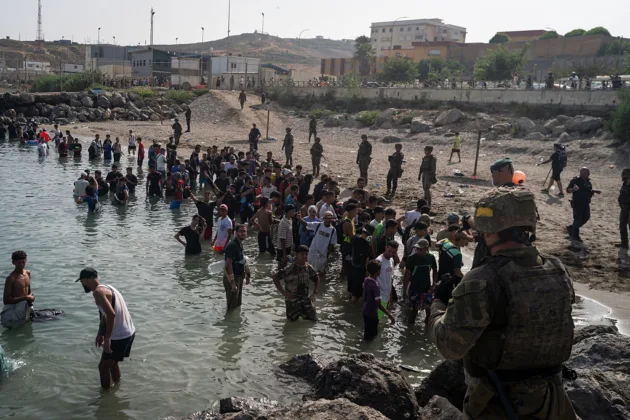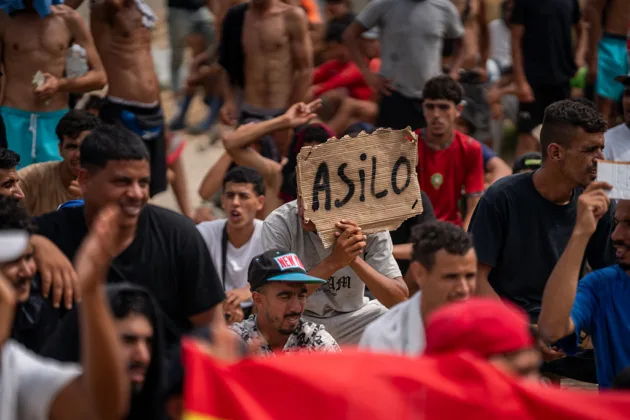






Spanish police have identified men previously convicted of recruiting fighters for Islamic State among those who crossed into Ceuta, Spain’s north African city, on July 30 and 31, ABC has reported, as other Spanish outlets separately describe a wider trawl for people with jihadist records still in the city.
Police sources told ABC that National Police officers had found, among the late-July arrivals, men already sentenced for recruiting jihadists for Daesh.
Several had served their terms.
Officers could only log them as persons of interest and pass the names to intelligence units.
One man is said to have recruited “soldiers for Islamic State” and to have been detected in Syria working for the group.
He had been given more than 10 years in prison, completed the sentence and faced no live judicial alert in Spain that would have allowed an immediate arrest.
Police recorded his details and those of people travelling with him.
ABC also said others identified after the crossing had convictions for glorifying terrorism by circulating jihadist propaganda.
The Unified Police Union (SUP) said on September 1 that more than 10 people among those who entered Ceuta had records, flags or profiles linked to jihadist radicalism, and that identification work was unfinished. The union had first called for tighter checks on August 4, describing the matter as one of national security.
El Español reported that Spanish authorities had already returned three migrants with Islamist-terrorism antecedents to Morocco, and that more than 10 profiles of interest were under review, most of them Moroccan nationals located in part through online activity. Checks are continuing.
Those later figures sit on top of reporting from early August.
Counter-terrorism officers believed at least 10 men previously arrested, convicted and deported from Spain over jihadist offences had crossed back on July 30.
Spanish interior minister Fernando Grande-Marlaska has since told the Congress of Deputies, on August 28, that more than a hundred people who entered during the episode have been expelled.
He has not published a breakdown limited to terrorism-related cases. Expulsions can follow a court order after an offence, an existing deportation order, or a refused asylum claim.
Official figures published on September 1 put the running totals at 214 expulsions and 3,519 voluntary returns to Morocco up to August 31, with 1,612 minors registered.
The SUP has argued that the simultaneous arrival of tens of thousands of people made ordinary border screening impossible and that completing identity and background checks is now a security task.
Being listed as a person of interest, the union added, does not by itself mean someone is preparing an attack.
Spanish authorities put the number who crossed on July 30 and 31 at about 72,000. Most returned to Morocco within days.
Several thousand remain in a city of about 84,000 people, with roughly 3,400 still in emergency accommodation at the start of September.
The reporting coincided with a newly leaked police report published by El Español, which said Moroccan security forces had shown “total permissiveness” during the July crossings and, in some cases, had been seen actively directing groups towards beaches leading into Spanish territory.
The report, submitted by the National Police’s National Immigration and Borders Centre (CENIF) to Spain’s National Court, pointed to the involvement of Moroccan gendarmes in facilitating or failing to prevent the crossings.
It runs to 55 pages and two annexes and is held by the investigating judge María Tardón. The document describes prior planning and the “active guiding” of migrants, though it stops short of attributing the operation to the Moroccan Government.
The disclosure has added to political pressure on Prime Minister Pedro Sánchez’s government.
The Spanish Government initially attributed the unprecedented influx largely to organised smuggling networks and misinformation spread through social media. Opposition parties have since seized on the police report to accuse Sánchez of failing to protect Ceuta and allowing Morocco to use migration pressure as a political tool.
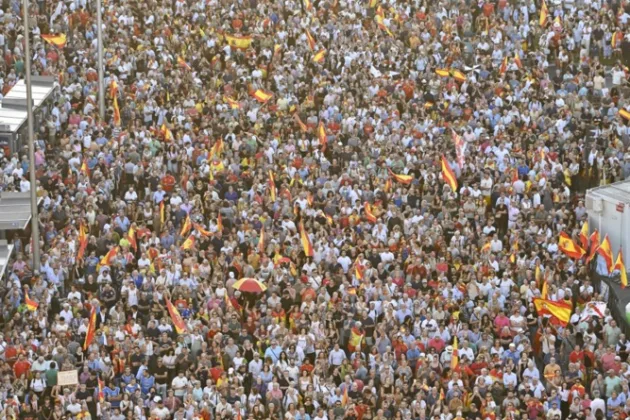
Public anger was also visible on Ceuta Day, September 2, when more than 20,000 people took part in demonstrations in the city, according to the Government delegation. Marchers moved from the Royal Walls to the Plaza de los Reyes under the slogan “Ceuta is not for sale, Ceuta must be defended”, calling for tighter border controls and the return of migrants who had entered illegally.
The protests were part of wider demonstrations and political gatherings across Spain over migration and border security. Organisers counted more than 260 rallies nationwide, including one in Madrid that the Government delegation put at 50,000 people.
BREAKING:
Spanish riot police launches charges and fires pepper spray at the crowds which have gathered in Madrid tonight to protest against mass-immigration and the invasion of Ceuta.
No pepper spray was used against the 80 000 illegal migrants when they stormed Ceuta pic.twitter.com/2Lm5zypFcJ
— Visegrád 24 (@visegrad24) September 2, 2026
Delegación de Gobierno cifra en 50.000 los asistentes a la concentración en Madrid https://t.co/K9K3sEZJmS pic.twitter.com/gnkIxCqIwP
— EL MUNDO (@elmundoes) September 2, 2026