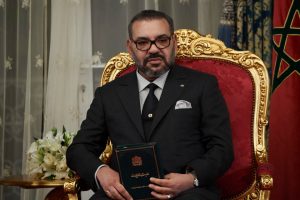





Morocco’s King Mohammed VI has granted a royal pardon to 634 people convicted by courts across the country, including 15 sentenced in terrorism and extremism cases.
The Ministry of Justice announced the decision on August 24 to mark Eid Al Mawlid Annabawi, the anniversary of the birth of the Prophet Mohammed.
The ministry said 619 of the beneficiaries were covered by the main decree, among them 462 detainees. Of those in prison, 449 had their sentences reduced and 13 were pardoned for the remainder of their terms, according to the state news agency MAP.
The 15 held in terrorism and extremism cases were added after formally declaring their attachment to the kingdom’s national principles, sacred values and institutions. The ministry said they had revised their ideological positions and renounced extremism.
Rabat runs those reviews through Moussalaha, or Reconciliation, a prison deradicalisation programme launched in 2017 and open only to volunteers. Those who complete it appear regularly in pardons issued on religious and national holidays.
The decision has landed while Spanish courts are still working through the records of Moroccans who entered on July 30, when around 72,000 people crossed into the enclave of Ceuta. The Spanish Government has said about 73,000 were sent back. The city says thousands remain.
The Guardia Civil detained a man with a criminal record for terrorism and other offences during reinforced checks at the frontier. He was the subject of an Interpol arrest warrant and is being held in the city while his possible extradition is processed.
The Andalusian High Court of Justice has recorded nine remands in custody among the July 30 arrivals: two for sexual assault, five for attacks on officers, one for aggravated injuries and one for drug trafficking. Two others were ordered expelled, one for groping a woman and one for entering a private home.
That second expulsion followed the case that has dominated Spanish coverage of the enclave. A 20-year-old Moroccan who crossed on July 30 climbed onto a fifth-floor balcony in central Ceuta on August 7 and got into the bed of a sleeping 62-year-old woman.
He admitted unlawful entry at a fast-track hearing the next day and was given 16 months, set aside in favour of expulsion and a five-year ban on return. Police records put before the court showed he was already subject to a 10-year entry ban and an earlier expulsion ordered in Valencia, eastern Spain, and carried a file that included previous sexual assaults.
Emergency calls in the enclave have risen tenfold to about 200 a day.
Data from Switzerland’s State Secretariat for Migration puts the same population in numbers. Some 80.5 per cent of asylum seekers from Algeria, Morocco and Tunisia were recorded as accused in criminal proceedings, against 12.3 per cent of applicants from every other country of origin.
About 99 per cent of Maghreb claims are refused, the Swiss newspaper Blick reported. Bern has signed an agreement with Rabat to speed up returns and is weighing wider use of coercive measures.
Foreign nationals make up close to half of Germany’s prison population and 58.9 per cent of inmates in Berlin.
Rabat, meanwhile, empties its own cells at speed. The pardons rest on the King’s constitutional power of clemency and come several times a year. He pardoned 1,788 people on Throne Day in July and a further 935 to mark the August 20 anniversary of the Revolution of the King and the People. That is more than 3,300 pardons in five weeks.
Clemency on that scale sits alongside a penal code harsher in several respects than anything on the European statute book. Morocco has carried out no execution since 1993, although the 1962 code still provides for the death penalty across dozens of offences and courts continue to impose it. Some 86 people remain under sentence of death, a figure driven down mainly by royal clemency.
Sex outside marriage carries between one month and a year in prison under article 490 and adultery one to two years. Terrorism convictions have run to 30 years.
The European Union has been widening its cooperation with Rabat throughout. European Commission President Ursula von der Leyen wrote to Spanish Prime Minister Pedro Sánchez on August 3 offering improved technical and financial support for Morocco, days after the crossing.
The EC has committed €222 million to Moroccan migration management between 2021 and 2024 and said it expected a further €190 million by the end of 2027. A strategic partnership modelled on the bloc’s 2024 agreement with Egypt is due to be concluded by the end of the year.
The January meeting of the EU-Morocco Association Council had already called for closer coordination against terrorism, tying that work to migration control in the bloc’s southern neighbourhood.
The Ministry of Justice published no names. It did not say what offences the 15 had been convicted of, how much of their sentences they had served or whether any conditions were attached to their release. The decision was taken by decree and not by a court.