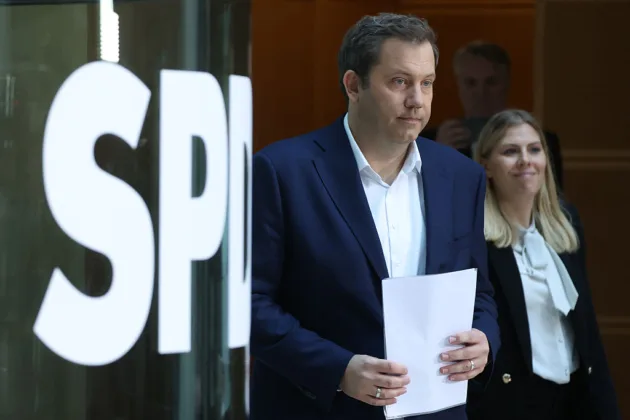






A group of 20 Social Democratic Party (SPD) federal MPs, including former Federal Minister of the Interior Nancy Faeser, have publicly opposed the formation of a State coalition government with Die Linke (The Left) in Berlin, escalating an internal rift over national security and anti-Semitism ahead of local leadership talks.
In a joint statement published on October 18 titled “Our Compass of Values is Never Negotiable”, the parliamentarians urged Berlin’s SPD leadership not to open coalition negotiations with the Greens and Die Linke.
The initiative, co-authored by SPD domestic policy spokesman Sebastian Fiedler and digital policy spokesman Johannes Schätzl, signals growing concern within the party’s central leadership regarding the political reliability of the left-wing party’s Berlin branch. Other signatories include the interior policy specialists Helge Lindh, Ingo Vogel and Daniel Baldy, development ministry state secretary Johann Saathoff and the spokespeople of the party’s conservative Seeheimer Kreis, Esra Limbacher and Claudia Moll, according to Bild.
The rebel MPs cited recurring controversies over anti-Semitism within Die Linke’s Berlin chapter, along with alleged ties between certain party members and organised crime networks, specifically Arab clan structures operating in the capital.
“The recurring conflicts of anti-Semitism in the Berlin State Association of the Left, the contacts in the Remmo environment and with actors from extremist milieus as well as the disputes over the handling of these events, in our view, give rise to considerable doubts about the political reliability of this state association,” the MPs said.
They added that they were not impressed by a joint statement of the Berlin SPD with the Greens and the Left rejecting anti-Semitism, saying that the protection of Jewish life is “never negotiable”.
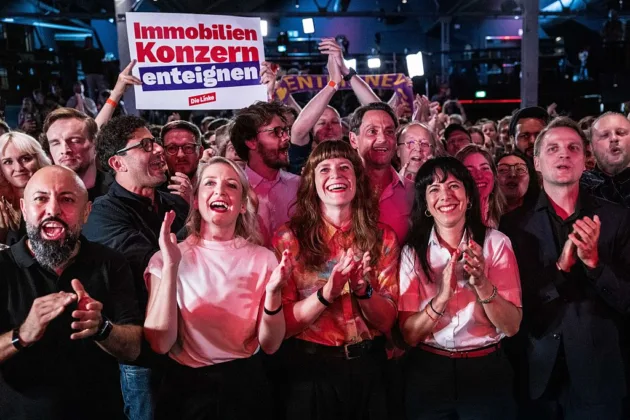
A major controversy over Die Linke’s ties to organised crime in the capital intensified following the party’s State election victory on September 20, when notorious clan leader Issa Remmo unexpectedly attended Die Linke’s election-night celebration in the Berlin district of Neukölln and publicly praised the party.
Die Linke took 25.7 per cent of the vote, finishing first in Berlin for the first time and winning 47 of the 158 seats in the Abgeordnetenhaus, ahead of the Christian Democratic Union (CDU) on 18.8 per cent and Alternative for Germany (AfD) on 16.3 per cent. The SPD came fifth on 12.1 per cent.
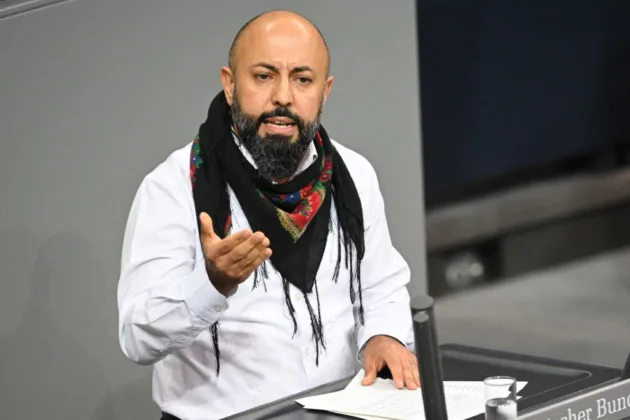
Concerns deepened after revelations that Die Linke Bundestag member Ferat Koçak had previously filed parliamentary inquiries seeking granular operational details from law enforcement regarding police raids against the Remmo family network.
While Die Linke’s Berlin leadership insists the party maintains no formal ties to criminal syndicates, the incidents have sharpened national SPD concerns about security governance in the capital.
The statement argued that these incidents cast serious doubt on whether Die Linke can serve as a trustworthy government partner in the federal capital and called for “backing for police and security agencies”.
The internal pushback coincides with broader policy disagreements regarding foreign affairs, law enforcement and migration.
Federal SPD representatives expressed concern that a coalition with the Left in Berlin would position the city administration in direct opposition to the federal government’s security and defence framework.
Despite the explicit criticism directed at Die Linke, the signatories reaffirmed their stance that the right-wing AfD remains the primary threat to democracy in the country, stressing that their opposition to a left-wing alliance does not alter their commitment to isolating the Right.
The declaration lands as Berlin SPD leaders convene today to decide whether to formally begin coalition negotiations. A three-way alliance with the Greens and Die Linke would command 95 of the 158 seats in the Abgeordnetenhaus, well above the 80 needed for a majority.
While coalition talks between the SPD, Greens and Die Linke had previously stalled over disagreements on anti-Semitism and Israel, regional party leaders have continued pursuing a left-leaning alliance to secure a governing majority in the capital.
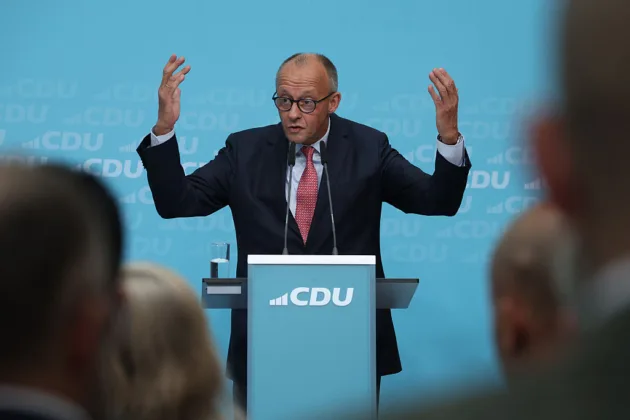
The SPD and the Greens suspended exploratory talks on October 13 after Die Linke admitted to its parliamentary group Vanessa Emde, a directly elected member accused of hostility towards Israel. The three parties nonetheless reached an exploratory agreement on October 17. Federal Chancellor Friedrich Merz has urged the SPD and the Greens not to govern with Die Linke.
Coalitions with Die Linke remain functional in other parts of the country, such as Bremen, where it has governed with the SPD and the Greens since 2019, and Mecklenburg-Vorpommern, where it was the SPD’s sole partner for the past five years and the two parties have opened talks with the Greens after the September 20 State election.
Those regional chapters of the party operate under a more traditional democratic-socialist platform without the security and extremism controversies overshadowing the Berlin branch. In Thuringia, by contrast, Die Linke has sat in opposition since a CDU-led coalition with the Sahra Wagenknecht Alliance (BSW) and the SPD took office in December 2024.
Coalition negotiations in the German state of Berlin have been thrown into uncertainty after the Social Democrats (SPD) and the Greens suspended preliminary talks with Die Linke on Tuesday, 13 October, amid concerns that commitments to combat anti-Semitism may no longer be…
— Brussels Signal (@brusselssignal) October 15, 2026