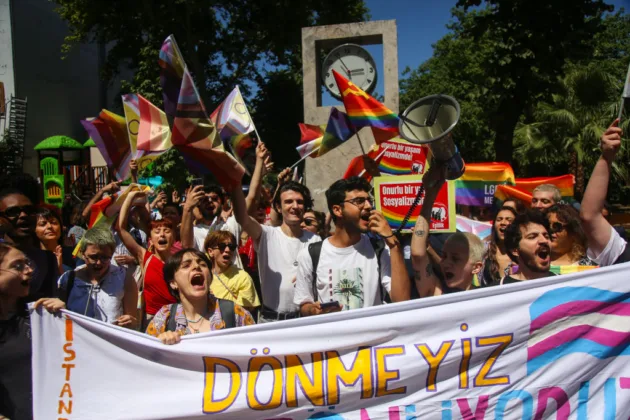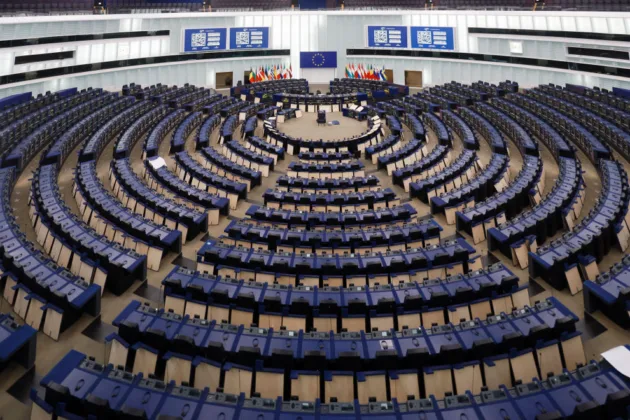




The Hate Review was presented in the European Parliament on October 12: A weighty report that claims to map the so-called “anti-gender movement” in Europe. It was compiled by Forbidden Colours, a Belgian non-profit association that lobbies at European level for the rights of LGBTI people. Such an advocacy organisation is necessary and valuable. But as with any group that wants to influence policy, caution is called for with its findings. However noble the ideals of some lobby groups, data are a political instrument for them. That can lead to the framing of those data.
Unfortunately, Forbidden Colours does engage in framing, and particularly flagrantly so. The organisation is perhaps counting on progressive journalists and institutions simply taking over a report about a growing, organised hate movement against feminism and LGBTI rights across Europe, without discussing its method critically. That is what happened with the coverage that has already appeared, among others in the Spanish newspaper El País and by RoSa, a Flemish knowledge centre for gender and feminism.
Advocacy organisations may carry out research with a particular aim in mind. This report, though, is anything but neutral. Forbidden Colours gathered an impressive quantity of data for 47 European countries, but frames it in such a way that it arrives by definition at an anti-gender movement that has infected all 47 and is becoming ever more institutionally entrenched. The approach is simple: Begin by defining “anti-gender” so vaguely and so broadly that you find anti-gender activity under every paving stone. For the report, the anti-gender movement takes in “all actors undertaking activities to restrict or attack reproductive rights or the rights of LGBTI people”. But where does the line run between contesting a policy proposal and attacking rights? Such a wide definition hands you an extremely elastic interpretive framework. Reservations about inclusive language, substantive criticism of gender studies: For Forbidden Colours it counts just as much as an attack on rights. Place those divergent activities inside a hate movement and you get what you wanted to prove: the existence of a large and expanding anti-gender movement.
Anyone who questions the moral narrative as set down by Forbidden Colours on so much as a single point risks seeing himself counted as part of that movement. For Belgium, Prime Minister Bart De Wever is mentioned twice, despite his explicit statement that he stands behind the equal worth of every sexual orientation and his government’s plan to draw up a legal framework for altruistic surrogacy. De Wever should simply not have written a critical book about woke and not have formed the so-called Arizona coalition, the federal government he put together in February 2025 – institutional infiltration by the anti-gender movement! Legitimate public debates on complex questions such as the abortion time limit, surrogacy, single-sex spaces for women or the medical transition of minors: The report sweeps it all under the anti-gender umbrella. Whereas people may object to a given measure for widely differing reasons, out of ethical, scientific or legal considerations, or simply out of an ethical conservatism.
I am mentioned twice myself, as a “TERF” (trans-exclusionary radical feminist) and over “anti-trans comments” in the press, where according to the report I dress up my criticism in clinical and psychological concern rather than in religious arguments. My positions are framed in this way within a predetermined political story. In that analysis there is barely room for the possibility that people reach different conclusions out of sincere scientific or ethical concern.
The report documents more than 3,200 items, among them over 2,500 actions and more than 700 actors. Some of them are unmistakably aimed against the rights of LGBTI people, such as the Hungarian law of 2021 that curbed information about homosexuality and gender identity for minors, which the Court of Justice of the European Union ruled unlawful on April 21, 2026. But that does not release researchers from the duty to justify their classifications case by case. Beyond that, ultraconservative transnational networks that set themselves against abortion, divorce, contraception and LGBTI rights absolutely do exist. One example is the Dutch foundation Civitas Christiana, part of the international network Family, Tradition and Private Property. We should be on our guard about that, but it cannot be a reason to accuse people and organisations of hatred gratuitously. Forbidden Colours does nobody a service that way. On the contrary, a report that brings so many different kinds of activity and position together under one loaded heading, without justifying that properly, gives the impression of dogmatism and of an attempt to intimidate dissenters. It feeds the perception among critics that research from the “gender corner” cannot be trusted. Anyone who sees his reputation unjustly damaged by the document will probably lose a measure of goodwill.
Nothing can be put right in the report itself any more. That makes critical reporting about it all the more important, before its conclusions begin to circulate internationally as established facts.