







The Spanish island of La Palma has suffered a complete blackout, leaving it entirely without electricity amid heavy storms.
The so-called “energy zero” struck at 6.38am local time on November 2, according to Spanish grid operator Red Eléctrica (REE). The Canary Islands Government placed the failure at 6.42am.
Power company Endesa said 50,508 supply points had been cut off. That is practically every connection on the island, which is home to about 85,000 people and lies in the Atlantic off northwest Africa.
The regional Directorate General of Emergencies declared a state of alert under the Canary Islands’ civil protection plan, known as PLATECA. The move was intended to coordinate the authorities involved and assess the impact on essential services.
According to REE, the blackout occurred when the Los Guinchos thermal power station disconnected for reasons that were still unknown. It said the cause could be linked to a violent storm that, dumped up to 200 litres of rain per square metre on the island.
Endesa said a fault had knocked out the 66-kilovolt Guinchos-Valle line, the island’s only transmission line, at about 4.10am. The line, managed by REE, failed hours before the system collapsed.
REE said on X it had begun restoring supply and was waiting for Los Guinchos to reconnect, though it reported recurring problems in restarting some generating units. By mid-morning Endesa said 8,117 customers were back on the grid while 42,391 remained without power.
Canary Islands President Fernando Clavijo urged residents to take extreme care and avoid unnecessary journeys. He also asked them not to cross flooded areas and to follow instructions from the 112 emergency service.
It is not the first time the island has gone dark. On June 10, 2025, a fault at Los Guinchos left all of La Palma without electricity for nearly three hours.
At the time the Canary Islands Government blamed the ageing of the plant’s generating units and failures in maintenance, Spanish daily Vozpópuli reported. Endesa itself admitted the plant had the oldest generating units in the archipelago, saying their renewal had been held up for 12 years by a delayed public tender.
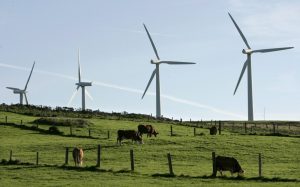
The island depends almost entirely on the diesel-fired station, with renewables covering barely 10 per cent of demand at peak production in 2025, according to system operator data cited by the same newspaper. Even so, La Palma takes part in the European Commission’s Clean Energy for EU Islands initiative, which promotes a shift to locally produced renewable power.
The Canary Islands’ isolated grids escaped the Iberian blackout of April 28, 2025, which crippled mainland Spain and Portugal. As Brussels Signal has reported, accountability for that collapse has remained elusive.