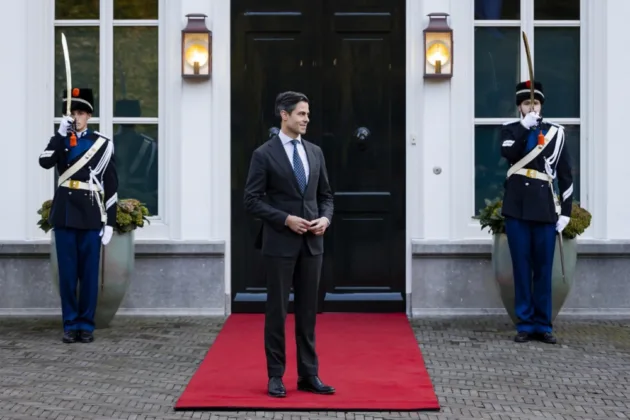





The Dutch governing coalition has agreed to remain in place after four days of intensive crisis talks averted the collapse of Prime Minister Rob Jetten’s minority cabinet.
The top figures confirmed late on November 16, after more than 11 hours of talks at the Catshuis, the prime minister’s official residence in The Hague, that trust had been restored between the centre-left Democrats 66 (D66), the Christian Democratic Appeal (CDA) and the People’s Party for Freedom and Democracy (VVD).
The agreement ends a weekend of intense speculation regarding the immediate viability of the Jetten administration, though it leaves the fundamental structural challenges of governing without a parliamentary majority firmly in place. The three parties hold 66 of the 150 seats in the House of Representatives.
To institutionalise this restored trust and manage future legislative hurdles, the coalition agreed to bring in an outside political heavyweight. Sybrand Buma, a former Christian Democrat leader and vice-president of the Council of State since July, has been recruited to advise the Jetten government.
Buma also served as informateur, or exploratory mediator, in the 2025 talks that paved the way for the current coalition.
While Buma will not negotiate directly on the cabinet’s behalf, his mandate is to guide the coalition in securing budget agreements with opposition factions in a transparent, structured manner, with the aim of ending the ad-hoc manoeuvring that triggered the current crisis. He has been given a month, until mid-December, when it should become clear whether the cabinet can secure majorities for its budgets.
The VVD’s decision to walk back from the brink of collapsing the government was also heavily influenced by stark electoral arithmetic.
Forcing the fall of the cabinet would have pushed the Netherlands into its third general election since November 2023.
With current polling suggesting that Jesse Klaver’s Progressief Nederland (PRO), formed from the GroenLinks–PvdA alliance, could emerge as the largest party, or that Geert Wilders’ Party for Freedom (PVV) could heavily capitalise on the ensuing instability, the VVD leadership concluded that remaining in the coalition with newly defined procedural safeguards was politically safer than facing a highly volatile electorate.
An Ipsos I&O poll published on October 14 put PRO on 28 seats, ten ahead of its nearest rival.
The political crisis was triggered on November 12 during a highly fractured parliamentary debate over the 2027 tax plan.
Tensions erupted when D66 and the CDA brokered an ad-hoc deal with the left-wing opposition parties PRO and Volt to support a controversial millionaire’s tax amendment, which would raise the tax burden on wealth by about €1 billion a year.
The legislative manoeuvre bypassed their coalition partner, the VVD, which opposed the wealth tax on the grounds that it would severely damage the Dutch business environment and deter foreign investment. The amended bill passed the House of Representatives by a single vote, with the VVD voting against its own government’s tax plan.
Following the vote, VVD leader and deputy prime minister Dilan Yeşilgöz publicly labelled the minority government a failed experiment and demanded a fundamental political reset.
She argued that the unexpected legislative shifts by D66 and the CDA were disillusioning and warned of adverse economic implications.
Yeşilgöz initially floated the idea of bringing another right-wing party into the coalition to secure a more stable, unified parliamentary bloc.
Rather than expanding the cabinet, the three existing parties have agreed to continue their current minority arrangement with heavily revised ground rules for legislative cooperation.
Jetten admitted that the dispute had deeply affected the personal and political relationships within the coalition.
He noted that the marathon discussions, which ran from November 13 to 16, focused heavily on improving cooperation on substance, politics and interpersonal relations, ultimately concluding that the country deserved to keep moving forward without snap elections.
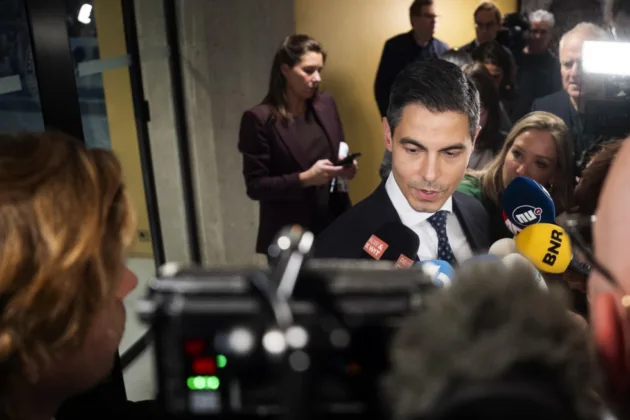
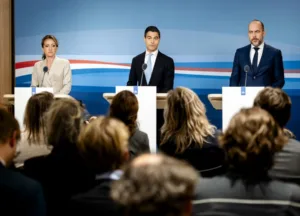
“We realise that we have tested the patience of the entire nation, but we are also relieved that, following several days of constructive discussions within the Cabinet and the coalition, trust has been restored,” Jetten said at a joint press conference on November 17.
“I have been too optimistic about how easy it is to organise support,” he added.
Yeşilgöz expressed confidence in the process being launched with Buma and said things went off the rails when the financial bottom line did not have a clear majority, causing the rest to lose balance.
In a concession to the VVD, the other two parties agreed measures to help entrepreneurs invest, innovate and become more sustainable.
The tax plan still needs the approval of the Senate. Yeşilgöz said it was up to the VVD’s senators to decide whether to back it there.
The near-collapse of the cabinet disrupted the Netherlands’ international diplomatic agenda at a critical juncture.
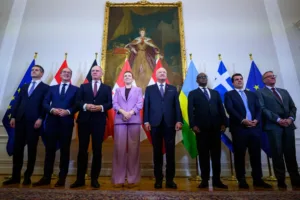
The tax dispute forced Jetten to skip the European Political Community summit in Dublin on November 12, where leaders met to address Ukraine’s ongoing security challenges, and the informal meeting of EU leaders the following day. Luxembourg Prime Minister Luc Frieden represented the Netherlands.
Party leaders maintained a strict media blackout throughout the talks. Jetten and his two deputy prime ministers, Yeşilgöz and the CDA’s Bart van den Brink, set out the terms at the November 17 press conference, which followed an extra Council of Ministers meeting that morning.