





Hamburg’s municipal grid operator has announced a freeze on new large-scale industrial electricity connections, warning that local grid capacity is exhausted until at least autumn 2027.
Municipal distribution operator Hamburger Energienetze has confirmed that it will be unable to approve regular connection requests above 1.5 megavolt-amperes (MVA) for major consumers as the Hanseatic city’s supply bottlenecks intensify.
“At present, no additional major connections can be granted,” the municipal company declared, as reported by German daily Die Welt on November 2.
The de facto moratorium, which will run until at least September 30, 2027, primarily hits prospective data centres, battery storage facilities and heavy industrial operations seeking to electrify manufacturing processes, including metal production and chemicals around the Port of Hamburg.
Existing connections, households and ordinary businesses are not affected. According to the operator, more than 99 per cent of connection requests fall below the threshold.
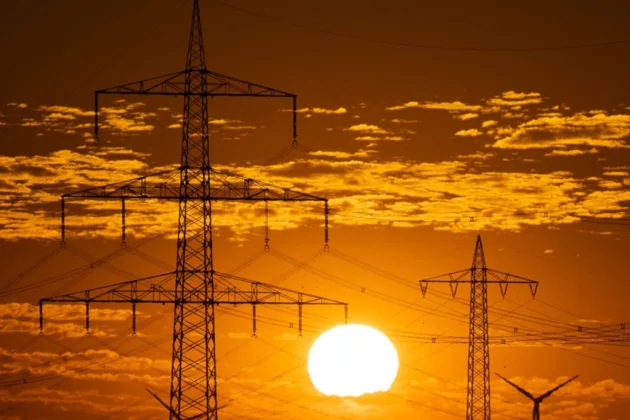
The shortfall stems from severe congestion at interconnection substations linking Hamburg’s municipal grid to the nationwide extra-high-voltage transmission network managed by Berlin-based transmission operator 50Hertz.
While businesses may submit applications until January 22, 2027 under a newly introduced annual rationing scheme, dubbed “Fair Grid”, officials concede that available allocatable capacity currently stands at zero in all three of the city’s sub-grids.
The new system replaces the previous first-come, first-served approach. Spare capacity is now shared out among applicants once a year, with planning progress and existing permits taken into account.
Requests for additional connections now total some 3,000 megawatts (MW), against a current peak load of about 1,800MW for the entire Hamburg grid, according to Hamburger Energienetze.
The bottleneck has sparked sharp criticism from regional business leaders, who warn that bureaucratic and infrastructural paralysis is actively undermining the federal government’s decarbonisation agenda.
Employers’ association UVNord, which represents business in Hamburg and Schleswig-Holstein, warned that the investment certainty required for corporate electrification is being jeopardised for years to come.
Hamburg’s local economic ministry acknowledged the crisis, stating: “We need simpler procedures and, above all, reliable timetables for the provision of additional capacity. Until then, available capacities must be allocated transparently.”
Hamburger Energienetze expects the power demand in Hamburg to triple within the next 20 years. It has also warned that bottlenecks could persist into the early 2030s and, in some parts of the city, beyond.
Hamburg mayor Peter Tschentscher of the Social Democratic Party (SPD) has already raised the alarm. “We are specifically missing 16 transformers,” he told German public broadcaster ZDF on September 29, adding that the shortage was becoming “a risk for the energy transition and climate protection in Hamburg”.
The grid squeeze in Hamburg is the latest structural symptom of Berlin’s Energiewende (energy transition).
Following the closure of Germany’s final commercial nuclear power stations on April 15, 2023, the federal government stripped reliable baseload generation from the grid in favour of intermittent wind and solar power.
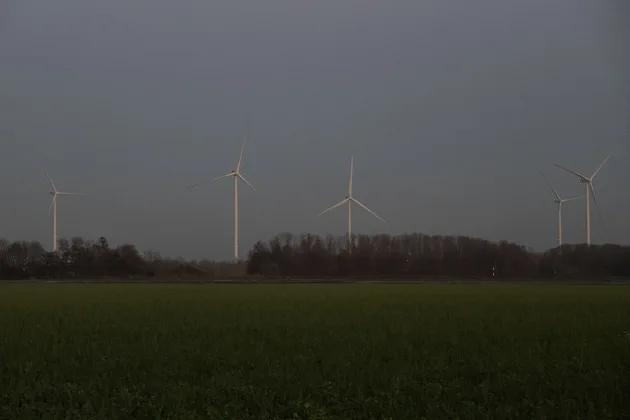
Because the bulk of Germany’s renewable power is generated by onshore and offshore wind farms in the north while major demand hubs remain concentrated in urban and southern industrial belts, transmission networks have become chronically overloaded.
Although northern Germany is home to vast onshore and offshore wind capacity, generating green electricity does not guarantee local delivery.
The surrounding high-voltage transmission lines are already heavily congested funnelling wind power southward to replace shuttered nuclear plants in Germany’s industrial heartlands.
At the same time, Hamburg lacks the heavy-duty transformer substations (Umspannwerke) required to step that high-voltage power down into the municipal distribution grid, where 380 kilovolts are converted to 110 kilovolts.
This physical hardware bottleneck, compounded by multi-year equipment backlogs, means local grid operators cannot tap the surplus wind swirling around the city’s perimeter without risking systemic network overloads, leaving the Hanseatic port starved of power amid an aggressive push to electrify its heavy industry.
In an October 2025 referendum, 53.2 per cent of Hamburg voters backed bringing forward the city’s climate neutrality target to 2040.
50Hertz has said new substations require suitable land as well as lengthy permitting and coordination procedures. The operator plans to spend €800 million on additional capacity for Hamburg by 2035.
Despite federal promises to build thousands of kilometres of high-voltage direct current corridors, transmission and distribution investments continue to lag years behind statutory climate mandates.
Hamburger Energienetze has pledged around €3 billion over the next five years to expand its grid. It plans to build some 15 new substations in the coming years.
The European Commission has urged EU member states to weigh measures to cut gas and electricity consumption over the coming months, after storage sites filled unusually slowly over the summer and prices settled well above the levels seen at the start of 2026.…
— Brussels Signal (@brusselssignal) September 29, 2026