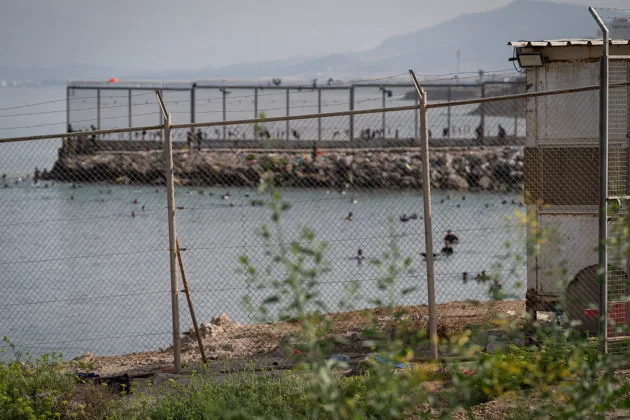






Illegal migrant arrivals in Spain’s Canary Islands have overtaken the total for the whole of 2025, with almost two months of the year still to go.
Police figures reported by Spanish newspaper La Gaceta on November 9 put arrivals between November 1 and 7 at 5,330 people on 56 boats. Added to the 13,327 recorded by Spain’s interior ministry up to October 31, that brought the 2026 tally to 18,657, against 17,788 for all of last year.
The threshold was crossed on November 7, after 311 days. As recently as August 15, arrivals to the islands were running 60 per cent below 2025 levels.
If the pace of the second half of October held until December 31, the archipelago could close the year with more than 30,000 arrivals, according to the newspaper’s projections. A slower rate would still leave the total well above that of 2025.
A figure above 30,000 would exceed the 31,678 arrivals of the 2006 cayuco crisis and would be topped only by 2023 and 2024. The record of 46,843 was set in 2024.
Boats were also more crowded. La Gaceta said 216 vessels had reached the islands by November 7, compared with 263 in the whole of 2025, with an average of 86 people on board against 68 last year.
Large wooden cayucos carrying up to 270 people set out from Senegal, The Gambia and Guinea-Bissau. A parallel route used inflatable boats launched from coastline under Moroccan control.
Most landed on El Hierro, an island of about 12,000 residents. Its island council declared an emergency after more than 8,000 arrivals in five weeks, with council president Alpidio Armas saying there were not enough means to move people on to Tenerife and Gran Canaria.
Canary Islands President Fernando Clavijo described the situation on El Hierro as unsustainable. On November 6 he wrote to European Commissioner for Internal Affairs and Migration Magnus Brunner, asking Brussels to activate EU solidarity mechanisms and call an emergency meeting.
Clavijo said Spanish Prime Minister Pedro Sánchez had agreed to convene the Interministerial Commission on Immigration on November 10. He also sought urgent meetings with European Commission President Ursula von der Leyen and with Brunner.
Across Spain, the interior ministry recorded 32,942 illegal entries up to October 31, 8.9 per cent more than in the same period of 2025. That figure excluded the invasion of Ceuta on July 30 and 31, when tens of thousands of people crossed from Morocco into the city.
The rise ran against the trend in the rest of the European Union, where the EU border agency Frontex has reported sharp falls in crossings this year.