
Europe has seen enough endless wars in the Middle East. As a former defence minister, I know firsthand the political, military and human costs of the conflicts in Afghanistan and Iraq.
Nine months into the latest conflict involving Iran, the warning signs are unmistakable: We risk stumbling into another prolonged confrontation with no clear exit strategy.
Yet this outcome is not inevitable. There is a way forward—but it requires abandoning two approaches that have repeatedly failed and recognising a force that Western policymakers have too often overlooked: The Iranian people themselves.
For nearly half a century, Western policy towards the Islamic Republic has been dominated by dialogue and accommodation. It produced no meaningful reform, did not halt Iran’s nuclear programme and did not protect Iranians from systematic human rights abuses.
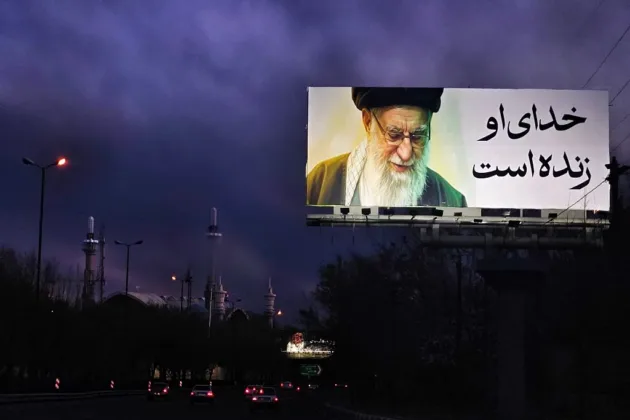
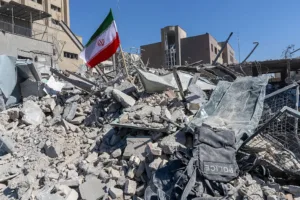
That approach was dramatically overturned on February 28, when American and Israeli airstrikes killed supreme leader Ali Khamenei, weakened the regime and triggered a conflict that has continued, intermittently, ever since. Yet the events of the past nine months have demonstrated that military intervention offers no more credible path to lasting stability than appeasement did.
Some have interpreted the failure of foreign military action to bring about regime change as evidence of the regime’s resilience. That misses the point.
Military intervention was never a realistic substitute for political change from within Iran. Appeasement failed for essentially the same reason: Both approaches overlooked the most decisive factor in the country’s future, its own people.
Since late 2017, Iran has experienced four nationwide uprisings (2017-18, 2019, 2022 and 2025-26), each marked by demands for fundamental political change. Yet the international response has largely consisted of silence, expressions of concern and condemnations that quickly faded.
Tehran, meanwhile, has responded with ruthless repression. During the most recent uprising in January, the Islamic Revolutionary Guard Corps (IRGC) and other security forces opened fire on demonstrators across the country, killing thousands.
The repression has continued through a wave of political executions. Around 50 political prisoners have reportedly been hanged since March for allegedly taking part in protests or belonging to the growing network of Resistance Units of the opposition People’s Mojahedin Organization of Iran (PMOI/MEK).
The authorities have good reason to fear another uprising. The economic and social grievances that drove the January protests have only deepened.
The Iranian currency has suffered a dramatic collapse: In early December 2025, one US dollar was worth about 1.2 million rials on the open market; today, it is worth around 2.7 million. Shortages of petrol, natural gas and, more recently, even bread have compounded public frustration.
The death of Ali Khamenei has also left a profound leadership vacuum. For nearly four decades, he was the central architect and ultimate arbiter of the Islamic Republic’s power structure. His absence has intensified factional rivalries, including within the IRGC, whose competing interests he had long managed to contain.
This is where Europe has an opportunity to pursue a fundamentally different approach.
Rather than choosing between accommodation with Tehran and a military intervention, European governments should provide political support to the Iranian people’s struggle for democratic change and engage with the organised opposition, notably the National Council of Resistance of Iran (NCRI), a coalition of Iranian opposition movements.
NCRI president-elect Maryam Rajavi has presented a 10-point plan for Iran’s democratic future. It calls for the separation of religion and state, gender equality, the rule of law, autonomy for Iranian Kurdistan and a non-nuclear Iran. These principles offer a framework for a secular, democratic republic based on equal citizenship.
Europe should also avoid treating a return to monarchy as a credible alternative to the present theocracy. Reza Pahlavi, the son of the Shah overthrown in 1979, has never repudiated his father’s authoritarian rule or the abuses of SAVAK, the notorious secret police responsible for torturing and killing political opponents.
His advocacy of foreign military intervention and his ambitions for a restored monarchy have made him a divisive figure among Iranians.
Iran’s future should not be determined by a choice between two forms of authoritarianism, whether religious or hereditary.
The Islamic Republic is weaker today than it has been for decades. But weakness alone does not produce democracy. The responsibility for bringing about change belongs to the Iranian people and the organised forces seeking a democratic republic.
On November 21, former prime ministers, government ministers, senior diplomats and parliamentary delegations from several European countries gathered in Paris to discuss precisely this alternative. Their message deserves serious consideration: Europe can help resolve the Iranian crisis by supporting democratic change from within, rather than perpetuating a cycle of failed diplomacy and military confrontation.
For Germany and Europe, a great deal is at stake. We have learned, at a high price, that wars without a viable political strategy can drag on for years. Iran need not become another such tragedy.
A lasting solution will not emerge from another bombing campaign or another round of concessions to Tehran. It will come from the Iranian people themselves, supported by a Europe prepared to stand for democratic principles rather than repeat the mistakes of the past.