
When democratic politicians abandon their stated principles for short-term political advantage, the consequences often come back to haunt them. European history offers ample warnings. Alarm bells should ring whenever political expediency takes precedence over democratic values.
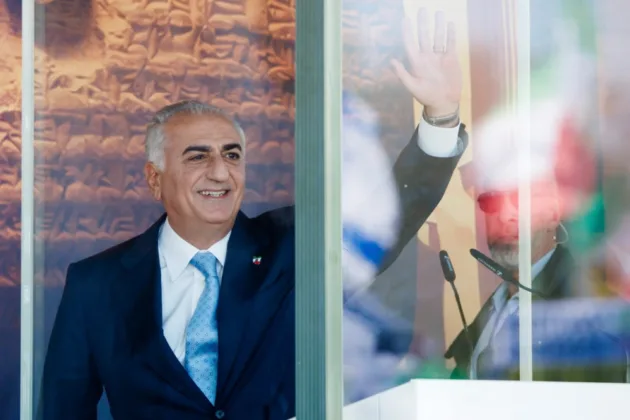
A troubling example is the reported plan for liberal group politicians in the European Parliament to meet this week with Reza Pahlavi, the eldest son of Iran’s last Shah, whose dictatorship was overthrown by the Iranian people in the February 1979 revolution.
At a time when Iran’s future is once again at the centre of international debate, such a meeting raises serious questions. Have those extending the invitation adequately considered Pahlavi’s historical legacy, democratic credentials and actual standing among Iranians?
There are growing indications that the world may be approaching another round of military confrontation between the United States and Iran. For Europe, and particularly Brussels, the stakes are enormous. The consequences could affect regional security, energy markets, international trade and Europe’s strategic interests.
The previous confrontation offers important lessons.
Economic pressure and the US naval blockade have weakened the Iranian regime. Military strikes can further diminish its capabilities. But weakening a dictatorship is not the same as bringing about its collapse, much less establishing a democratic alternative.
Indeed, the Iranian regime has repeatedly demonstrated that it may fear peace more than war. External confrontation provides its rulers with a pretext to intensify domestic repression and portray political dissent as collaboration with foreign enemies.
Another military confrontation is therefore unlikely, by itself, to produce democratic change or fundamentally alter the regime’s behaviour. The broader political equation may remain unchanged.
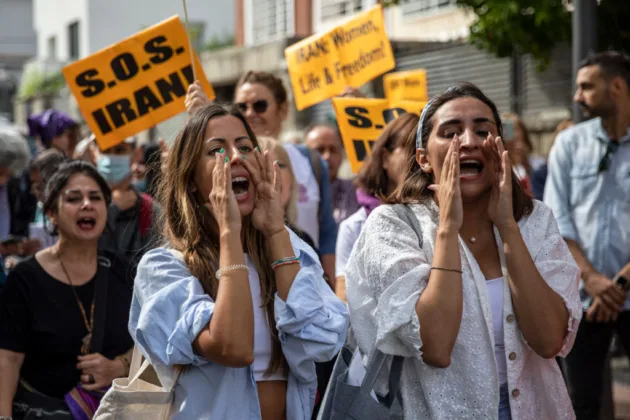
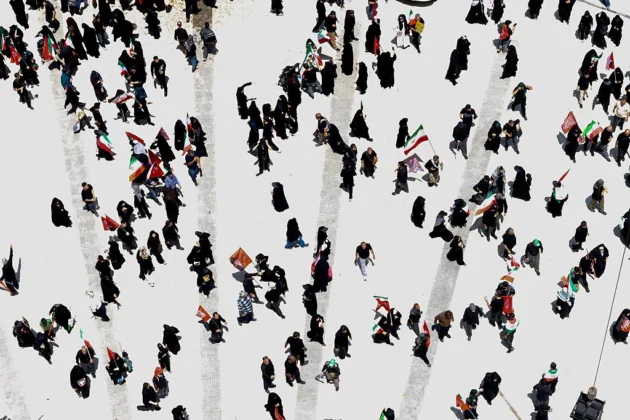
The decisive factor is not the number of bombs dropped on Iran or the severity of economic pressure imposed from abroad. It is the Iranian people themselves: Their determination to reject the dictatorship and their capacity to organise for regime change by themselves and for a democratic future.
That is where Europe’s attention should be focused.
Yet the recent crisis offers another lesson: International uncertainty creates opportunities for political figures seeking to capitalise on the suffering of others.
Reza Pahlavi has sought to position himself as a beneficiary of Iran’s crisis. His repeated, outspoken advocacy of foreign military action against Iran has raised serious concerns that he is counting on foreign powers to pave his way to power.
His tour of European political and media institutions this week appears designed to project the image of a credible alternative. But international visibility is no substitute for democratic legitimacy. Interviews are no substitute for an organisation. Invitations to parliamentary buildings are not evidence of popular support. And a famous surname is not a political programme.
Pahlavi has yet to demonstrate the organisational capacity, credible democratic roadmap or meaningful presence inside Iran and among the diaspora.
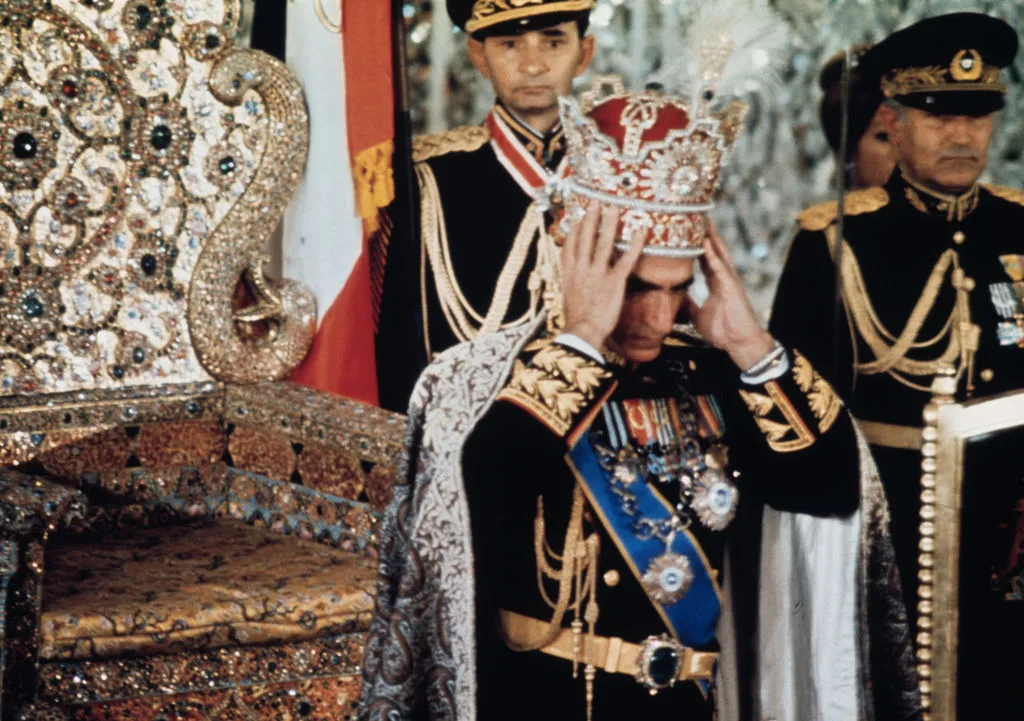
More troubling still, he has never clearly repudiated the repression associated with his father’s rule, including the torture and political imprisonment carried out for years by the Shah’s notorious secret police, SAVAK. Instead, he has repeatedly praised his father’s legacy, including this year.
For a European political family professing commitment to human rights, freedom of expression, pluralism and accountable government, this record should prompt serious scrutiny.
There is also the conduct of some of Pahlavi’s supporters. Iranian opposition activists across Europe have filed many legal cases against them for intimidation, physical assaults and disruption of events, including those organised by activists who reject both monarchy and theocracy.
European liberals should also consider the controversy similar initiatives have already generated elsewhere.
In Germany, the Friedrich Naumann Foundation’s decision to present its 2026 Freedom Prize, dedicated to the Iranian people, to Reza Pahlavi has provoked strong objections from German political figures, Iranian associations, human rights advocates and former political prisoners. The foundation, which is close to the liberal Free Democratic Party (FDP), is due to hold the ceremony in Frankfurt’s Paulskirche on November 7. Former justice minister Herta Däubler-Gmelin of the Social Democratic Party (SPD) has joined calls for the decision to be reversed, while six former political prisoners of the Shah’s regime have written to the foundation in protest.
In Belgium, attempts by the francophone liberal Reformist Movement (MR) to arrange a parliamentary appearance for Pahlavi during the same European tour faced opposition from Iranian communities and political figures. The proposed parliamentary invitation was ultimately withdrawn, after foreign minister Maxime Prévot advised against treating Pahlavi as the sole voice of the Iranian opposition.
These objections deserve to be heard, not dismissed.
Members of the European Parliament should remember that Iran’s 1979 revolution overthrew a monarchy, only for another dictatorship to emerge. The lesson is not that Iranians must choose between the Shah and the mullahs. It is that neither hereditary privilege nor religious authority should determine their political future.
Europe’s task is not to select Iran’s next ruler. It is to uphold the principles Europeans profess to cherish: Popular sovereignty, equal citizenship, freedom of expression, the rule of law and the right of people to determine their own government. That means shunning Reza Pahlavi.
If European liberals wish to stand with the Iranian people, they should listen to democratic voices, defend fundamental rights and recognise that Iran’s future belongs exclusively to its citizens.
The Iranian people must have the final word, not foreign governments, not European political parties and certainly not anyone claiming an inherited right to rule, including Reza Pahlavi.
European politicians should not sacrifice their democratic principles for the illusion of a convenient political alternative. History has shown too often how badly such calculations can end.