


Spain’s election will decide more than who governs in Madrid. It will shape the balance of power at the table where Europe’s decisions are taken.
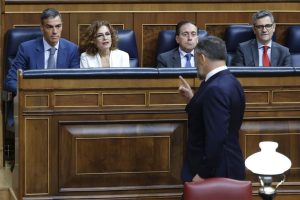
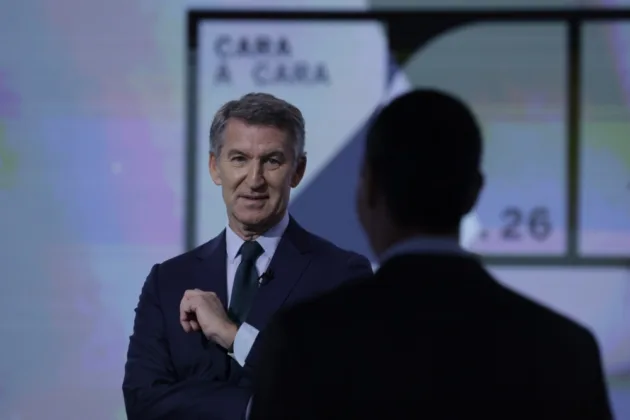
On November 29, Spain holds its sixth general election in 11 years. It was called on October 5, after Congress rejected the government’s two housing decrees. In the final week before Spain’s polling blackout, poll averages put the Popular Party first. Most seat projections gave it a majority together with the national-conservatives of Vox, although the Socialists had been narrowing the gap.
Outside Spain, most coverage asks whether the centre-right will govern with Vox. Spaniards will settle that on November 29. Seen from Brussels, the more useful question is what changes in the European Council when Madrid changes hands.
Europe is not just changing governments. It is redefining its balance of power.
In Brussels, power is often discussed as if it lived inside the institutions. In practice, much of it comes from national capitals. The European Parliament is elected once every five years, while the European Council is re-elected a little every time a member state votes. The Commission proposes, and laws are made by Parliament and by national ministers in the Council of the European Union. The heads of state and government in the European Council write none of them, but they set the direction for all three.
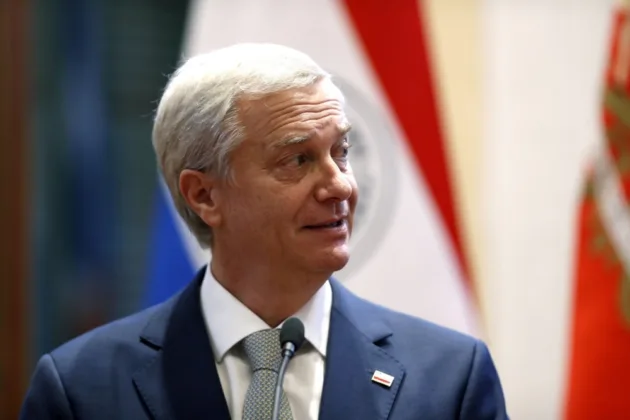
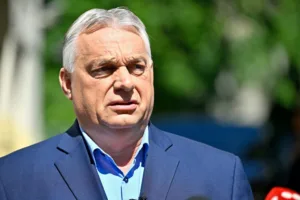
That body has already changed a great deal. In June 2024, EU leaders adopted a strategic agenda for 2024-2029; 12 of the 27 who adopted it have since been replaced, most of them after national elections. Not every change went the same way. Hungary moved from the Patriots for Europe to the European People’s Party (EPP), while the Czech Republic moved to the Patriots. Overall, though, the European Council has shifted to the right, and Brussels now talks less about the Green Deal and more about competitiveness, simplification, defence and the return of migrants.
Spain could be the next change, and one of the biggest. It is the EU’s fourth-largest economy and home to about 11 per cent of its population. In the Council of the EU, a qualified majority needs 55 per cent of member states representing 65 per cent of the population, while a blocking minority needs at least four member states representing more than 35 per cent of the population. Many coalitions, on either side of a vote, are hard to build without Madrid. Spain is also the largest country where the socialists still lead the government.
The effects would reach Parliament too. When the balance among governments shifts, majorities in Parliament tend to shift with it, because parties that govern at home are usually reluctant to vote in Strasbourg against what their own ministers accepted in the Council.
There is something else that is easily forgotten: Governments change, geography does not. A new government in Madrid would still defend Spain’s farmers and cohesion funds in the next long-term budget, and still look south across the Mediterranean and west to Latin America. What would change is its partners. On migration, a government in Madrid closer to Rome and Athens would turn Mediterranean coordination into alignment.
Brussels often treats national results it dislikes as turbulence to be managed. But in a union of democracies, these results are how the system is supposed to work: Voters in each country decide who speaks for them in the European Council.
Spain’s vote alone will not set Europe’s course, but it will show once again where that course is set. Europe’s balance of power is not made in Brussels. It is only recorded there.