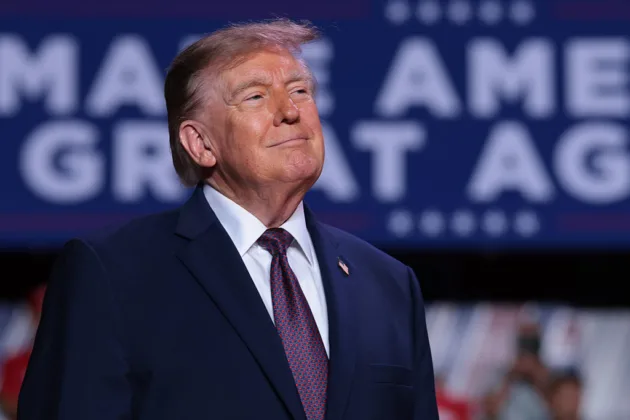



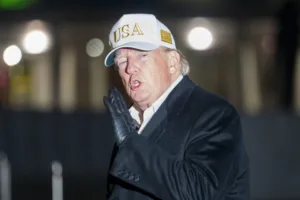

US President Donald Trump has said public anger over the war with Iran and the rise in fuel prices it triggered cost the Republican Party control of Congress in the midterm elections.
Speaking to Ross Douthat in an interview broadcast by CBS programme 60 Minutes on November 8, Trump said part of the electorate had disliked the conflict and the jump in petrol prices. He also conceded that messaging on the economy had been poor, possibly on his part.
He insisted, though, that his own name had not been on the ballot and that the result would have been very different had he been a candidate. Projections after the November 3 vote gave Democrats control of both the House of Representatives and the Senate.
Trump defended his decision to authorise military action against Iran, arguing it had been needed to stop Tehran acquiring a nuclear weapon. He said history would judge the move favourably, even if it had cost him politically.
He claimed the US had effectively won the war and crippled Iran’s nuclear programme, adding he had no intention of escalating the conflict now the vote was over. He said the countries Washington had protected in the region would have to repay the full cost of the war and claimed Israel would not exist without him.
On immigration, Trump acknowledged his mass deportation drive had hurt Republicans by sweeping up migrants who had held steady jobs for years. Asked whether the policy had gone too far, he replied: “I think it might be too tough, yeah.”
Exit polling cited by CBS found 58 per cent of voters believed the administration’s immigration measures had gone too far.
Trump said he would like to strike a deal with the incoming Democratic majority that would allow migrants who had lived and worked in the US for 10 or 15 years to stay. He said he could easily stop insulting the opposition for six months, though he conceded he regularly mocked Democrats with nicknames.
The interview was recorded on November 6, the same day Trump named Stephen Miller, the architect of his deportation programme, as White House chief of staff. Miller, who replaces Susie Wiles, was set to take up the post today.
Trump ruled out any need to pardon himself before leaving office but said he would grant many pardons to aides and officials to shield them from prosecution once he had gone.
On the 2028 presidential race, he would not commit to endorsing a successor. He praised Secretary of State Marco Rubio as one of several strong options, alongside some senators.
He argued the Make America Great Again (MAGA) movement would outlive him because it was rooted in common sense.