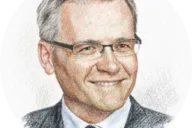
Łukasz Warzecha, a prominent Polish journalist who has written for newspapers and magazines and hosted television programmes, has been prevented from entering Ukraine and handed a three-year ban on crossing into that country on “security grounds”.
He was stopped on November 2 at the Dołhobyczów-Uhrynów crossing on the Polish-Ukrainian border, in Lublin province, eastern Poland.
Warzecha had been invited to participate in a joint study visit to Ukraine for Polish journalists organised by the Mieroszewski Centre, a Polish state institution, and the Ukrainian Institute, a Ukrainian public body affiliated with the foreign ministry.
Mieroszewski Centre director Łukasz Adamski has told reporters that a list of journalists who would be on the tour had been agreed between the organisers and submitted to the Ukrainian authorities, which had not raised any objections ahead of the journalists arriving at the Polish-Ukrainian border.
On arriving at the Ukrainian border Warzecha had his passport taken from him, was asked the purpose of his visit and then told to wait in a separate room from the other members of the journalists’ party. He was held in that room for more than seven hours before being informed that he had been banned from entering Ukraine for a period of three years and that this was a decision issued by Ukraine’s Security Service (SBU) for “security reasons”.
Speaking after the ban against him was issued and he was escorted back across the Polish border, Warzecha said he had “wanted to confront my own views with open-minded politicians and opinion leaders in Ukraine. Unfortunately I was not given the opportunity to do so”.
Warzecha also told broadcaster RDC that he suspected that the action taken against him was “a provocation aimed at destroying a dialogue project someone in the Ukrainian security apparatus did not want.”
He added that “preventing people from entering your country simply because of their views is not the standard that would be expected of a member of the European Union.”
Warzecha has also said the Mieroszewski Centre had tried to invite him to Kyiv several times before but that his name had been struck off the list by the Ukrainian side. Adamski confirmed that this time consent had been granted, according to the Polish media portal Press.
Former head of the Polish Institute of International Affairs (PISM) Sławomir Dębski took to social media platform X and called the Ukrainian action a scandal in which “the SBU was acting like an Orwellian thought police” and instead of combating Russian spies decided to “act in a Soviet-style manner”.
Adamski said his organisation’s attempts to intervene with the foreign ministries of both Poland and Ukraine had failed to bring any results. The rest of the party of journalists**, though, continued with the planned visit after a stoppage of two and a half hours.
The Mieroszewski Centre issued a statement that while it “recognised Ukraine’s sovereign right to decide whom to grant entry into its territory, restricting the work of journalists on grounds of state security without specifying the reasons creates fertile ground for hostile commentary.”
Adamski said the visit to Ukraine had been arranged specifically with the aim of “representing diverse editorial perspectives”. The Mieroszewski Centre in October arranged a similar visit for Ukrainian journalists to Poland.
The aim was “to enable Polish journalists to gain direct knowledge of the situation in Ukraine, engage in conversations with representatives of various communities, and achieve a better understanding of the challenges facing Ukrainian society”, wrote Adamski.
Ukrainian authorities had not publicly explained the decision by November 4. Under SBU rules, such bans are issued in the interests of national security or public order and standardly run for three years, according to the Polish weekly Najwyższy Czas!.
Warzecha has written for tabloid papers Fakt and Super Express and for well over a decade has been a regular senior commentator for the independent conservative magazine and portal Do Rzeczy. He also has his own programmes with YouTube broadcaster Super Ring and a YouTube channel on which he blogs frequently.
During the lifetime of the previous Law and Justice (PiS) government Warzecha was a commentator on a TV show for public television TVP Info, a post he was dismissed from for being critical of the PiS government.
Warzecha is a self-declared conservative libertarian, an advocate of free market economics and critic of the European Union’s climate and migration policies.
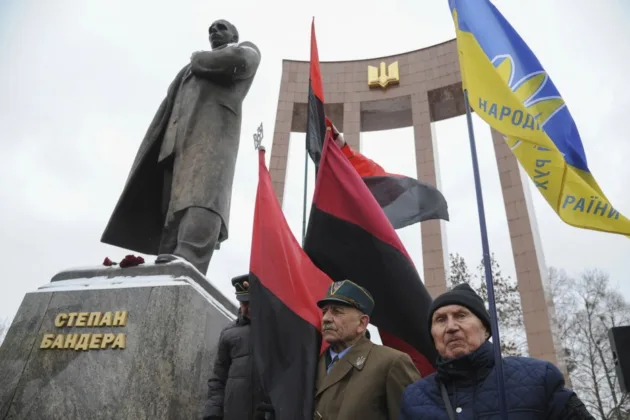
He has frequently been critical of Ukraine, for example over its honouring of historical nationalist figures, and has called for a reduction in social benefits given to Ukrainians living in Poland. These views are currently very much a part of the mainstream in Poland.
Warzecha has repeatedly criticised Poland’s policy toward Ukraine, writing that “we ourselves have fostered Ukrainian arrogance.” In 2023, he wrote that the policy of supporting Ukraine’s EU membership “is suicidal and runs sharply counter to Polish interests.”
Warzecha has, though, supported Ukraine in its defence against the Russian invasion, expressing satisfaction that the country was able to defend itself effectively.
Ukraine’s decision to stop Warzecha from entering the country has been criticised by the Polish Right as evidence that Ukraine was intolerant of criticism of its historical narrative and endemic corruption.
Sławomir Mentzen, a leader of Poland’s libertarian nationalist Confederation party, called for intervention by the Polish Foreign Ministry.
“The entry ban on Ukraine for Łukasz Warzecha is a scandal! Anyone who wants to can enter Poland from there, yet Warzecha bothers the Ukrainians? We welcome Ukrainians who say far worse things about Poland than Warzecha says about Ukraine. I urge the Ministry of Foreign Affairs to take action on this matter!”, wrote Mentzen.
Marcin Przydacz, head of the International Policy Bureau at the Chancellery of President Karol Nawrocki, also called the decision a scandal and said he expected a firm response from the foreign ministry.
Law and Justice (PiS) MP Andrzej Śliwka also demanded an explanation and said he would raise the matter with the authorities.
Since Russia’s full-scale invasion of Ukraine in 2022, Poland has been one of Kyiv’s closest allies, providing extensive military, humanitarian and diplomatic support.
Tensions have arisen, though, between the two countries over history, such as the Volhynia massacre in which an estimated 100,000 Polish civilians perished during Second World War ethnic cleansing, and the import of Ukrainian grain, which Polish farmers say constitutes unfair competition.
Warzecha is not the first Pole to be turned back. On August 30, Institute of National Remembrance (IPN) historian Michał Siekierka was stopped at the Dorohusk-Jagodzin crossing on his way to the funeral of 55 Volhynia victims in Ostrówki and only then learnt of a three-year SBU ban issued in 2023, according to Polish media.
There has also been a change of attitude among Poles to Ukrainian migrants with calls for restrictions on their benefits and numbers.