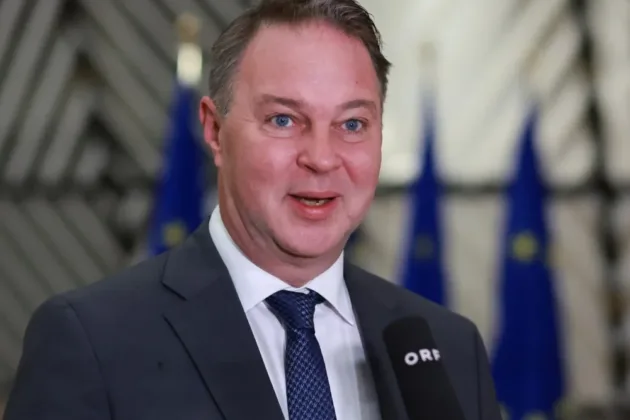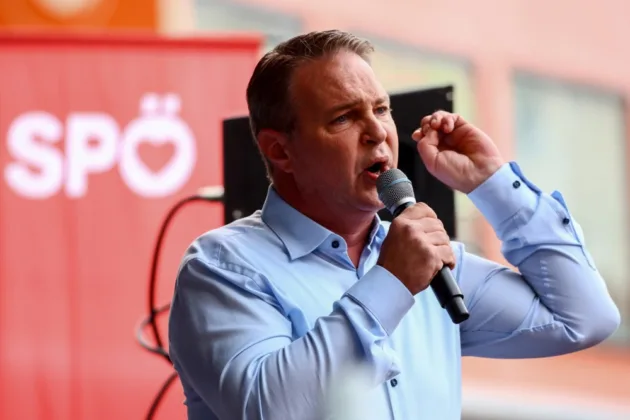








The Austrian Socialist Party (SPÖ) has reversed the results of its leadership election, and has declared the left-liberal Andreas Babler as its chairman, replacing the elected populist Hans Peter Dozkozil.
Following a divisive contest for party control, it was initially declared that Dozkozil had won at a party election conference last Friday in Linz.
However, it was announced on Monday that there had been a clerical error and, as a result, Babler was subsequently declared to be the winner.
While Babler has insisted he wants a full recount of the vote to absolutely confirm his party leadership, and to restore the credibility of the SPÖ, he faces an unenviable task. Before the convention, the party had held an official members’ poll to decide the candidates, which Dozkozil won with 3,000 votes, considerably more than his competitors.
One commentator wrote before the convention that, “If Babler is elected, the accusation will be that the functionaries have overruled the members’ vote.” Since Babler’s apparent victory came about because of a supposed error, this will only compound the problem as he scrambles for legitimacy, the observer added.
The leadership controversy comes amid a deeper split that has emerged within the SPÖ.
Dozkozil stands for a policy that is generally left-wing, but also swings right on key issues such as mass migration. In this sense, he mirrors other left-wing figures across Europe such as Germany’s Sahra Wagenknecht, the UK’s former Labour Party leader, Jeremy Corbyn, and Danish Prime Minister, Matte Frederiksen.
Babler, meanwhile, is seen as being more an idealist, left-liberal figure – appealing to an urban core of Vienna voters. That does not go down well with Dozkozil’s supporters who, as Robert Misik wrote in the digital media magazine Social Europe, view “left-liberal hipsters from the inner cities” as the enemy.
Babler is the mayor of Traiskirchen in the district of Baden in Lower Austria. He has been outspoken in defending the presence of a major refugee camp situated in his region – one of Europe’s largest – only criticising that conditions there, in his opinion, means it is not fit for purpose.
On the broader Austrian political scene, it appears that the SPÖ will remain in the doldrums. It has fallen into the third place in national polls and performed poorly in a number of regional elections.
There seems to be little prospect of the SPÖ becoming part of a coalition centre-right ÖVP; the Financial Times had reported that many observers believe Dozkozil’s leadership would be necessary for such any such coalition to work.
In the meantime, the nationalist FPÖ is leading in the latest polls. Following several ÖVP-FPÖ coalitions formed in regional governments, such as Lower Austria and likely to follow in Salzburg, a nationalist-led coalition with the centre-right looks probable regarding next-year’s general election.