





DE Peet’s JDEP.AS, one of the world’s largest coffee companies, said the global coffee industry is finding the timing very tight to comply with a new EU law banning the import of commodities and related goods linked to deforestation anywhere in the world.
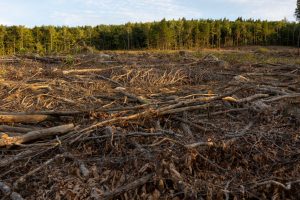
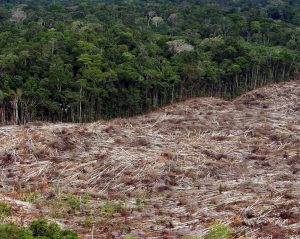
The European Union law, which comes into effect at the end of 2024, will require EU importers of coffee, cocoa, cattle, palm and other commodities to prove their goods are not contributing to forest destruction – a major source of climate change – or face hefty fines.
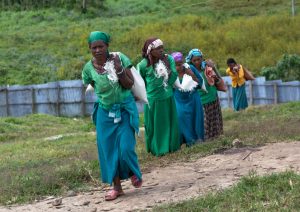
Producing countries from Indonesia to Brazil have criticised the law, saying it is discriminatory and that the new rules could end up excluding vulnerable, small-scale farmers from accessing the EU’s lucrative market.
Their fear is that farmers in remote, rural regions might, for example, be unable to provide buyers of their goods with geolocation coordinates to prove their farms are not on land deforested after 2020 – one of the law’s key requirements.
JDE Peet’s, maker of Douwe Egberts and L’Or coffee, said the EU has simplified this aspect of the law in some respects, but the industry will still struggle to comply by end-2024.
“It’s clear the timeline is very, very tight. We’re doing what we can to finish on time,” Laurent Sagarra, Vice President of Sustainability at JDE Peet’s, said in an interview.
In some countries, the compliance deadline has effectively come and gone because their harvests have begun, meaning the goods they produce now will be sold in the EU market next year, and will have already to be compliant, he said.
The European Commission said its “doors are open to discussions with the industry and not only do we reply to any implementation questions they may have, but also publish extensive guidance on the basis of the exchanges so far”.
JDE Peet’s has signed deals with Ethiopia, Papua New Guinea, Tanzania, Uganda, Peru, Honduras and Rwanda to map and monitor their coffee-growing regions using high-resolution satellite imagery, artificial intelligence, and on-the-ground verification.
But the company has still to sign agreements with another 20 countries well before the end of this year to ensure it can continue importing coffee from a variety of origins next year.
Coffee sold to consumers is usually a blend of different bean varieties. Even small coffee-growing countries are important for roasters to maintain the signature taste of their products.
Roasters also need a diverse sourcing base in case adverse weather or disease affect a country or a region’s crop in any given season.
“We’re engaging with (virtually the) entire coffee world, there are 27 countries with which we are engaging,” said Sagarra.
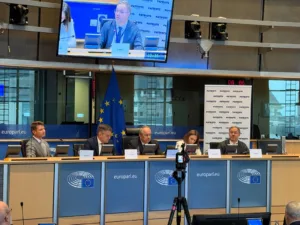
A majority of EU member states have asked the bloc to scale back the law and possibly suspend it temporarily due to concerns even EU farmers will struggle to tick all the boxes required in proving their goods are deforestation-free.
The process is also expected to be costly. Sagarra declined to provide details on the costs, stressing instead that the aim of stamping out deforestation from supply chains goes beyond the EU.
Companies around the world – under pressure from investors and climate-conscious consumers – have introduced their own targets to rid their supply chains of environmental harms.
“Its not just the EU, a lot of companies have climate targets (because) being deforestation-free is a competitive advantage. Coffee from countries with high deforestation will become less attractive (in the future),” Sagarra said.
When asked if JDE Peet’s would be compliant in time, Sagarra responded: “100 per cent is always difficult because we’re still managing a lot of uncertainty, we still have a lot of things happening with our countries of origin.”
“We are doing everything we can to ensure that we are ready.”