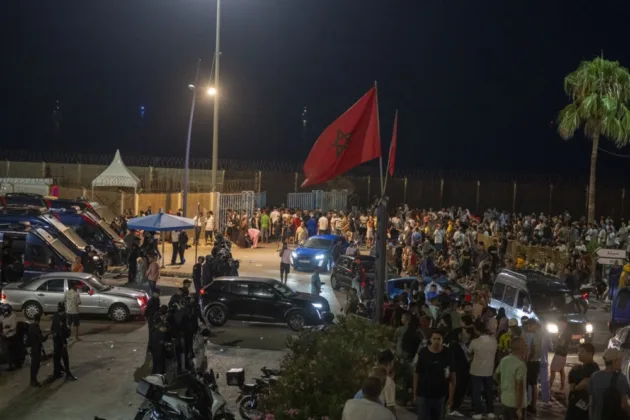












Members of Spain’s Supreme Court have rejected Prime Minister Pedro Sánchez’s claim that one of their rulings lay behind the mass entry of migrants into Ceuta, describing the accusation as indecent.
Judges said the origin of the crisis was political. They said Morocco had presented Sánchez with a bill, although they did not know what for.
Sánchez said in Ceuta on July 31 that trafficking networks had made a self-serving reading of a Supreme Court judgment on returns at the border. He spoke after a coordination meeting with the city’s president and the central government delegate.
The ruling, dated June 29 and made public on July 8, upheld an earlier decision by the High Court of Andalusia. It found that the summary rejections allowed under the tenth additional provision of the Immigration Law do not cover people who arrive by swimming, because they cross no physical containment element.
The judges consulted said the court had settled a narrow legal question with a reasonable interpretation, even if other readings were possible. One said the real cause was that Moroccan gendarmes had let thousands of people through.
The same source accused Sánchez of an erratic migration policy and said Rabat repeatedly got the better of him. Another went further, linking Moroccan leverage over Madrid to the Pegasus spyware affair and to Western Sahara, without offering evidence.
Juan Jesús Vivas, president of Ceuta, had warned of the consequences of the ruling before the crisis and had urged parliament to amend the Immigration Law. Arrivals by sea and around the El Tarajal breakwater were already rising at that point.
The Popular Party (PP) tabled a bill in the Congress of Deputies on July 16 to rewrite the provision. Alma Ezcurra, the party’s deputy secretary for sectoral policy, said the 2015 text had been drafted for pressure on the border fences, whereas the pressure was now coming mainly by sea.
Sánchez has since said he was open to reforming the law so that returns at the border could be carried out as efficiently as possible. He has avoided attributing any responsibility to Morocco for failing to stop the crossings.
Between 50,000 and 60,000 people entered Ceuta on July 30 and 31, most of whom have since gone back to Morocco. At least 67 died, many of them by drowning or while trying to climb the breakwater.
The episode has strained relations inside the European Union, with 22 member state governments calling for emergency talks on migration and several tightening checks on travel from Spain.