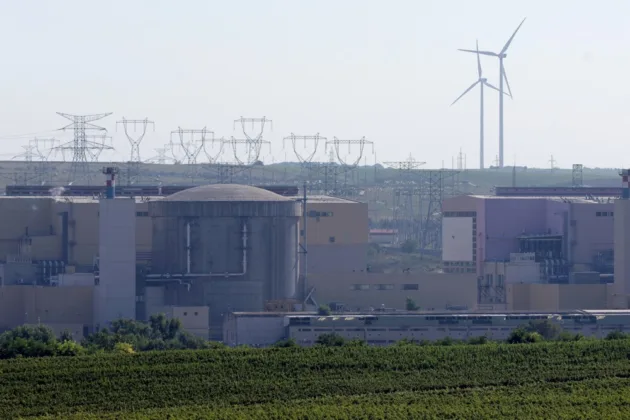








Hungary’s Paks nuclear power plant has stopped producing electricity for the first time in its 44 years of service, after record-low water levels on the Danube left its Soviet-built reactors without enough cooling water.
Prime Minister Péter Magyar said the penultimate generating unit was taken offline at 1.30am on August 2, cutting output to 240 megawatts, little more than a tenth of the plant’s usual 2,000. The last unit was powered down late on August 2 or on August 3, he told commercial broadcaster RTL.
Paks supplies close to half of Hungary’s electricity. Magyar said the plant could stay out of service for more than a month, with no significant rainfall forecast for the drought-hit region.
“We are facing the most critical five days ahead,” he said in a video message, as forecasters predicted temperatures of 40 degrees Celsius.
The plant draws river water to cool its condensers. The Danube fell to minus 131cm at Paks on August 1, below the previous record of minus 98cm set in 2018, leaving the intake pumps unable to lift sufficient volumes. A level of minus 134cm requires a full shutdown.
The Hungarian Government has ordered most rail freight to halt between 5pm and 10pm from August 3 and instructed public sector staff to work from home for the first three days of the week. Floodlighting on public buildings has been switched off.
Magyar said mandatory restrictions on large companies were not yet needed though could be introduced. Energy group MOL, carmaker Audi, battery producer Samsung SDI and parts supplier Denso are among the firms that have cut demand voluntarily.
Mark Radnai, deputy chairman of the governing Tisza party, put the potential cost at 100 billion to 200 billion forints (€250 million to €500 million) because of higher prices for imported power.
Magyar has blamed part of the shortfall on delays to the Paks II expansion, agreed by his predecessor Viktor Orbán with Russia’s Rosatom and still unfinished. Fidesz rejected that, arguing worsening river forecasts had given the new government weeks to build reserves.
European Commission spokeswoman Anna-Kaisa Itkonen said the shutdown could strain the regional electricity balance, adding that the EU executive was ready to call an ad hoc meeting of its Electricity Coordination Group.
Romania is facing the same problem. Its army detonated a rock formation in the Danube on August 3 to push more water towards the Cernavodă nuclear plant, where one of two reactors has been offline since July 28.