










US tech giant Google has agreed to sign the European Union’s new AI Code of Practice.
That was despite warning that the bloc’s rules could strangle innovation and slow the continent’s development of artificial intelligence.
Announced on July 30, the company framed its decision as a good‑faith move to keep Europe in the AI race.
“We do so with the hope that this Code, as applied, will promote European citizens’ and businesses’ access to secure, first‑rate AI tools as they become available,” the company said.
Even so, Google expressed unease over Brussels’ decision.
“While the final version of the Code comes closer to supporting Europe’s innovation and economic goals than where it began — and we appreciate the opportunity to submit comments — we remain concerned that the AI Act and Code risk slowing Europe’s development and deployment of AI,” it added.
The new rules target general‑purpose AI models such as OpenAI’s ChatGPT, Google’s Gemini and Elon Musk’s Grok on X, with particular emphasis on copyright issues.
Signatories would also commit to scrubbing data sourced from hacked websites or content containing insulting or violent speech to prevent such material from training AI systems.
One of the Code’s principles obliges AI developers to continually identify and mitigate “systemic risks” over a model’s lifespan.
The document, published earlier in July and set to take effect on August 2, has been sold by Brussels as a boost to legal certainty for developers.
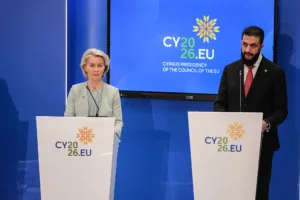
The Executive Vice-president of the European Commission for Technological Sovereignty, Security and Democracy Henna Virkkunen insisted the measure would foster innovation, not smother it.
“By providing legal certainty on the scope of the AI Act obligations for general‑purpose AI providers, we are helping AI actors, from start‑ups to major developers, to innovate with confidence, while ensuring their models are safe, transparent, and aligned with European values,” she said.
Google has now joined fellow signatories OpenAI and French AI start‑up Mistral.
Facebook owner Meta, though, wants nothing to do with it.
The company refused to sign, with global affairs chief Joel Kaplan blasting the Code on July 18 as regulatory overreach.
“We have carefully reviewed the European Commission’s Code of Practice for general‑purpose AI … models and Meta won’t be signing it,” Kaplan said.
“This Code introduces a number of legal uncertainties for model developers, as well as measures which go far beyond the scope of the AI Act.”
Meta’s rejection came after more than 40 European business leaders signed an open letter urging Brussels to ditch the AI Act altogether.
“We share concerns raised by these businesses that this over‑reach will throttle the development and deployment of frontier AI models in Europe, and stunt European companies looking to build businesses on top of them,” Kaplan warned.
The European Commission’s lack of understanding of the digital market it has tried to regulate has harmed the bloc’s competitiveness, according to a member of the European Parliament’s Committee on Industry. https://t.co/C6axDMR6A2
— Brussels Signal (@brusselssignal) April 25, 2025