




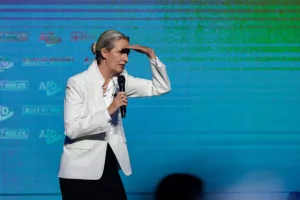

OpenAI has announced plans to open its first office in Spain, choosing Madrid as it races to keep pace with surging demand for its artificial intelligence (AI) tools.
The company behind ChatGPT said the new hub would open in the second half of 2026 and would deepen its work with Spanish firms, developers, universities and public-sector bodies.
The decision has handed Spain’s Socialist-led Government an opening to defend its regulatory record. Digital transformation minister Óscar López said the move proved that firm AI rules had made the country “more competitive”, rejecting the idea that regulation scares off investment.
He cast Madrid as a future hub for what the Government calls trustworthy AI, in line with its drive to present Spain as a model for responsible adoption.
That framing sits awkwardly with a broader complaint across the tech sector that the European Union’s AI Act and related red tape risk pushing innovation elsewhere.
OpenAI tied its choice to fast-rising usage rather than policy. Weekly active ChatGPT users in Spain have climbed more than 40 per cent over the past year, placing the country among the five largest markets in Europe.
Use of Codex, the firm’s coding assistant, has grown more than 11-fold since the start of 2026. Globally, ChatGPT is approaching 1 billion weekly users.
Spanish clients already include the banks BBVA and Santander, the business schools IE University and IESE, and the software company Factorial.
Emmanuel Marill, OpenAI’s general manager for the region covering Europe, the Middle East and Africa, said Spain combined strong user demand with “a government committed to AI”.
The Madrid office would join existing OpenAI bases in Dublin, London, Paris, Brussels and Munich, part of a push to build closer ties with European regulators and customers.
The firm said it would hire local staff for customer-facing, technical and public-policy posts, and would reveal the office’s exact location and recruitment plans in the coming months.
Economy minister Carlos Cuerpo welcomed the announcement as a “clear demonstration” of the strengths of the Spanish economy, pointing to its growth, competitive energy costs and skilled workforce.
The arrival lands as US AI giants compete for a foothold in Europe, where rivals Anthropic and Google are chasing the same enterprise market while navigating the bloc’s stricter rules.