



For the first time in decades, the threat of rationing has returned to Europe. Countries are already beginning to ration fuel – with Slovenia recently becoming the first – as the closure of the Strait of Hormuz reduces stockpiles.
But the European Union is quietly preparing for a different rationing programme altogether: Electricity. And, unlike the fuel shortages caused by the Iran War, this is a problem entirely of the EU’s own making.
Data centres are eating up electricity around the developed world. While this has been a boon in some areas – Loudon Country, Virginia, for example, makes roughly half of its taxes from data centres – it has also created a massive backlash from locals due to the belief that the data centres have caused a rise in prices. But they also use incredibly high amounts of electricity. In the United States, they use roughly 4.4 per cent of electricity, a number expected to rise to roughly 12 per cent by the end of the decade. The EU average in 2025 was roughly 1.5 per cent, though in some countries it was shockingly higher: Ireland set the world record in 2025 when data centres consumed 22 percent of the country’s electricity.
The European Union has a few ways of managing this issue. They could expand nuclear power, an energy source which produces little waste and immense amounts of energy for cheap. They could continue to rely on a mix of fossil fuels, nuclear power, and renewables for an “all of the above” energy strategy. Or, they could seek to force their population to rely on renewables and mandate the use of meters which restrict energy uses at certain times.
It does not take an expert in Brusselology to know which option they are taking.
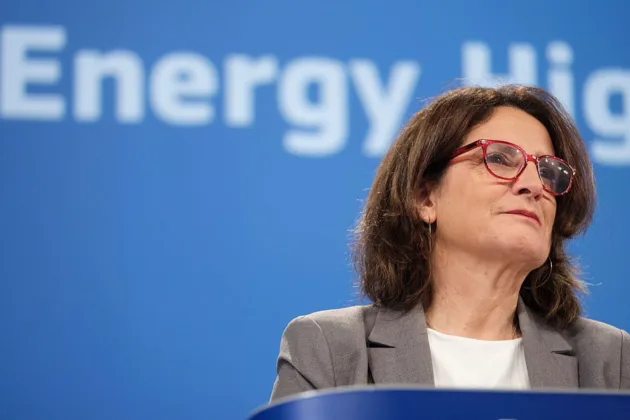
Enter the Strategic Roadmap for Digitalisation and Artifical Intelligence in Energy. The new document, which the European Commission will soon be putting to the European Parliament and Council for approval, is an attempt to manage the influx of data centres. Among other things, the new document calls upon the creation of “smart grids” and the use of “smart metering systems”. The former will allow for the “control needed to increase the uptake of renewables,” whereas smart metering systems can help in “reducing the curtailment of renewable energy and facilitating electrification.” The Commission is particularly excited about smart meters, which they argue will aid with “enabling consumers to better manage their energy consumption, save energy and lower their bill.” They also believe it will aid in the “transition to a clean energy economy”. Mentions of this transition – in the context of being concerned about how the building of more data centres may impact it – are sprinkled throughout the document.
In the various press releases and official documents related to the new initiative, another theme emerges as a common theme: Smart meters will help Europeans manage their energy consumption. As Politico put it, “The hope is this will prompt households to cut their electricity use at evening hours when demand is highest.”
Essentially, Brussels is dogmatically attached to achieving net zero by 2050. Nothing – wars, energy shortages, the development of brand new technologies which were not even being fathomed when the net zero promise was made six years ago – will shake them from that goal. It does not matter if China and India continue to pollute to a degree which renders Europe’s efforts almost irrelevant; net zero must be achieved. But because they also need data centres, the solution is to “prompt” households to cut electricity use.
Now, these are AI driven “smart” meters, which are therefore attached to a broader cloud. And again, one need not study the ways of Brussels to grasp what is happening here: Eventually, the “prompting” will turn into a mandate. Europeans will be expected to curtain energy use when “demand is highest,” and they will not have a choice; the AI-driven smart meters will cut it down for them.
The issue is that demand is usually high for a reason. In the summer, for example. Heat deaths already kill more Europeans than guns do Americans (including suicides); will those who rely upon AC in the heat of summer receive some sort of warning saying that they are using too much electricity at a peak time?
Sceptics may argue that this is over-thinking: “It’s just a way to help people use less electricity!” they will likely respond. But once it does not work, and people continue to keep the lights on and watch TV and use AC, what then? Will Brussels pack up and say, “Well, we tried?”, and reopen the coal mines?
Of course not. Look at the recent attempt to ban gas-powered vehicles. For years, Brussels and national governments made it easier to purchase electric cars. But when adoption was not moving at a rate fast enough for them, they just sought to ban them entirely, an effort which failed due to the rise of the populist-right.
Europeans should oppose these moves, and the right-wing majority in the European Parliament should pass language ensuring that Europeans will never be forced to ration electricity just so pointless Net Zero goals can be realised.
Otherwise, it may soon be lights out.