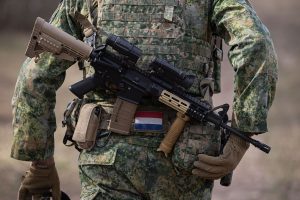




In their new international security strategy, the Dutch government argue that Europe must become less dependent on the United States for its security.
“With a sense of realism, the Netherlands is committed to reducing our critical unilateral dependencies,” the Dutch government says.
In a letter to the Dutch parliament, ministers warned that an increasingly aggressive Russia, a more assertive China, and what they described as a changing US posture towards Europe have created a new security environment that requires European countries to take greater responsibility for their own defence.
The strategy describes a shift in Dutch foreign and security policy. Strengthening European security becomes the Foreign Ministry’s primary objective until at least 2030.
“Committing to stronger European security is not a choice but a plain necessity,” the document states.
While reaffirming that NATO remains one of the main pillar of European security, the Dutch government argues that European countries must assume a far greater share of the alliance’s conventional defence burden.
The strategy outlines plans to build military capabilities more rapidly so that Europe can carry a larger share of collective defence responsibilities.
Dutch officials state that the objective is to ensure Europe can play “as autonomous a role as possible” in its own defence and deterrence.
The Netherlands also indicates that it is exploring ways to strengthen the European dimension of nuclear deterrence, including closer cooperation with France.
They also plans development of a stronger European defence industrial base and reduce reliance on external suppliers.
In order to achieve this new goals, the Netherlands states that it wants to move away from unanimity requirements in EU foreign policy decision-making.
“The geopolitical reality forces us to make choices,” the letter states.
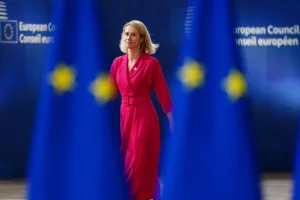
The end of EU member state veto right has been an objective of European Commission President Ursula von der Leyen. She argued that the EU should move to qualified majority voting (QMV) for parts of foreign and security policy so that a single government cannot block decisions.