

Europe has spent five months explaining that the Iran war is not its own, and a single Ukrainian operation has undone the explanation.
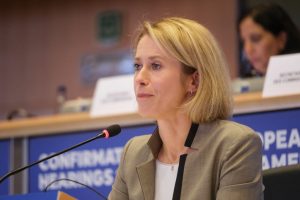
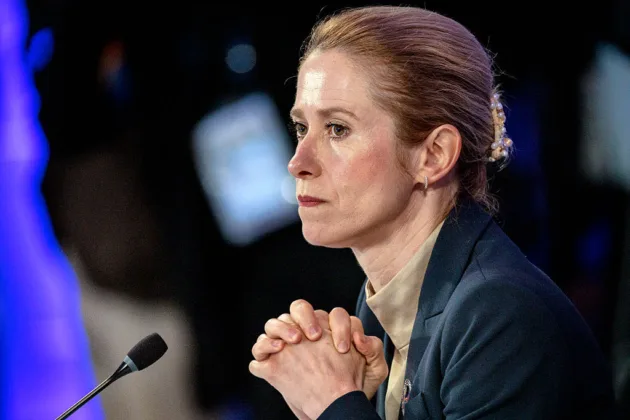
EU foreign policy chief Kaja Kallas put it as plainly as an EU official ever puts anything: “this is not Europe’s war”. She was right about intent. She was describing a decision Brussels had taken, not a position it occupies, and the two are not the same thing.
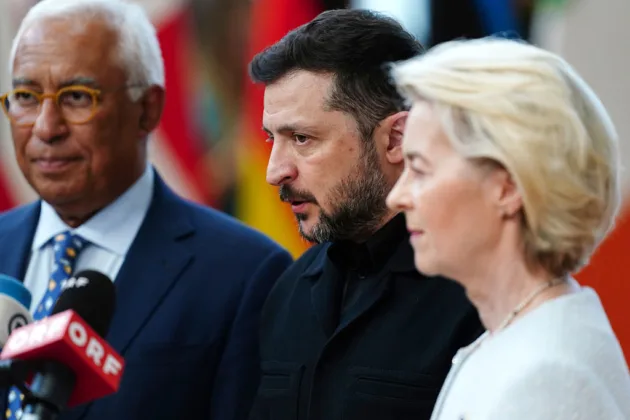
When Ukraine’s Security Service hit sanctioned cargo ships in the Caspian Sea on July 25, Iranian Foreign Minister Abbas Araghchi did not telephone Kyiv. He telephoned Kallas, told her the strike “cannot go unanswered” and demanded that the European Union hold the perpetrators and their backers to account.
The backers were the point of the sentence.
So the question is worth asking properly rather than rhetorically. Is Ukraine now a proxy of Brussels?
The case for yes is largely arithmetic. Team Europe has supplied about €69.3 billion in military aid since 2022. Of the €90 billion loan approved in April, some €60 billion is earmarked for Ukraine’s military industry rather than its budget, and repayment depends on Russian reparations no serious person expects to arrive.
Europe is not lending. It is buying.
Nor is it buying air defence. Germany’s defence ministry has said it would help finance “so-called deep strike capabilities”, a phrase with no defensive reading available. Bilateral European aid attributable to drones reached roughly €1.6 billion in the first four months of 2026 alone. The drones that reached the Caspian are the product European money ordered.
Adversaries have already drawn the conclusion. Moscow published the addresses of European drone plants and a senior Kremlin figure called them potential targets. Tehran skipped the intermediate step and addressed Brussels directly.
Yet the label does not fit, for a reason that ought to trouble European governments rather more than the label would.
A proxy takes instruction. Ukraine does not. Washington warned Kyiv against striking non-Russian vessels in the Black Sea, and the warning survived a matter of days before Ukrainian drones hit a ship Tehran describes as Iranian and civilian. If the United States cannot impose a target restriction and have it hold, Brussels certainly cannot.
The Caspian strike formed part of a 40-day campaign Volodymyr Zelensky announced on June 25, and no European institution was consulted about any of it, because none is entitled to be. The European Council did not vote. The European Parliament was not asked. There is no mechanism by which either could have been.
Europe is therefore not a principal directing a proxy. It is the guarantor of an actor it cannot instruct — carrying the liability of a belligerent with the leverage of a spectator.
That is not a lesser position than proxy sponsorship. It is a worse one.
The consequences are collected domestically whatever the constitutional theory says. Brent slipped about 5 per cent on July 27 to just under $92 (€81) a barrel and Dutch gas fell below €59 per megawatt hour when the bombing paused, relief that lasted precisely as long as the pause. Storage across the continent stands at 54.2 per cent against 65 per cent a year earlier, and the shortfall will be bought at whatever the next escalation charges for it.
Voters have noticed ahead of their governments. The share of Poles who want arms shipments to Ukraine stopped has risen from 18.3 per cent in December 2022 to 45.2 per cent by July 2026. Poland is not a marginal case. It is the member state that took the Russian threat seriously first and longest.
Brussels has a filing category ready for such people. European Commission President Ursula von der Leyen promised in June 2024 to “build a bastion against the extremes from the left and the right”, and doubt about an open-ended military commitment now files neatly under that heading.
It is an efficient arrangement. The policy cannot be debated, because questioning it is treated as evidence of extremism, and the extremism is demonstrated by the questioning.
Ukraine is entitled to fight its war as it judges best, and Kyiv has a stronger claim to that entitlement than most. What is not available, and what nobody in Brussels has yet been asked to defend in public, is the arrangement Europe currently occupies: one party selects the enemies and another underwrites them.
Kallas may still be proved right that this is not Europe’s war. She will not be proved right by saying so.