




The third great German delusion is von der Leyen’s Green Transformation. It revolves around the EU Green Deal, which aims for climate neutrality by 2050 and substantial emission reductions by 2030. Its core elements are the expansion of renewable energy sources (wind, solar, hydro) through massive public subsidies, a carbon pricing regime (EU Emissions Trading System) and the decarbonisation of the European industrial sector.
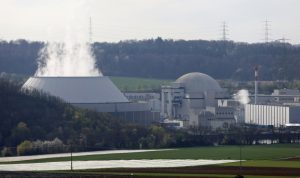
The Green Transformation was foreshadowed by Germany’s Energiewende (energy transition), launched by Merkel long before the EU Green Deal, aimed to phase out coal, reduce reliance on other fossil fuels and to phase out Germany’s then world-leading civilian nuclear industry.
Germany’s economics minister Habeck of the Green party, a former children’s books author, stepped up and expedited Merkel’s green policies from 2021 and later oversaw the closure of Germany’s last remaining nuclear plants. He famously boasted, though there may be pains during the transition phase, German heavy industry could be fully powered by “renewables” without raising production costs and that the New Germany was on the verge of another second “green” economic miracle.
The Wall Street Journal took a different and more realistic view as early as January 2019. In analysing the cost structure of renewable energy, it concluded that the Energiewende was foolhardy even by German standards and would go down in economic history as the “dumbest energy policy” the world had yet seen.
As so often and notwithstanding sceptical assessments from outside the EU, German politicians, once they had decided on a policy, decided to stay the course, or, as they would have put it, “kept their nerve”, as “final victory” surely would be just around the corner.
Meanwhile, the annual economy-wide costs associated with Germany’s climate and energy transition have risen sharply. According to a 2025 study by Frontier Economics for the German Chamber of Commerce and Industry (DIHK) , total annual system costs for the Energiewende — including grid expansion, generation investment and operating costs — are projected to reach roughly €212–229 billion per year from 2030 onward, with required annual investment in energy, transport, buildings and industry projected at €113–316 billion by 2035. Federal subsidies, tax expenditures and support measures for renewable energy and decarbonisation run into many tens of billions of euros annually.
The effects on German living standards and industrial competitiveness have been profound. Electricity prices provide a good barometer of the significant costs imposed on both industry and consumers by Germany’s climate policies. German households today pay among the highest, if not the highest, electricity prices in the world — approximately €0.39–€0.40/kWh in 2024, compared with roughly €0.25–€0.28/kWh in France, the highest in the EU, and substantially lower prices in the United States ($0.12–$0.16/kWh) and China (as low as $0.08/kWh in some regions).
Germany now combines some of the highest electricity prices in the industrialised world with very high petrol, fuel and household heating costs, reflecting a mix of taxation, carbon pricing, energy-transition policies and the post-2022 restructuring of European energy markets. The Energiewende has contributed to making Germany one of the world’s highest-cost major industrial locations for energy-intensive production.
According to a German government report, “German industrial production has been on a downward trajectory since 2018” and “significant declines” have occurred “in energy-intensive sectors in particular” because of persistently high energy costs. In 2022 Germany recorded its first trade deficit in over 30 years. Whilst exports have since partially recovered, over 40 per cent of companies in energy-intensive industries have started or are considering relocating production abroad.
German industrial employment peaked in 2018 at around 5.7 million jobs. Since then, employment in manufacturing has fallen by approximately 250,000, to around 5.4–5.5 million in recent years. Forecasts from industry analysts such as EY suggest further declines, with potential additional job losses in the high tens of thousands annually under continued structural and energy-cost pressures.
The worst affected sectors have again been the energy-intensive automobiles and chemicals sectors – traditionally Germany’s largest and most profitable export industries. Unemployment as a whole is also on the rise and reached 3 million or 6.8 per cent in 2025. This figure does not include many millions of migrants who have been resident in Germany for years, but are neither working nor are required to be, registered as available for full-time or even part-time. A staggering 40 per cent or so of the €1 trillion the German government raises through income tax every year are earmarked exclusively for migrants and climate rescue policies.
Overall, the German economy has been contracting for the last three successive years, with at best extremely minimal growth projections for the years ago, based largely only on the expected stimulus by Chancellor Merz’ €1 trillion-plus “debt programme” passed in 2025. Much of that sum, however, has been pledged for rearmament and in particular military equipment purchases from the US, while a large share of the remainder will have to be used for subsidising social spending, especially on Germany’s growing migrant population.
In fact, there is no better example of the calamitous effects German’s climate policy than the fate of its once mighty car industry: Successive German governments and a German European Commission president, Ursula von der Leyen, have been the main drivers behind the EU’s decision to phase out all combustion engine cars by 2035. Germany’s traditional car industry was the country’s biggest private employer and most profitable industry. German politicos, for ideological reasons, decided to dismantle it, when it had already become clear that in terms of reliability, battery capacity and cost German EVs were outperformed both by their US and Far Eastern competitors.
Up to the late-2010s Germany was running record trade surpluses and near full employment, nearly balanced budgets, dominating the world’s car industry, and recording growth rates at between one to just over two per cent even with a slowly declining indigenous population. That period, the mid-1910s, will almost certainly go down in economic history as Germany’s last ever (mini-) boom and the end of Germany’s decade-long post-WWII period prosperity.
The tipping point came in 2015 when Merkel decided on an open-door unskilled migration policy and on a world-climate rescue mission with Germany herself only accounting for a share of about 1.8 per cent of world-wide CO2 emissions. Spending at least €400 billion a year or about one-tenth of its annual GDP on “investments” in mass migration and high-risk, low-return renewable energy policies, are financial commitments no economy can sustain. Least of all a country whose prosperity and international competitiveness depends on low-cost predictable energy supplies to sustain its energy-intensive industrial export base because it leaves no fiscal room for much needed investments in human capital and digital technologies where Germany is lagging most other advanced economies.
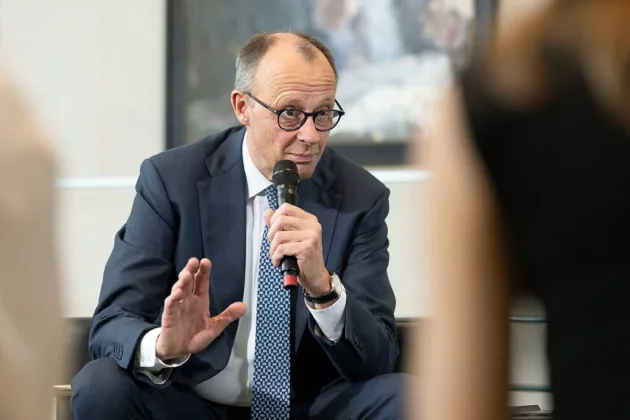
Germany’s current Chancellor, Friedrich Merz, almost certainly sealed the fate of Germany’s once mighty industrial economy when he decided both against a badly needed radical reversal of his predecessors’ migration and climate policies and in favour of trebling military spending to face challenges which arguably do not exist. Merz, who won the 2025 election promising fiscal restraint, migration reform, and to restore industrial competitiveness upon perusing the public accounts appears to have decided that Germany was beyond redemption and that all he could hope for was a deficit-driven cyclical boom which may get him re-elected. With growth forecasts ranging from 0.2 per cent to 1.1 per cent for each of the next three years, his €1 trillion spending spree may well make history as the most expensive unsuccessful election ever.
(Part IV be continued next week)
Dr Gunnar Beck is a legal academic and practising barrister specialising in EU law. He has been Reader in EU law at SOAS, University of London since 2005, and also taught at Oxford University, the LSE and MCC in Budapest. He was an MEP from 2019-2024 for AfD and deputy legal adviser (EU law) at the London House of Commons until 2010.