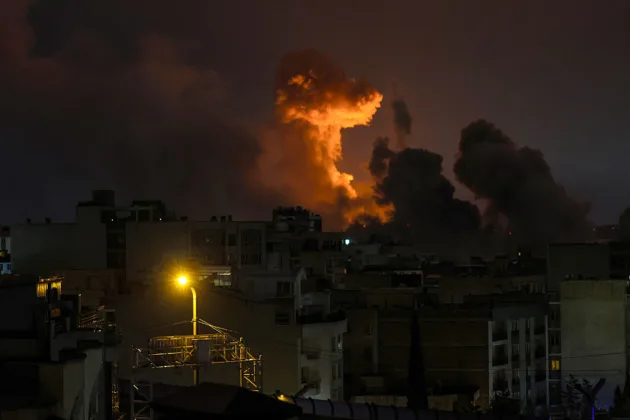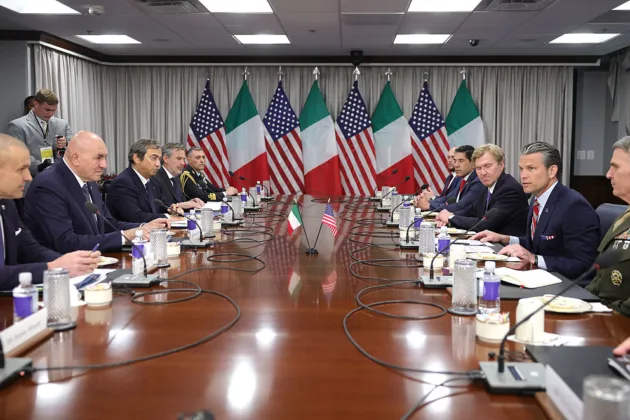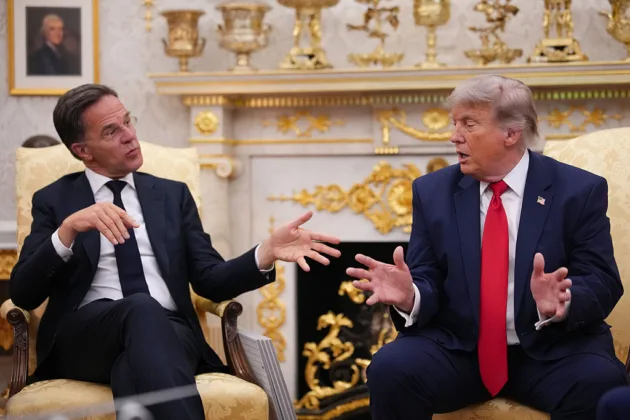



Iran has accused Italy of being complicit in the US-led military campaign against Tehran after NATO Secretary General Mark Rutte said American aircraft had operated from US bases on Italian territory during the conflict.
The diplomatic row erupted after Rutte, speaking in an interview with Fox News on June 23, said around 500 US military aircraft had taken off from American bases in Italy in support of Operation Epic Fury, Washington’s campaign against Iran.
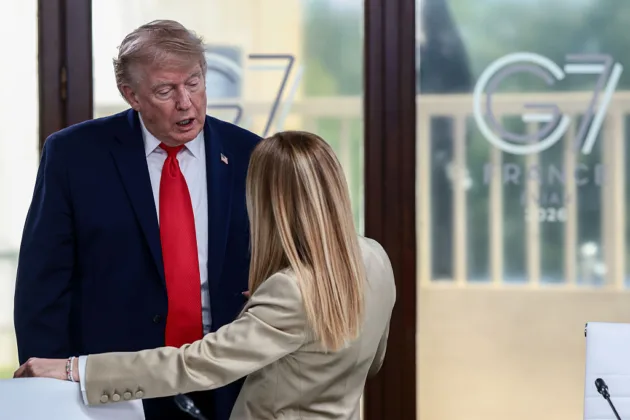
He also cited Romania among the European allies that had made military facilities available to support the operation, arguing that “country after country” had contributed through existing bilateral agreements. His remarks appeared to contradict repeated assurances from Prime Minister Giorgia Meloni’s government that Italy had not participated in combat operations.
Reacting to the comments, Iranian Foreign Ministry spokesman Esmail Baqaei accused Italy and Romania of facilitating what Tehran described as the US “aggression” against Iran. Speaking at his weekly press briefing on June 26, Baqaei said Rutte’s comments amounted to an admission that European countries had supported Washington’s military campaign.
“The statements by the NATO Secretary General constitute an acknowledgment of the involvement of certain European countries in the US aggression against Iran,” Baqaei said.
He added that “Italy and Romania must clarify the role they played in allowing their territory to be used for this aggression”, arguing that permitting national territory to support military action against another state “constitutes a violation of international law and entails responsibility for the states concerned”.
Baqaei also said Tehran expected “an official explanation” from the Italian government following Rutte’s remarks.
Italian Foreign Minister Antonio Tajani sought to defuse the dispute through a phone call with his Iranian counterpart, Abbas Araghchi, on June 25. According to Tajani, he reiterated that “Italy has never taken part in any military initiative and has never authorised the use of its bases for acts of war against Iran”, stressing that Rome had acted in full compliance with its bilateral agreements with the United States.
During the conversation, Tajani also called for the full reopening of the Strait of Hormuz to allow the safe passage of Italian merchant vessels still affected by the regional crisis, while describing the reopening of Italy’s embassy in Tehran as “a strong signal of dialogue” aimed at restoring political, economic and cultural relations between the two countries.
Defence Minister Guido Crosetto criticised Rutte’s intervention, saying the NATO Secretary General had created confusion by failing to distinguish between the presence of US forces stationed in Italy and direct Italian participation in military operations. Rome has maintained that it complied with both its constitutional constraints and its alliance obligations, authorising only logistical and technical support while refusing requests related to combat missions.
The controversy has intensified pressure on Meloni’s government, with opposition parties demanding that the Prime Minister report to parliament on the extent of US military activity conducted from bases in Italy during the conflict and whether previous government statements accurately reflected those operations.