








A statement by NATO Secretary General Mark Rutte has triggered a political controversy in Italy and raised new questions about the role European allies played in the recent US attacks against Iran.
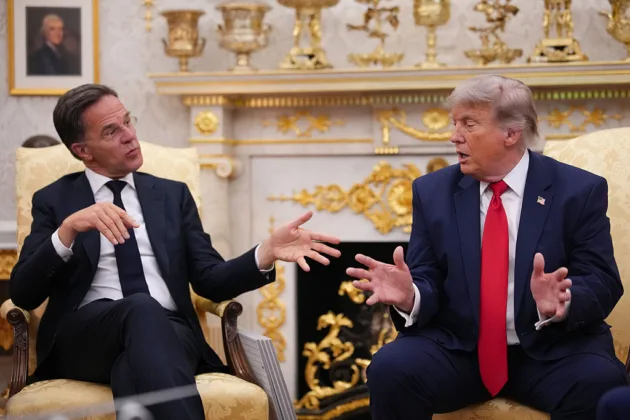
Speaking to Fox News on June 23, Rutte sought to rebut criticism from Washington that European allies had failed to support the United States during Operation Epic Fury, the US bombing campaign against Iran that took place earlier this year.
As evidence of European support, Rutte cited Italy. “I fully understand the disappointment, but if you take Italy, 500 American aircraft flew from the American bases in Italy to support the operation. That’s a huge number,” he said, adding that between 4,000 and 5,000 flight missions had been carried out across Europe.
The remarks immediately sparked controversy because they appeared to contradict repeated assurances from Prime Minister Giorgia Meloni’s government that Italy had not participated in military operations against Iran and had not authorised its territory to be used for offensive actions.
The dispute comes amid broader tensions between Washington and several European governments over the Iran conflict, with many reluctant to align fully with US and Israeli positions on the war.
Throughout the crisis, Italy stressed its non-belligerent role, insisting that any activities involving US forces stationed in the country were limited to obligations under NATO and bilateral agreements.
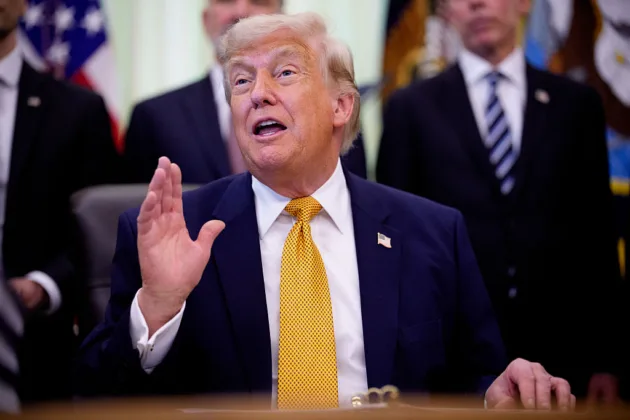
That position reportedly irritated President Donald Trump, who accused some European allies of benefiting from US security guarantees while avoiding the political costs of supporting Washington’s confrontation with Iran.
In the White House view, Italy appeared to distance itself publicly from the operation while still hosting key American military infrastructure in the Mediterranean and relying on the US security umbrella.
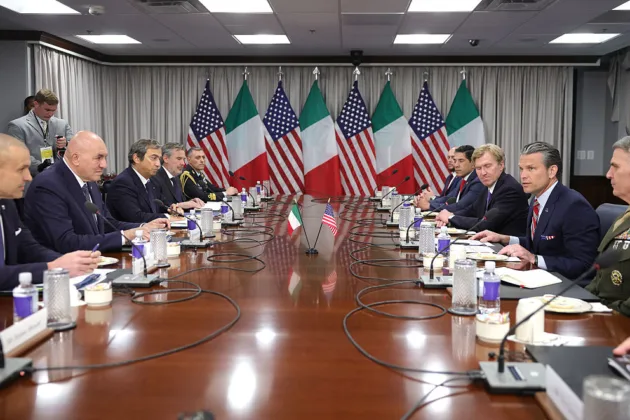
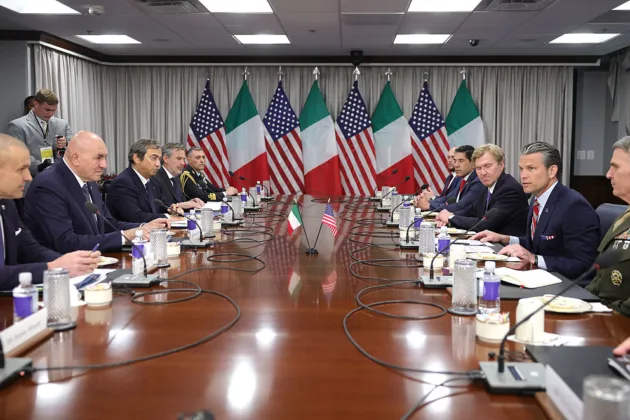
Rome reacted quickly to Rutte’s comments. Defence Minister Guido Crosetto said the NATO chief had created a misleading impression, insisting that Italy had authorised only logistical and support activities, not combat missions against Iran.
The Meloni government maintained that Italy had not taken part in the strikes and that its actions remained fully consistent with existing agreements governing the presence of US forces on Italian territory.
Italy hosts a dozen major US military installations, as well as several smaller logistics and intelligence sites. Around 12,000–15,000 US military personnel are stationed in Italy, making it one of the largest US deployments in Europe after Germany. These forces operate in close coordination with the Italian armed forces under NATO command structures, with highly integrated planning, shared infrastructure and joint operational frameworks that enable combined operations across the Mediterranean and beyond.
At the centre of the controversy is a key question: Can the United States use its bases in Italy whenever it wants?
Bases in Italy hosting US forces remain under Italian sovereignty and operate under NATO and bilateral agreements. Major operational uses of these facilities such as for Epic Fury Operation require coordination with Italian authorities and political authorisation from Rome.
According to the Italian government, permission in this case was limited to logistical, transit and support functions linked to US deployments. Rutte’s comments, however, highlighted the scale of that support, indicating that around 500 US aircraft departed from Italian bases during the operation—effectively forcing Rome to acknowledge that US facilities in Italy were used, a point which both sides now accept.
The controversy comes at a sensitive moment in US–Italy relations, with broader debates over NATO burden-sharing and the Iran conflict already straining transatlantic ties.
Prime Minister Giorgia Meloni finds herself under pressure from two sides: On one hand from Donald Trump, who has accused several allies of not acting as fully reliable partners in supporting US foreign policy, and on the other from Italian public opinion, where sympathy for Trump and for US foreign policy has fallen to historically low levels.
According to a YouTrend survey for Sky TG24 (April 2026), around 79 per cent of Italians disapprove of Trump’s handling of international crises, including Iran, while only 7 per cent express approval. Broader European studies, including those by the European Council on Foreign Relations, similarly indicate limited trust in US leadership under Trump, with Italy reflecting a wider pattern of scepticism across Europe.