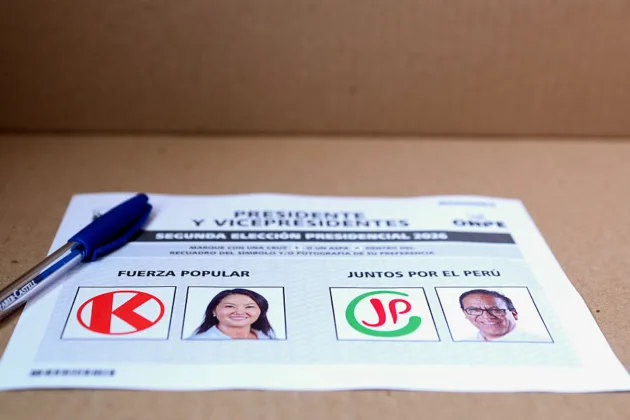




Peru’s presidential runoff has remained deadlocked, with neither right-wing candidate Keiko Fujimori nor her left-wing rival Roberto Sánchez able to claim a clear victory four days after the vote.
The latest official count put Sánchez fractionally ahead on about 50.1 per cent against Fujimori’s 49.9 per cent, reversing a narrow lead she had held earlier in the day of the June 7 ballot. Just a few thousand votes separated the pair.
The figures came from the National Office of Electoral Processes (ONPE), with more than 94 per cent of tally sheets processed. No winner has been declared.
The electoral authority said it was still counting ballots from rural areas and from Peruvians abroad, while hundreds of disputed tally sheets were sent to special juries for review.
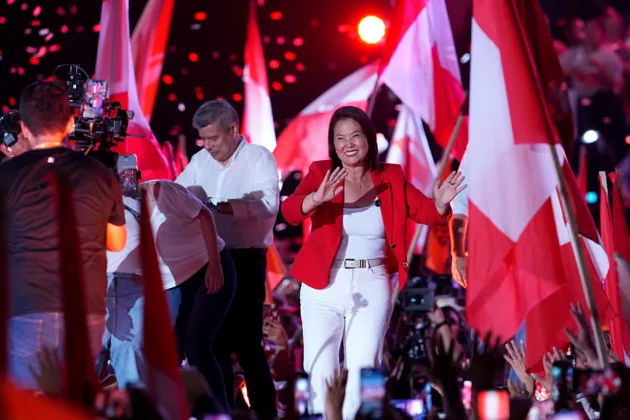
Fujimori, daughter of former president Alberto Fujimori, urged caution and said it would be irresponsible to call the result from a partial sample. She added that she would accept whatever the final count showed.
Sánchez, a congressman and former trade minister under former president Pedro Castillo, moderated his campaign in its closing weeks while courting rural voters with promises of anti-poverty measures, police reform and a new constitution drawn up through citizen participation.
He has also pledged to pardon Castillo, who is serving a prison sentence over his failed attempt to dissolve Congress in 2022.
Fujimori favoured private investment and economic continuity, while Sánchez argued for a bigger role for the State and higher spending to cut inequality. The contest laid bare deep divisions in a country gripped by years of political turmoil.
The National Jury of Elections (JNE) said the official result of the second round would not be known for about 30 days. After the first round in April, final figures took more than a month to confirm amid thousands of contested ballots.
The outcome echoes the 2021 runoff, when Fujimori lost to Castillo by roughly 44,000 votes after a count that dragged on for weeks. This is her fourth attempt at the presidency.
Crime and political instability dominated the campaign, with the winner set to become Peru’s ninth leader in a decade. More than 27 million people were eligible to vote.
“Whoever wins will have half the country against them,” Paulo Vilca, a political analyst at the Peruvian Studies Institute, told AFP.