








In a move which appeared to unite the Polish government and opposition, the country’s defence minister has announced Poland’s proposal for a new permanent US military base on its territory.
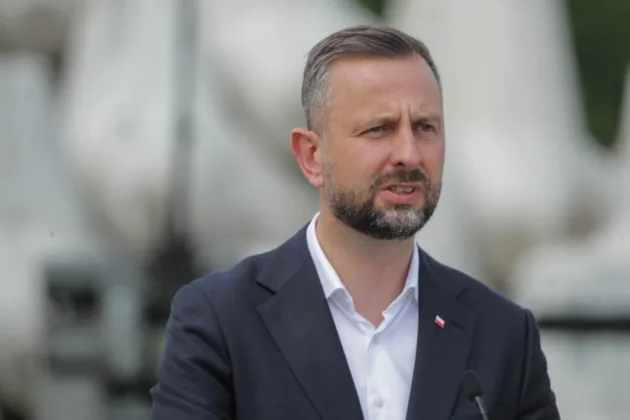
Władysław Kosiniak-Kamysz said on June 3 that he has submitted such a proposal to US Secretary for War Pete Hegseth.
“US engagement in Poland’s security is not diminishing. On the contrary, it may become even greater,” Kosiniak-Kamysz wrote on X, adding that a “secure Poland means a strong army, a strong society and strong alliances”.
He later told reporters that Poland was determined to increase the US military presence in Poland, which it sees as a key to providing it with security from Russia.
“We will do everything to increase the presence of American troops. We will create conditions that will be attractive to our American partner”, said the defence minister, adding that Warsaw spends $15,000 (€13,000)a year for every US soldier stationed in Poland which he saw as “an investment and not a cost”.
Kosiniak-Kamysz noted that “final decisions have not been made yet, but we are on the right track” and that the “American side expects details and commitments and we are currently working on this.”
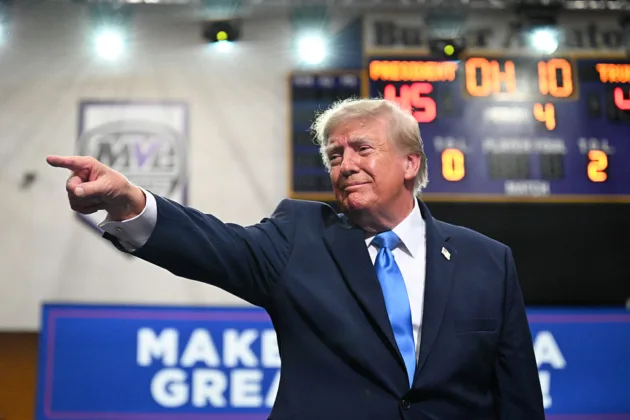
The proposal comes after mixed signals from Washington over its military presence in Poland. Last month, the Pentagon cancelled a planned rotation of around 4,000 US troops to Poland, but later changed course when US President Donald Trump announced that his country would be sending an additional 5,000 soldiers to Poland, a move the American head of state said was a response to a request from his political ally, the Polish President Karol Nawrocki.
However, it remains unclear whether the troops would replace the cancelled deployment or amount to a broader increase in the American military presence.
Trump, who returned to office in January last year, has repeatedly accused European NATO members of getting a “free ride” from Washington and his administration has moved to reassess US global military priorities, putting greater emphasis on homeland defence, the Western Hemisphere and deterring China.
However, Trump and members of his administration have publicly commended Poland for its defence efforts and called it a model ally.
It was felt in Warsaw that the confusion over troop movements was the effect of the Pentagon wishing to implement Trump’s announcement to reduce the numbers of troops in Germany made after Trump’s objections to German Chancellor Friedrich Merz’s criticism of the US over the war in Iran.
The Pentagon realised that moving troops from permanent bases in Germany would entail moving families, therefore it announced that a brigade, set to be stationed in Europe on a rotational basis in Europe, would instead be kept at home.
That move led to criticism from both Republican and Democrat members of Congress who argued that it was unfair, on the one hand, to praise Poland’s ramping up of military spending to almost five per cent of GDP, the highest such level in NATO, and call the country a “model ally” only then to cut its US troops compliment.
Republicans, triggered by their Polish political allies in Poland’s opposition Conservatives (PiS), pushed back hard against Hegseth’s move on the grounds that it was an embarrassment to Trump and Polish opposition allied President Nawrocki.
The Trump administration enjoys good relations with Nawrocki and PiS while its relations with the centre-left government led by Prime Minister Donald Tusk are strained because Tusk once alleged Trump was a Russian asset and he and his allies have cast doubt on whether the US was a reliable ally.
Once Trump announced his administration’s change of heart Polish officials from both the government and the President’s chancellery began to press for a permanent US base to provide greater clarity and security at a time of heightened tensions in Central and Eastern Europe caused by the war in Ukraine.
Poland, a NATO member that borders Ukraine, Russia’s Kaliningrad exclave and Moscow-allied Belarus, has been on edge since Russia launched its full-scale invasion of Ukraine in 2022 and sees the 10,000 soldiers stationed on a rotational basis, the second largest US troops presence in Europe after Germany, as a key to its security.
The US is Poland’s most important security partner. In 2023 it established its first military garrison in Poland and in the following year it opened a new missile defence base in the country.
Poland has been consistently upgrading its military forces with American equipment buying Patriot air-defence systems, F-16 and F-35 fighter planes, Himars rocket launchers, Abrams tanks and Blackhawk helicopters.
There have been reports in the Wall Street Journal (WSJ) that the US is considering involving Poland in NATO’s nuclear sharing programme, meaning that some US nuclear weapons could be stationed on Polish soil.
Asked about the WSJ reports on the Polish government controlled broadcaster Radio Trójka deputy defence minister Paweł Zalewski however denied rumours about any negotiations between Poland and the US over nuclear sharing.
In 2024 the then PiS allied President Andrzej Duda clashed with foreign minister Radosław Sikorski when the head of state said that Poland was ready and willing to participate in the nuclear sharing programme saying this was not Polish government policy.
The ruling centre-left government seems to have adopted a dual approach to relations with the Trump administration.
On the one hand the defence minister Kosiniak-Kamysz, who leads the centre-right Polish People’s Party (PSL) which is a member of Tusk’s ruling coalition, seems to have established close relations with the US administration.
Good relations with the PSL on the part of the Trump administration have led to rumours that the US may be trying to broker a pro-Nawrocki government composed of the former ruling PiS, the PSL and the centrist Poland 2050 party led by former parliamentary speaker Szmon Hołownia, but Kosiniak-Kamysz has thus far rejected such overtures.
On the other hand Włodzimierz Czarzasty, the Speaker of Poland’s Parliament and leader of the Left Party, another Tusk coalition ally, has said Trump cannot be trusted and infuriated the US ambassador to Poland Tom Rose so much by saying the US President did not deserve the Nobel Peace Prize that the US embassy cut off relations with him.
Tusk himself has said he is in favour of close transatlantic ties but on the other has backed French President Emmanuel Macron’s calls for “European strategic sovereignty”, widely interpreted as a call for Europe to handle its one defences without reference to the US, and has opposed any assistance to the US over its war with Iran.
It is Karol Nawrocki and PiS who remain the Trump administration’s chief allies in Warsaw. So much so that Nawrocki and PiS have refused to criticise the US intervention in Iran, rather hinting that Poland should be doing more to help the US President and questioning Poland’s participation in the EU’s Security Action for Europe (SAFE) loans programme when it excluded the purchase of US equipment.
Trump backed Nawrocki in last year’s Polish presidential election and his administration has since allowed Tusk’s enemy, former PiS justice minister Zbigniew Ziobro whom the Polish PM is prosecuting for alleged abuse of power, to move from Europe to the US, much to the Warsaw government’s annoyance.
While there is political consensus about the presence of US troops in Poland the public is not so sure about a permanent military base. A recent poll by the IBRiS agency which asked if Poland should host a new US military base showed that while 44 per cent approved of the idea 41 per cent were opposed.
The lower poll ratings for the US presence in Poland than has been the case in the past stem from a decline in trust towards the US since Trump’s arrival in office, stemming from political attacks on the President from the liberals and the Left in Poland and widespread criticism in EU and west European circles.