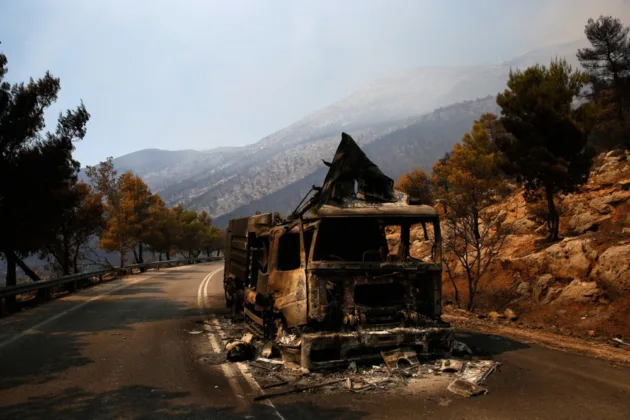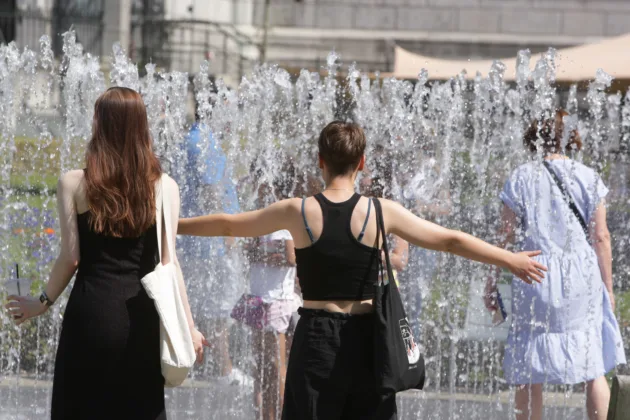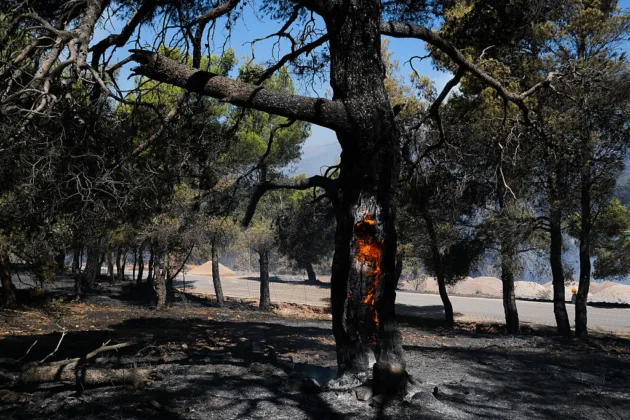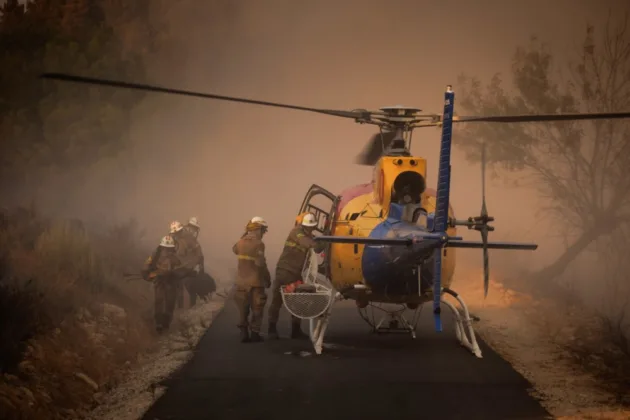




Wildfires and successive heatwaves across Europe have already inflicted more than €3 billion in economic losses in 2026, according to an analysis by the Financial Times.
The figure covers only the cost of restoring burned land in the five worst-affected eurozone countries, France, Spain, Portugal, Greece and Romania, and already exceeds the European Commission’s estimate of average annual wildfire costs for the entire European Union (€2.5 billion).
Nearly 500,000 hectares have burned in the first two months of the fire season.
The €3.1 billion estimate is based on the Commission’s own methodology for restoration costs (returning land to its previous state) and aligns with French government calculations.
It does not include damage to homes, businesses, agriculture, tourism, higher future insurance premiums or extra spending on firefighting equipment.
Experts, including climate economist Sarah Meier of ETH Zurich, warn that the true economic toll could ultimately be more than three times higher.
France and Spain have borne the brunt. In Gironde, a single fire destroyed around 42,000 hectares and forced the evacuation of some 220,000 people; local industry, including aerospace firms such as Safran, Dassault Aviation and ArianeGroup, was temporarily disrupted.
In Spain, tens of thousands of hectares of farmland and pasture have been lost and firefighting costs alone have been estimated in the range of €1.7–3.3 billion for the year so far.
These damage figures stand in stark contrast to the far lower cost of prevention.
Experts consistently note that investment in forest management, prescribed burns, clearance of undergrowth and early detection is a fraction of the expense of suppression and recovery.
In Spain, industry representatives estimate that annual prevention spending runs at roughly €800 million, while one euro spent on prevention can save around €100 in firefighting costs.
Across much of Europe, roughly 90 per cent of wildfire budgets still goes on extinguishing fires rather than preventing them.
Governments have long been urged to reverse this imbalance.
Analysts argue that sustained, relatively modest annual outlays on landscape management would substantially reduce both the frequency of large fires and the multi-billion-euro bills that now arrive every summer.
COMMENT: Heat alone does not devour entire provinces. Fire is natural, but catastrophe is political. Iberia in 2025 burns not because the sun is cruel but because its leaders are weak, writes @rpintoborges. https://t.co/6D2TDRS0gG
— Brussels Signal (@brusselssignal) August 27, 2025