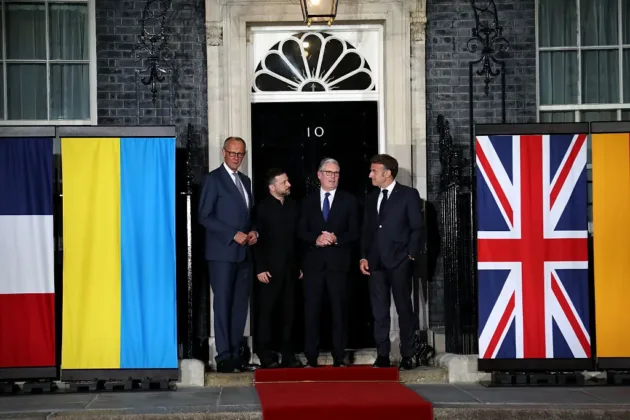

The leaders of the United Kingdom, France and Germany have backed Ukrainian President Volodymyr Zelenskyy’s call for direct ceasefire talks with Russia, in a joint statement issued after a summit in London on June 7, 2026.
British Prime Minister Keir Starmer hosted Zelenskyy alongside French President Emmanuel Macron and German Chancellor Friedrich Merz at 10 Downing Street, as the Ukraine War stretched into its fifth year.
The three leaders said they supported a proposal for direct dialogue between Ukraine and Russia, with active US and European participation, aimed at securing a ceasefire and supporting further negotiations. They added that the current line of contact should serve as the starting point for any talks.
The statement also said that “international borders must not be changed by force”. The wording reflected long-standing Ukrainian demands that any settlement respect the country’s territorial integrity.
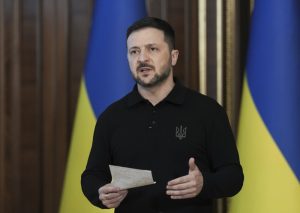
The European backing came days after Zelenskyy made his first direct appeal to Russian President Vladimir Putin since 2022. In an open letter published on June 4, the Ukrainian leader proposed a face-to-face meeting and said he was ready for a full ceasefire.
Zelenskyy used the letter to place responsibility for the war on Putin personally, noting that the Russian leader had spent close to half of his 26 years in power waging war against Ukraine. Kyiv said the message had been sent to Moscow but also shared with its Western partners, including the US.
The letter appeared a day after Ukraine launched a large-scale drone strike on St Petersburg, hitting an oil terminal as Putin opened his flagship economic forum in the city.
Moscow’s response was largely dismissive. Kremlin spokesman Dmitry Peskov said Zelenskyy could travel to Moscow “any time”, adding that Putin had not yet been shown the letter.
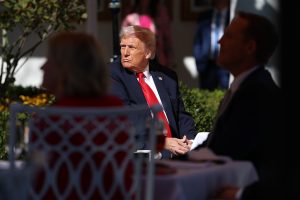
Putin himself rejected the overture, saying he saw “no point” in such a meeting before a peace deal had been agreed. US President Donald Trump took the opposite view, saying it would be positive for the two leaders to meet, though Washington’s recent diplomatic efforts have centred largely on Iran.
The E3 leaders condemned Russia’s large-scale missile and drone strikes on Ukrainian cities, including the repeated use of Oreshnik missiles, which they said had taken a heavy toll on civilians. Russian attacks continued to kill civilians in the days before the summit.
They also underlined an urgent need to step up production of interceptors and to jointly develop anti-ballistic missile and deep-strike capabilities. Kyiv has repeatedly pressed its Western allies for more air-defence munitions as it faces daily Russian bombardment.
The United Kingdom, France and Germany, known informally as the E3 group, have been among Ukraine’s most prominent backers since Russia launched its full-scale invasion in February 2022. The UK and France lead the “coalition of the willing”, an initiative intended to provide security guarantees for Ukraine as part of any future peace process.