
European leaders have signalled they are ready to take the lead in negotiations to end Russia’s war in Ukraine, with Berlin insisting the effort would stay closely coordinated with the United States.
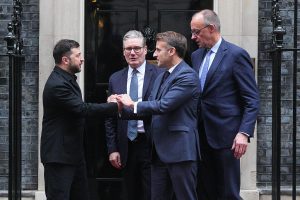
The shift was set out by Stefan Kornelius, spokesperson for German Chancellor Friedrich Merz, after the leaders of Ukraine, France, Germany and the UK met in London on June 7.
Kornelius said Europe was taking up and continuing a negotiating process that Washington had largely led until now. He added that the push would proceed in tandem with the US rather than in competition with it.
“We need the broadest possible support from all European partners,” he said.
The remarks followed a joint statement by Merz, French President Emmanuel Macron, British Prime Minister Keir Starmer and Ukrainian President Volodymyr Zelensky calling for direct dialogue between Kyiv and Moscow with the active participation of the US and Europe.
The four laid out five conditions for peace. These were an immediate and complete ceasefire, the current front line as the starting point for any talks, robust and legally binding security guarantees for Ukraine, the retention of frozen Russian assets until Moscow ends the war and pays for the damage, and direct Ukraine-Russia negotiations involving both the US and European powers.
European leaders would discuss their approach further at the G7 meeting in Évian, eastern France, and at a European Council summit in Brussels in the coming days, according to Kornelius.
He cautioned that it could take weeks or even months before Russian President Vladimir Putin agreed to sit down at the negotiating table.
The European push has come as the US has increasingly turned its attention to the conflict with Iran, leaving the diplomatic track on Ukraine with little forward momentum.
US envoys Steve Witkoff and Jared Kushner had led mediation efforts between the two sides since early 2025 but without significant results, according to Politico.
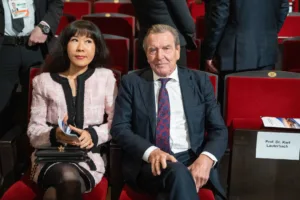
Putin had earlier floated former German Chancellor Gerhard Schröder, a long-standing Kremlin ally, as a possible negotiator. European capitals quickly rejected the idea.
It remains unclear whether the Russian leader is willing to negotiate with European governments at all, having so far kept them at arm’s length from direct talks despite their long-stated wish to shape any settlement.