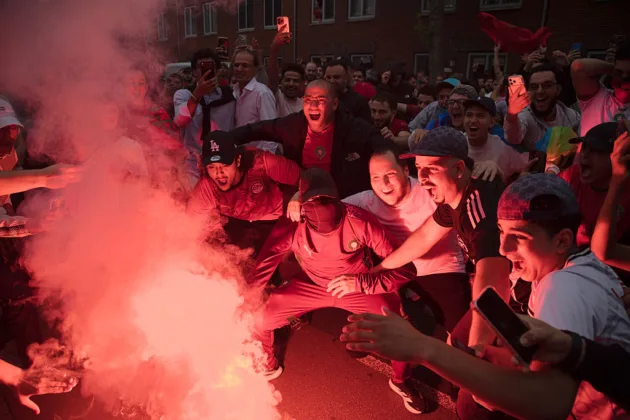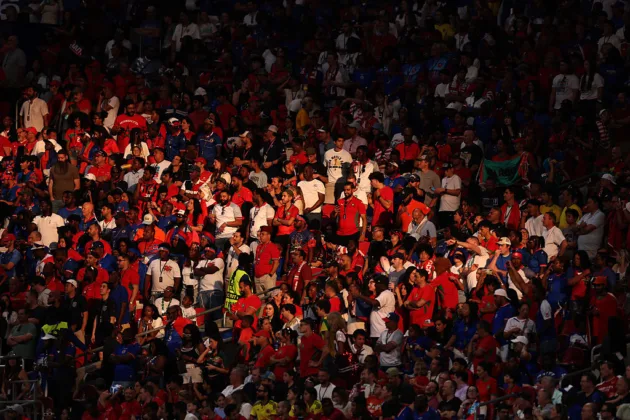










The commander of the Amsterdam police has admitted that officers largely refrained from intervening during disturbances involving Moroccan-Dutch fans after a football match because attempting to maintain order on minor offences would have led to “war.”
In an interview with De Telegraaf, police chief Sander van der Hulle explained the decision not to crack down on smaller infractions, stating: “If you start enforcing on minor offences, it becomes war.”
After the Moroccan national team played against the national team of Canada, during which fireworks were set off, public order was disrupted, and confrontations with the police occurred across Amsterdam.
However, the police remained largely passive.
This turned out to be a conscious policy by the police to prevent escalation.
Only in the case of very serious riots, the police would have moved in.
According the police chief, this has caused the evening to pass without major problems.
“We realise that as soon as we intervene in Amsterdam-West, we may find ourselves dealing with disturbances all evening, with windows being smashed and cars set alight.”
“I think we handled it well. It was a controlled display of jubilation by fans of the Moroccan national team, without causing any major disruption to public order.”
Many people saw it differently and would have preferred a strong reactions against the vandalism and provocations that took place.
Media reported how youths got “free reign” and masked individuals (illegal in the Netherlands) created mayhem in the city.
“Lots of young lads ride at high speed along the pavement, narrowly missing families with children. They do wheelies on fatbikes and scooters. Requests from the police to ride around them are met with a middle finger or a barrage of abuse”, De Telegraaf wrote about the evening.
It appeared the police wasn’t even considering making arrests and preferred fraternising with young Moroccan football supporters.
A stark contrast was noted, “to groups of young people who constantly display defiant behaviour on their fast fatbikes and scooters and are increasingly seeking confrontation”.
In other cities in the Netherlands, the police was more active and made arrests. There order was said to have returned more quickly
In one part of the city, Amsterdam-Osdorp, the police did come out in numbers and when the mobile units arrived, the provoking Moroccon youths left the scene.
The commander’s remarks have sparked strong criticism, with opponents accusing the police of capitulation and selective enforcement based on fear of escalation.
Dutch Politician Geert Wilders posted on X, saying “Only cowards surrender”.
Wierd Duk, a prominent reported, called it “capitulation”.
Still, the chief of police claimed that wrongdoers will be punished and that around 200 fines have been issued against people who broke the law.
POV: Zo zag Amsterdam plein 40-45 eruit nadat Marokko de wedstrijd had gewonnen. 🇲🇦
En politie is in geen velden of wegen te bekennen. pic.twitter.com/yjoklmUWW1
— Symphony (@Symphony_res) June 30, 2026