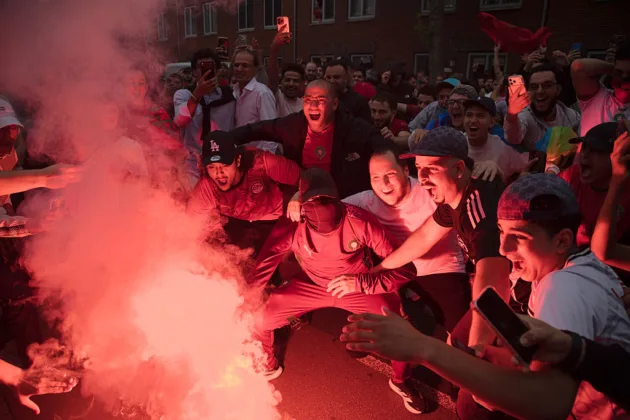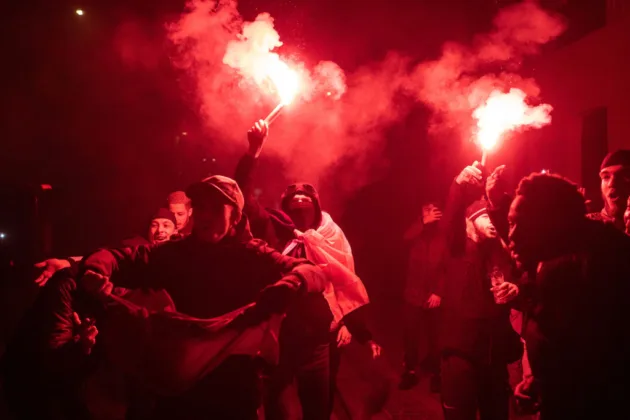





Morocco’s penalty shoot-out victory over the Netherlands at the World Cup has sparked celebrations and street clashes across several Dutch cities, with riot police making 17 arrests in The Hague and Rotterdam. The disorder follows a now-familiar pattern, the team’s wins having repeatedly triggered unrest in European cities in recent years.
The last-32 tie in Monterrey, Mexico, finished 1-1 after extra time on Monday night before Morocco prevailed in a shoot-out. PSV Eindhoven forward Ismael Saibari converted the decisive penalty to send his side into the last 16, where they would face co-hosts Canada.
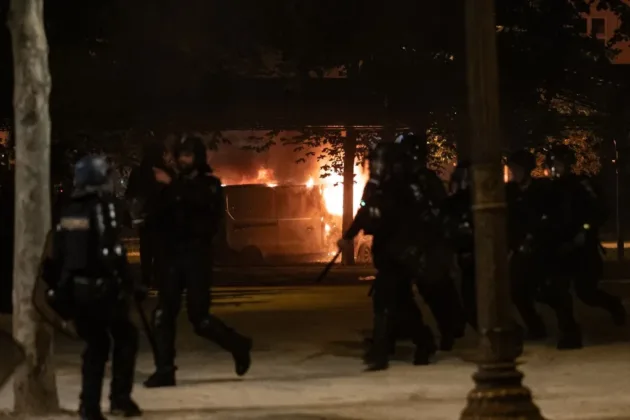
In The Hague’s Schilderswijk district, home to one of the country’s largest Moroccan populations, fans waved flags, set off fireworks and danced in the streets. The mood soured around an hour later when riot police moved in, deploying a water cannon and baton charges.
Police said officers had been pelted with fireworks and stones. AFP reporters at the scene saw officers strike several young men with batons before pinning them to the ground.
Of 13 people detained in The Hague, four were held for public violence and the rest for disturbing public order. In Rotterdam, officers cleared a central street after a local 90-minute limit on post-match celebrations expired, with four more arrests.
Authorities said order was quickly restored, with the area returning to normal aside from “a few troublemakers”.
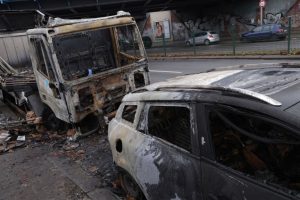
The scenes echoed repeated disturbances during the 2022 World Cup in Qatar, when Morocco’s victories set off unrest in European cities with large Moroccan communities. In Brussels, police used water cannon and tear gas after the side beat Belgium that November, as rioters torched a car and pelted officers.
Days later, around 100 people were arrested on the Champs-Élysées in Paris following Morocco’s quarter-final win over Portugal. The Hague itself saw clashes in December 2022 after the team reached the last 16, with several arrests and a police officer injured.
Celebrations of Morocco’s victories in Schilderswijk have become a tradition, and, as in other European cities, they have repeatedly ended in confrontation with police.