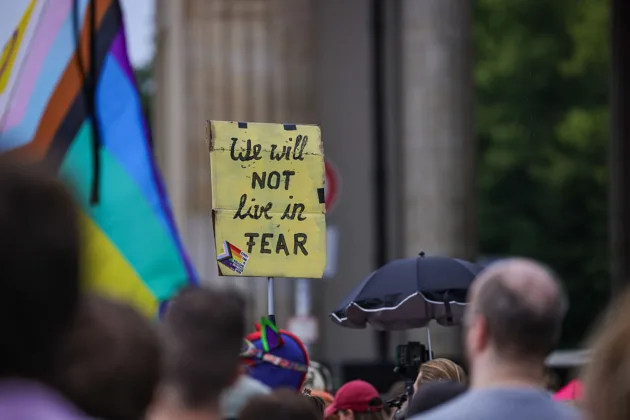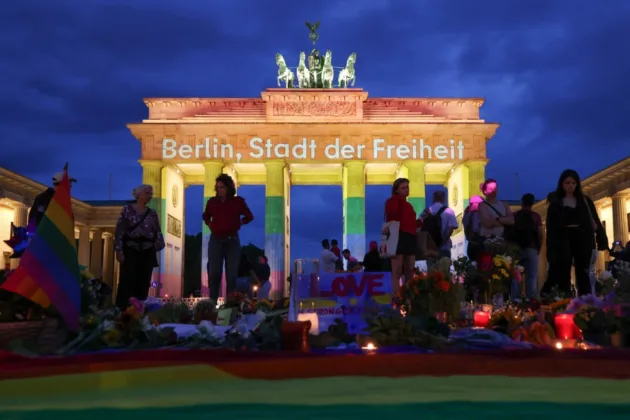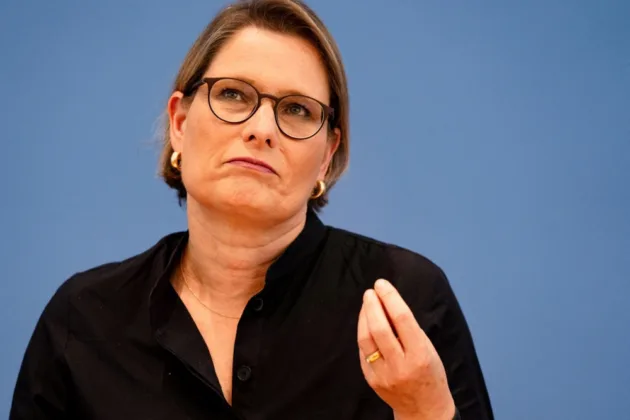

A political controversy has erupted in Germany following the attack on Berlin’s Christopher Street Day (CSD), after Berlin’s queer commissioner Alfonso Pantisano defended his claim that LGBTQ+ people are under threat from “conservative forces” and said that Islamist groups should also be included in that category.
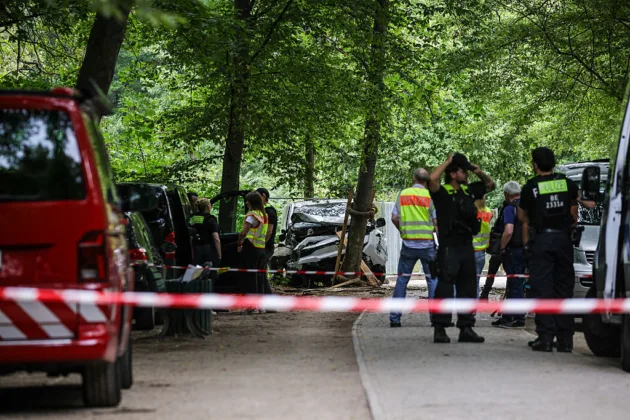
The attack took place on the evening of July 25, 2026, when Abdul Ballout, a 21-year-old German citizen with Lebanese roots, drove a hired minibus into pedestrians near the closing rally of the parade in the Tiergarten park in central Berlin.
He then attacked passers-by with a machete, according to federal interior minister Alexander Dobrindt, who described the attack as Islamist terrorism.
A 65-year-old Polish woman was killed and 31 people were injured, several of them critically. Police shot Ballout dead in the Spandau district of western Berlin the following evening, ending a manhunt of almost 24 hours.
A juvenile court in the Tiergarten district had sentenced Ballout on May 12, 2026 to one year and 10 months for preparing a serious act of violence endangering the State and for distributing Islamic State (ISIS) propaganda, then lifted his arrest warrant and released him under a deferred probation arrangement.
Federal prosecutors said on July 28, 2026 that investigators had found a video on a phone in the rented vehicle in which a masked man, presumed to be Ballout, pledged allegiance to ISIS.
Pantisano, a member of the Social Democratic Party (SPD), made the remarks while discussing threats facing the LGBTQ+ community in the aftermath of the attack. He has held the post since it was created by Berlin’s Christian Democratic Union (CDU) and SPD coalition in May 2023.
The attack reignited a broader political debate in Germany over the sources of anti-LGBTQ+ hostility. Critics on the right and some political commentators accused parts of the German left of repeatedly identifying conservative and right-wing movements as the main threat to gay people while paying insufficient attention to Islamist extremism and other forms of religiously motivated hostility.
Days before the attack, Pantisano had told the rbb programme Abendschau that queer people were being politically targeted “from the right and above all by conservative forces, by right-wing extremists and neo-Nazis”.
Asked by the same broadcaster on July 26, 2026 whether he stood by that assessment, he responded that he did, defending his broader definition of the forces he considered a threat to LGBTQ+ people.
Pantisano argued that the term “conservative forces” should also include religious groups that oppose LGBTQ+ rights.
He said: “Yes, because by conservative forces I also include all religious groups, which all have a problem with us, and Islamists belong to that.”
The statement immediately became the focus of a wider political dispute in Germany.
Critics argued that Pantisano was placing fundamentally different categories under the same label, warning that Islamist movements should be understood as political extremist organisations rather than as a form of ordinary conservatism. They accused him of blurring the distinction between mainstream conservative parties, religious communities and extremist groups.
Berlin’s own domestic intelligence service treats the two as separate phenomena. Its 2024 annual report devoted a special chapter to the ways in which supporters of both right-wing extremist and Islamist groups stoke homophobic and anti-queer prejudice.
The service’s report for 2025, published in June 2026, put the number of people attributed to the Islamist scene in Berlin at about 2,590, up from 2,440 a year earlier.
The dispute has fed into a broader argument over security and migration policy, in which Chancellor Friedrich Merz has reopened the question of stripping citizenship from dual nationals convicted of the gravest terrorist offences.
Berlin’s Governing Mayor Kai Wegner has called for pressure and controls on radical mosques to be increased with the aim of banning them, and for state-supervised Islamic religious education in Berlin schools.
Cem Özdemir, minister-president of the German state Baden-Württemberg, criticised Muslim umbrella organisations for issuing statements that did not name the anti-gay character of the attack or the perpetrator’s stated religious motive.
Pantisano later expanded on his position in an interview about the aftermath of the CSD attack, arguing that hostility towards LGBTQ+ people could emerge from different ideological and religious environments. He said that discrimination against queer people had appeared in several historical contexts and that the issue should not be reduced to a single political or religious source.
Born in 1975 in Waiblingen, southwest Germany, to parents from Calabria in southern Italy, Pantisano has often spoken about his Italian roots and his experience growing up between different cultural backgrounds.
Before becoming Berlin’s queer commissioner he sat on the board of the Lesbian and Gay Federation in Germany (LSVD), the country’s largest LGBT rights organisation, and chaired the Berlin SPD’s equality committee.
His family background has also attracted attention because of his brother Luigi Pantisano, who has been co-leader of Germany’s left-wing party Die Linke since June 20, 2026.
Luigi Pantisano was elected without a rival candidate at a party congress in Potsdam, eastern Germany, with 53.3 per cent of the vote, days after he had compared the CDU to the AfD and to fascists in an interview with Bild. He later apologised for the remark.
The two brothers have become notable figures in German politics because of their different roles on the left. Alfonso Pantisano has focused on LGBTQ+ rights and anti-discrimination policy, while Luigi Pantisano has built his career within Germany’s socialist left.