





German justice minister Stefanie Hubig has called for a ban on discrimination based on sexual identity to be written into the country’s constitution, four weeks after an Islamist attack on Berlin’s Christopher Street Day parade. She told the newspaper Rheinische Post the wording should be added to Article 3, paragraph 3 of the Basic Law.
That article already prohibits anyone being disadvantaged or favoured on grounds of sex, descent, race, language, homeland and origin, faith, religious or political opinions and disability. Hubig, a member of the Social Democratic Party (SPD), said it was only logical to extend the list and that talks were still needed inside the government.
The Christian Democratic Union (CDU) and its Bavarian sister party, the Christian Social Union (CSU), have resisted the change for years. Their parliamentary group leader Thorsten Frei said on August 8 that he did not consider it necessary and that it would overload the constitution.
Günter Krings, a deputy leader of the group, has argued that amending Article 3 would prevent no attack and stop no perpetrator. He said unequal treatment on grounds of sexual orientation was already barred by the Basic Law, by German equal treatment legislation and by the EU Charter of Fundamental Rights.
Susanne Hierl, the group’s legal affairs spokeswoman, has described sexual identity as too imprecise a term to belong in the constitution and said its inclusion would bring no substantial improvement in protection.
Support inside the Union comes mainly from state level. The Bundesrat, Germany’s upper house, approved an identical bill in September 2025 on the initiative of Berlin, whose governing mayor Kai Wegner is a CDU member.
That text now sits in a Bundestag committee alongside a similar bill from the Greens. Amending the Basic Law requires two-thirds majorities in both chambers, which cannot be reached without Union votes.
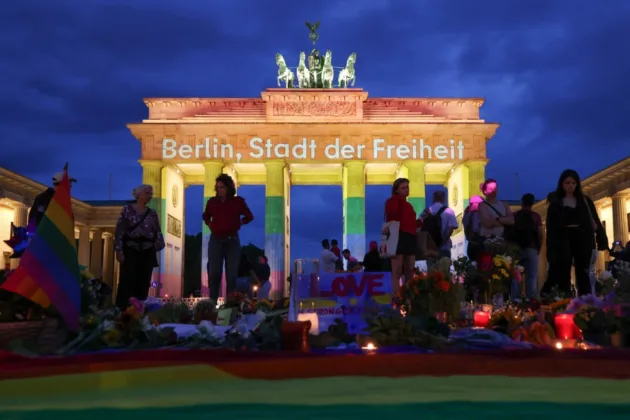
Hubig said several Union-led state governments supported the plan and pointed to Chancellor Friedrich Merz’s message to gay and lesbian Germans after the attack. A van was driven into a crowd in Berlin’s Tiergarten park on July 25, killing a 65-year-old Polish woman and injuring 31 others.
Abdul Ballout, a 21-year-old German citizen of Lebanese background, was shot dead by police the following evening after a manhunt lasting almost 24 hours. A juvenile court had released him 10 weeks earlier.
Hubig has rejected calls to try young suspects classified as security threats under adult criminal law. She said applying it across the board risked driving their radicalisation further.