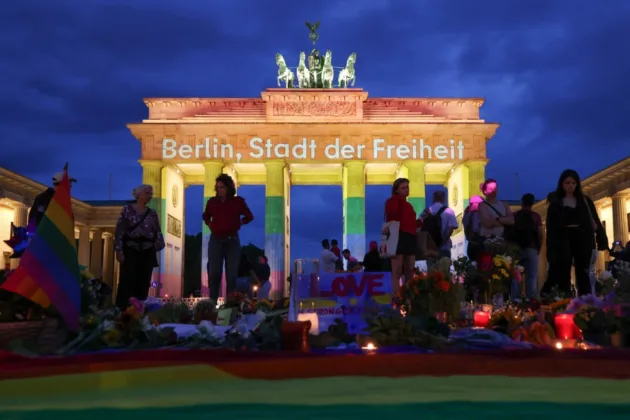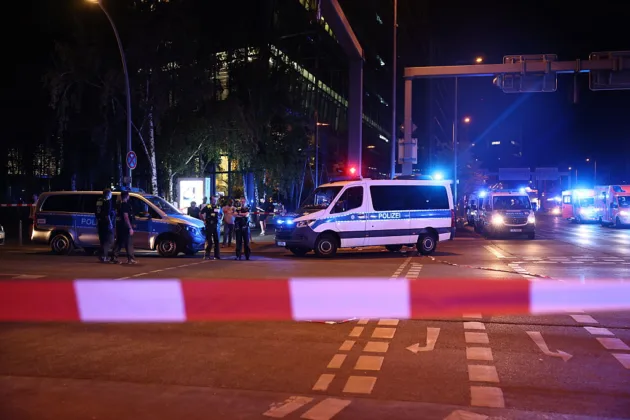










More than half of Germans have said they no longer regard their country as stable and safe, according to a poll published a week after the Islamist terror attack on the margins of Berlin’s Christopher Street Day (CSD) parade.
The survey found 51 per cent of respondents rejected the statement that Germany is a stable and safe country. Some 37 per cent agreed and 12 per cent were undecided.
Personal perceptions of safety have shifted less sharply. Around 38 per cent said their sense of security had clearly or somewhat declined since the attack, while 54 per cent reported no change and 7 per cent said they felt safer.
The poll was carried out by the Civey institute for the Funke Mediengruppe, which questioned 5,000 adults online between July 28 and July 30. The findings were first reported by Die Welt.
Abdul Ballout, a 21-year-old German citizen with Lebanese roots, drove a hired minibus into pedestrians near the closing rally in Berlin’s Tiergarten park on July 25 before attacking passers-by with a machete.
A 65-year-old Polish woman, who had accompanied her daughter to the parade, was killed. Another 31 people were injured, several of them critically.
Federal interior minister Alexander Dobrindt described the assault as Islamist terrorism. Police shot Ballout dead in the Spandau district of western Berlin the following evening, ending a manhunt of almost 24 hours.
Ballout had been classified as a Gefährder, the German designation for people considered capable of politically motivated violence. He had been convicted two months before the attack of preparing a serious act of violence and of distributing Islamic State propaganda.
The case has revived argument over migration and internal security. Chancellor Friedrich Merz has reopened the question of stripping citizenship from dual nationals convicted of the gravest terrorist offences.
Berlin justice senator Felor Badenberg has called for juvenile criminal law to be reviewed, while the city’s Governing Mayor Kai Wegner wants tighter controls on radical mosques with a view to banning them.
Social Democrat parliamentary group leader Matthias Miersch has urged Merz to attend a CSD event, arguing that political leaders should be visible at such gatherings while the community affected is still grieving.
The polling lands weeks before three regional elections. Saxony-Anhalt votes on September 6, with Mecklenburg-Vorpommern and Berlin following on September 20.
The right-wing Alternative for Germany (AfD) leads surveys in all three contests and topped a poll in the capital for the first time in July, though Germany’s other parties continue to rule out governing with it.