

European Council President António Costa has welcomed the entry into force of a trade agreement with the United States that removes European Union duties on American industrial goods, describing it as a good day for Europe.
The rules took effect on July 1, eliminating all EU tariffs on US industrial imports and granting preferential access to the European market for certain American agricultural and seafood products.
In return, the US has agreed to a ceiling of 15 per cent on the tariffs it applies to most European exports.
Speaking at a press conference in Dublin, Costa said the bloc disliked tariffs but favoured trade deals. He cast the agreement as an example of how the EU could secure a fair and predictable commercial relationship with Washington.
The European Commission has said the removal of EU duties would save importers and consumers around €5 billion a year.
The deal has drawn criticism from many MEPs, who regard it as lopsided because the EU has dropped its own duties while accepting a US levy on European goods.
Costa stressed that both Europe and the US remained sovereign, adding that the 27 member states had chosen to act together as a Union.
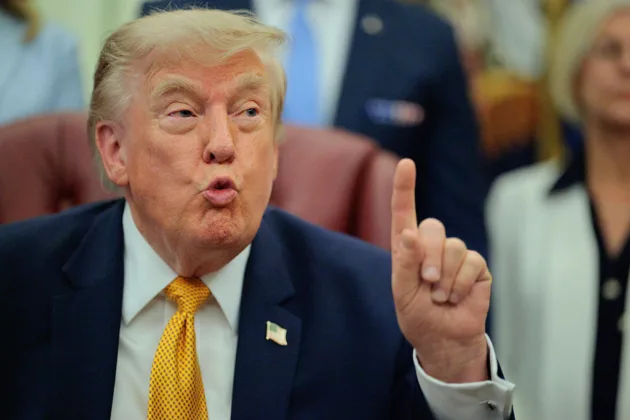
The agreement was reached in July 2025 by European Commission President Ursula von der Leyen and US President Donald Trump, with a joint statement following in August.
Under conditions secured by the European Parliament, the deal would expire at the end of 2029 unless renewed. The European Commission could also suspend it should Washington fail to lower tariffs on European steel and aluminium by the end of 2026.
Costa said the bloc had spent the past year building a network of trade agreements, pointing to recent deals with India, Mexico and Indonesia. He put the number of concluded accords at 84, with a further 27 under negotiation.
The Portuguese socialist made the remarks in Dublin, where Ireland began its six-month presidency of the Council of the European Union on July 1.
Costa also pledged that the EU would keep pressing Russia over its invasion of Ukraine during the Irish term. He said Irish principles would guide the bloc’s unity in supporting Kyiv.
The EU would maintain pressure on Moscow for as long as necessary, Costa said, to force it to move from the battlefield to the negotiating table.