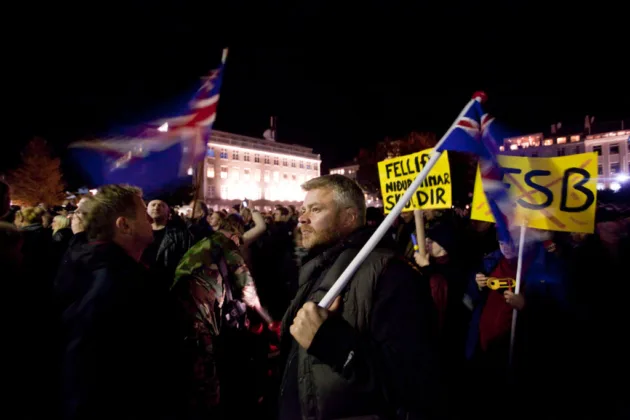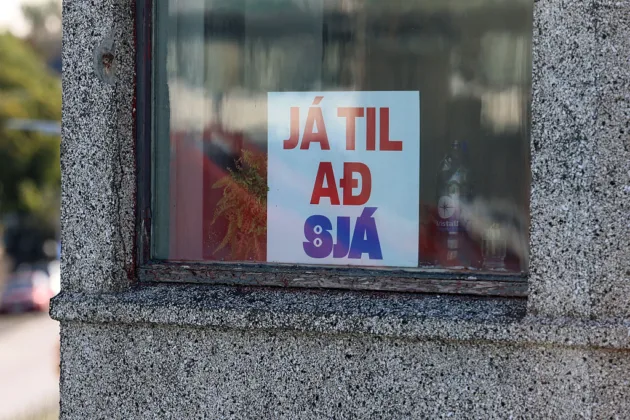



Early voting has begun in Iceland ahead of an August 29 referendum on whether the Nordic island should resume negotiations to join the European Union, reopening a question that has divided the country for more than a decade.
From July 27, Icelanders can cast their ballots at district commissioners’ offices across the country, at some municipal offices, and at embassies and consulates abroad. Around 50 polling stations have been established domestically and approximately 130 overseas.
Voting abroad is available at Icelandic diplomatic missions, at the consulates general in Winnipeg in Canada, Tórshavn in the Faroe Islands and Nuuk in Greenland, and at honorary consuls. The exception is Iceland’s permanent mission to NATO in Brussels, where no ballots will be taken.
The referendum will ask voters a single question: Should negotiations on Iceland’s membership in the European Union start again? The question is already printed on the ballot paper, with only two options, yes or no. The result is advisory and does not bind parliament or the government.
The electoral register was published on July 24. Icelandic citizens aged 18 and over with legal residence in Iceland are entitled to vote, along with citizens who have moved abroad within the past 16 years. Foreign nationals resident in Iceland have no vote in national referendums.
The National Electoral Commission expects early voting to account for between 15 and 20 per cent of ballots, in line with previous elections, although officials have noted there is little precedent for holding a nationwide vote at the end of August.
Under the Elections Act, no 112/2021, the commission is also responsible for producing official neutral information explaining the referendum question. Voters can access material through its dedicated website and a printed information booklet that will be delivered to households in the coming weeks. The commission has put the cost of running the vote at between 500 million and 600 million Icelandic krónur (€3.5 million and €4.2 million).
The vote follows a pledge made by Prime Minister Kristrún Frostadóttir’s coalition government after taking office in late 2024. The policy statement agreed on December 21, 2024, by the Social Democratic Alliance, the Reform Party and the People’s Party committed the three parties to a referendum no later than 2027, a timetable later brought forward.
Frostadóttir announced the August date on March 6, 2026. Parliament approved the referendum on May 28, ending years of political deadlock over Iceland’s relationship with the EU. In the 63-seat Althingi, 34 members voted in favour, eight against and 14 abstained.
Iceland applied for EU membership in July 2009 following the collapse of its banking sector and formal talks opened the following year. Negotiations stalled in 2013 when a centre-right government suspended the process. In 2015, Reykjavík formally informed Brussels that it no longer wished to be considered an EU candidate.
Since then, Iceland has remained closely integrated with Europe through the European Economic Area (EEA), the Schengen free-travel zone and the European Free Trade Association, while staying outside the EU itself. Foreign minister Þorgerður Katrín Gunnarsdóttir has said that alignment could allow talks to be completed in around 18 months.
Fishing remains the most politically sensitive issue in Iceland’s EU debate. The sector is one of the country’s largest export industries, and successive governments have resisted any arrangement that could place Icelandic fishing grounds under the EU’s Common Fisheries Policy (CFP).
Under the CFP, decisions on quotas and access to fishing grounds are managed collectively at EU level rather than by individual member states alone. For Iceland, this raises concerns about losing authority over its natural resources as it could mean foreign vessels gaining greater access to Icelandic waters.
Recent polling suggests the referendum could be closely contested. A Maskína survey for DV published on June 13 put support for resuming talks at 53.1 per cent against 46.9 per cent among those expressing a preference, with 14.6 per cent undecided. A Gallup poll for Viðskiptablaðið found 54 per cent opposed to membership itself and 46 per cent in favour among those taking a position.
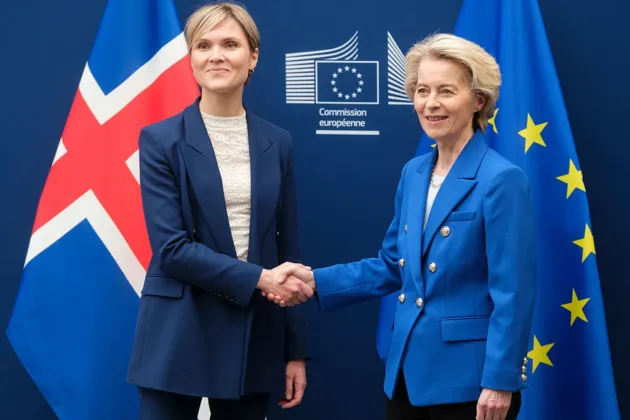
Brussels has welcomed the vote. European Commissioner for Enlargement Marta Kos said a “significant decision now lies ahead for the Icelandic people”, describing the bloc as an anchor of values, prosperity and security. Commission President Ursula von der Leyen met Frostadóttir in Brussels in January to discuss the question.
The referendum campaign is also taking place amid concerns over possible online interference and misinformation. Iceland’s digital security body Netvís has opened a reporting portal allowing the public to flag suspicious content linked to the vote, and works with the police and the largest social media platforms on requests to remove material.
Netvís has warned that fake accounts, automated bots and artificially generated material could be used to create confusion or influence public opinion as the referendum approaches. The analysis division of the National Commissioner of Police has said it considers foreign attempts at influence likely.
Should voters back a resumption of talks, any accession treaty would be put to a second referendum before Iceland could join.