







Iceland’s parliament has approved a national referendum on August 29, 2026, asking voters whether the country should reopen accession negotiations with the European Union, more than a decade after freezing its membership bid.
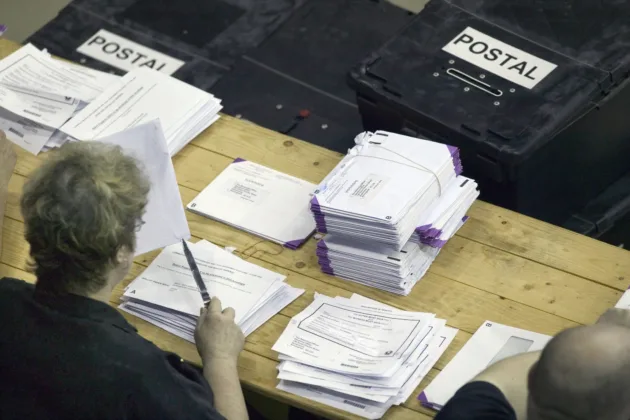
The referendum was formally approved by the Althing (Icelandic parliament) on May 28. In the 63-seat chamber, there were 34 votes in favour of the resolution, eight against and 14 abstentions, with seven members absent.
The question on the ballot will be: “Should negotiations on Iceland’s membership in the European Union start again?”
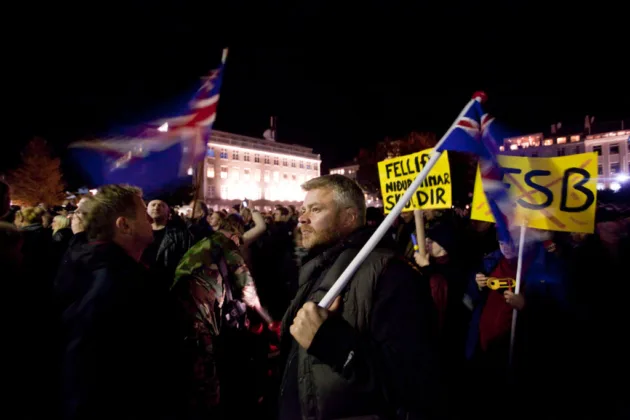
Iceland applied to join the EU in 2009 in the wake of its severe financial crisis that followed the 2008 collapse of its banking system. Accession talks opened the following year but were suspended in 2013 after a change of government and strong public opposition.
The country has since remained outside the EU but deeply integrated through the European Economic Area (EEA) and Schengen agreements, giving it access to the single market without full membership obligations. It also belongs to the European Free Trade Association (EFTA) alongside Norway and Liechtenstein.
The current centre-left coalition government, led by Prime Minister Kristrún Frostadóttir (Social Democratic Alliance), made holding the referendum a key campaign promise after winning power in late 2024. The coalition had originally pledged to hold the vote by 2027 but brought the timetable forward.
Proponents argue that EU membership would provide greater economic stability, security guarantees and influence amid global uncertainty and tensions with the United States. The EU’s Enlargement Commissioner, Marta Kos, said a “significant decision now lies ahead for the Icelandic people”, describing the bloc as an anchor of values, prosperity and security in a fast-changing world. European Commission President Ursula von der Leyen has also met Frostadóttir in Brussels to discuss the bid.
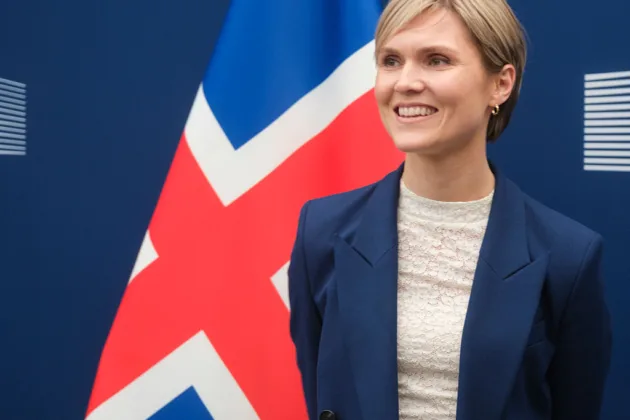
Foreign Minister Þorgerður Katrín Gunnarsdóttir has warned that the referendum risks becoming a “Brexit moment”, expressing deep concern over misinformation, foreign interference and the use of artificial intelligence (AI) in the campaign.
In an interview with The Guardian, she accused opponents of fearmongering and spreading claims “straight from the playbook of Nigel Farage and Reform”, while highlighting the danger of Russian interference and other external actors trying to influence the outcome.
A recent Gallup poll for the public broadcaster RÚV showed about 57 per cent of Icelanders favour reopening talks, while around 30 per cent are opposed, the broadcaster reported.
Fishing rights, currency sovereignty and resistance to EU regulations on agriculture remain major sticking points for opponents. Gunnarsdóttir has said she expects fisheries and agriculture to be the hardest issues in any talks, while voicing optimism that Iceland could join the bloc as early as 2028.
A “Yes” vote would allow negotiations to restart (potentially by the end of 2026), but any final accession treaty would require a separate referendum. The government has said a “No” vote would end any attempt to restart the process.
Ten countries are currently in accession talks with the EU, with Albania, Moldova, Montenegro and Ukraine at the front of the queue. Joining requires a yearslong assessment by the European Commission across 35 policy areas, and every member state must agree unanimously to admit a new applicant.
Iceland has roughly 400,000 inhabitants and would be entitled to six MEPs. Membership would extend the bloc’s reach far into the North Atlantic at a time of rising geopolitical instability.