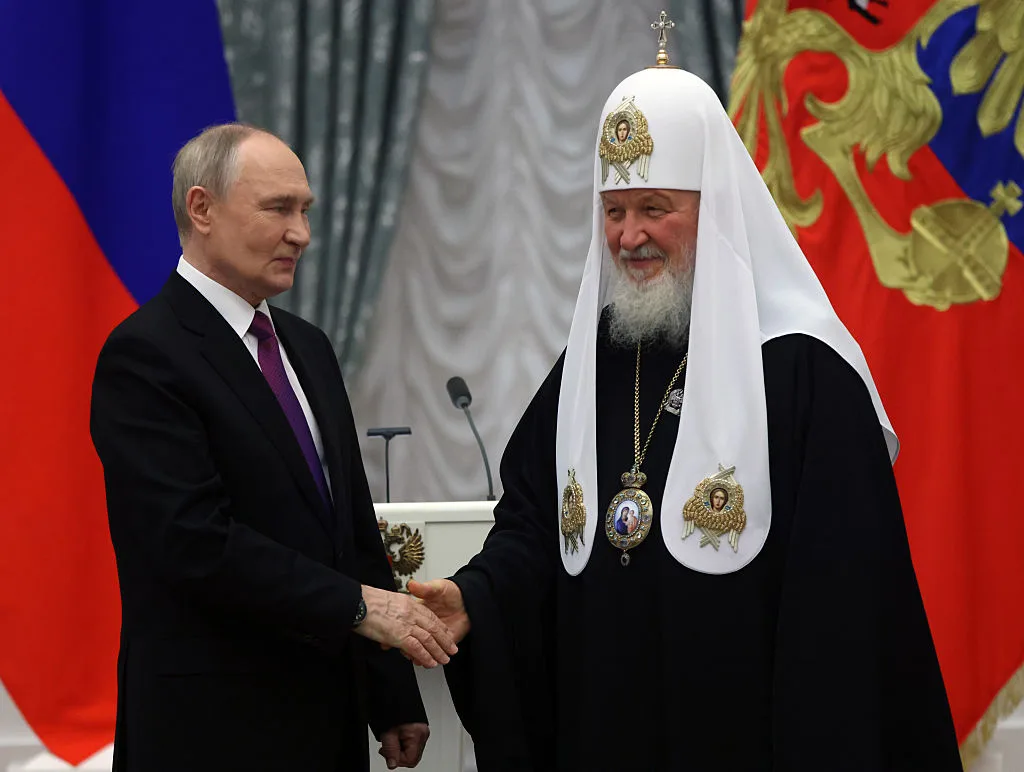

The Estonian Ministry of the Interior has given the Estonian Christian Orthodox Church, the Moscow Patriarchate-affiliated body known until March 2025 as the Estonian Orthodox Church of the Moscow Patriarchate, six months to appoint a new metropolitan and formally sever its administrative and canonical ties with Patriarch Kirill of Moscow.
The move is part of growing efforts to reduce Russian influence over religious institutions amid the war in Ukraine.
Successive Estonian governments have long expressed concern about the church’s subordination to the Moscow Patriarchate, which they view as closely aligned with the Kremlin.
Estonian interior minister Igor Taro has said the current structure poses a national security risk because of the influence exerted by Patriarch Kirill, who has publicly supported Russia’s military actions in Ukraine.
In May 2024 the Riigikogu, Estonia’s parliament, declared the Moscow Patriarchate an organisation that supports Russian military aggression.
Under the order, the church must break its direct subordination to Moscow, elect a new metropolitan independent of the Russian Orthodox Church and ensure its operations comply with Estonian law.
The six-month deadline gives the church time to reorganise or appeal the decision through the courts.
Failure to comply could prompt the interior minister to begin proceedings to forcibly dissolve the religious association, though the ministry has said the aim is not to close places of worship.
The church has an estimated 150,000 members, mainly among Estonia’s Russian-speaking minority. It runs more than 30 congregations across the country.
Church leaders have previously rejected the government’s demands, arguing that the order violates religious freedom and constitutes interference in internal ecclesiastical affairs.
The Pühtitsa Convent, a community of nuns also directly subordinate to Moscow, falls under the same requirements.
This is not the first action against Moscow-linked religious bodies in the Baltic states, with similar measures discussed or implemented in Latvia and Lithuania.
The Estonian step reflects broader Western concerns about hybrid threats, including the use of religious institutions for political influence.
The Moscow Patriarchate has condemned the Estonian decision as persecution and an attack on canonical Orthodoxy.
The Ecumenical Patriarchate of Constantinople, which oversees a rival Estonian Orthodox jurisdiction, has not directly commented but maintains a presence in the country.
Estonia’s slow movement, coming more than four years after Russia’s full-scale invasion of Ukraine, reflects a combination of legal caution and mounting security concerns.
Successive governments initially favoured dialogue and voluntary realignment of clergy to the Ecumenical Patriarchate of Constantinople.
The church’s leader, Metropolitan Eugene (civil name Valeri Rešetnikov), was required to leave Estonia in early February 2024 after the Estonian Internal Security Service (ISS) concluded that his activities posed a threat to national security.
Persistent ties between Patriarch Kirill and the Kremlin, combined with heightened hybrid threats in the Baltic region, have prompted stronger action.
Estonian officials now argue that continued subordination to Moscow poses a direct national security risk.