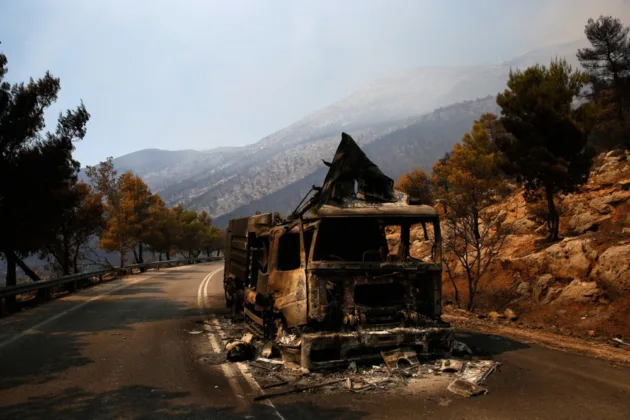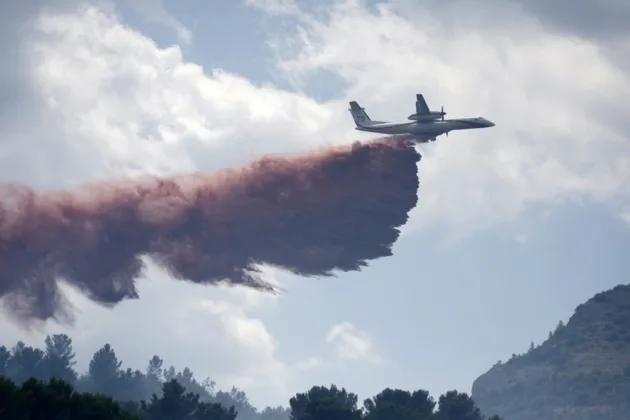

Europe is burning. Literally. From the forests of France and Spain to the incinerated hillsides of Greece, wildfires are destroying homes, farms, businesses, entire communities. More than 576,000 hectares had burned across Europe by August 12, according to the European Forest Fire Information System. Thousands are evacuated, people are killed, firefighters risk and sacrifice their lives, and toxic smoke travels hundreds of kilometres. That smoke carries dangerous fine particles deep into the lungs of citizens, creating a public-health emergency for children and the elderly.
The European Environment Agency’s European Climate Risk Assessment identifies wildfires as the second-biggest health threat facing the continent after extreme heat. This is an environmental crisis, an economic crisis and a security crisis. Yet while half of Europe burns, what are European Commission President Ursula von der Leyen and the institutions in Brussels prioritising? More taxes, more regulations, more speech restrictions and more endless declarations.
The European Union does not directly manage national firefighting operations. Member states bear primary responsibility for responding to natural disasters. But Brussels has an essential supporting role through emergency coordination, funding and the EU Civil Protection Mechanism. When multiple nations burn simultaneously, European leadership should be visible, show a real sense of urgency and focus on putting out the fires. Again, literally.
Instead, Brussels operates inside a cosy policy bubble completely detached from real-world suffering. Policies are designed, unrealistic targets are announced and eurocrats push forward with ideological posturing. Forests ablaze? Too little urgency. Waves of illegal migrants arriving on southern beaches? No coherent response. Global brands losing competitiveness? Launch another endless consultation.
Under von der Leyen, the Union has produced no shortage of directives, strategies and declarations about “resilience and solidarity”. The central question is whether those grand promises ever translate into practical action on the ground.
Looking at the EU’s upcoming agenda, the answer is no. Brussels’ autumn priorities include tighter enforcement of political-advertising rules that strangle smaller organisations and independent conservative voices, a proposed “own resources” tax scheme targeting consumer goods like tobacco under the guise of funding defence, and heavy-handed AI regulations that guarantee compliance costs will skyrocket while European tech innovation suffocates.
Despite glossy press releases claiming to address the concerns of ordinary Europeans, Brussels goes by its usual playbook: Tax, regulate and punish scapegoat industries while burdening consumers.
This is an argument about priorities, proportionality and basic common sense. A serious Union would distinguish between existential threats and politically convenient distractions. It would display the same fierce determination towards emergency preparedness, border security, organised crime and industrial decline as it does towards dictating consumer choices and censoring political discourse.
The Irish Presidency, in place since July 1, claims it will be defined by “action and by delivery”, promising a focus on competitiveness, European values and security. We have heard these clichés before. Competitiveness cannot mean piling more rules and obligations onto struggling businesses. European values cannot mean restricting political speech in the name of “defending democracy”. Security cannot be reduced to military declarations while wildfires, toxic smoke, porous borders and economic paralysis directly threaten European citizens.
Ireland will also oversee negotiations for the EU’s 2028-2034 long-term budget. This will be the ultimate test: Will resources be directed towards civil protection, border enforcement, agriculture and industrial competitiveness? Or will the budget fund more bureaucracy disconnected from daily life? Will Brussels promote real GDP growth, or will it continue to bleed job creators dry through punitive taxation?
Europe does not need more policymaking for appearances, nor more speeches delivered from air-conditioned offices while southern Europe suffocates in ash. It needs leadership capable of recognising real emergencies, setting serious national priorities and delivering immediate results. Ireland says its Presidency will be defined by action. European citizens, watching their continent burn, must hold it to that promise.