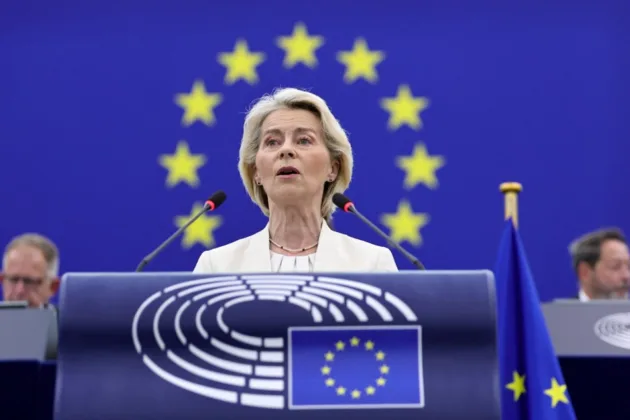




The European Parliament’s Greens group has urged the European Commission and member states to implement an EU-wide Heatwave Action Plan, arguing that Europe is unprepared for increasingly frequent extreme heat and wildfires as member states continue to battle some of the continent’s most destructive fires in years.
The Greens/European Free Alliance (Greens/EFA) renewed the demand on July 28, as fires forced evacuations in France, Spain and Italy.
Greens/EFA co-president Terry Reintke said the current situation was the result of years of insufficient climate action.
“Europe is burning, people are being forced from their homes and millions are living through unbearable heat. This is not normal summer weather, but the result of years of political inaction and weakened climate ambition,” Reintke said.
She described heatwaves and wildfires as “a security risk, a public health crisis and a social crisis all at once”, calling on the Commission to increase support for firefighters while helping cities adapt through more trees, shaded areas, cooling zones and improved public infrastructure.
A central element of the Greens’ proposal is a levy on five of the world’s largest listed fossil fuel companies, TotalEnergies, BP, Chevron, ExxonMobil and Shell, to finance climate adaptation across Europe.
According to the group, adapting Europe to increasingly severe heatwaves would require around €70 billion annually, citing European Commission estimates.
The Greens argue that a levy equivalent to roughly 7 per cent of the combined annual revenues of the five energy companies could finance measures to make schools, hospitals, care homes, public transport and other public buildings more resilient to extreme heat. The group puts that combined turnover at about €1 trillion a year.
The proposal also calls for binding EU-wide protections for outdoor workers, including mandatory rest breaks, access to drinking water and shade, and adjusted working hours during periods of extreme temperatures.
Construction, agriculture, roadworks and logistics staff are singled out in the plan as the most exposed and the least protected.
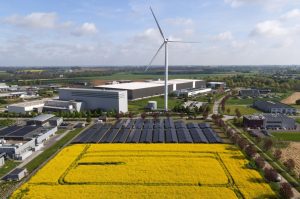
Additional measures include financial support to improve cooling in low-income housing, expanding urban green spaces, accelerating rooftop solar deployment and requiring member states to adopt legally binding climate adaptation plans under the Commission’s planned Climate Resilience Framework.
The Greens also urged EU institutions, including the European Parliament, to open their buildings as cooling centres during heatwaves for vulnerable people, homeless individuals and outdoor workers.
The group has further called for a special European Council meeting on extreme heat, and cites figures putting heat-related deaths in Europe at about 48,000 a year.
It also says 26 per cent of EU households cannot keep their homes cool in summer, rising to 35 per cent among the lowest earners.
The plan was first presented on July 6, two days before a plenary debate on heatwaves that the group said it had secured against opposition from conservative and right-wing MEPs.
Precedent for a sector-specific levy already exists. Council Regulation (EU) 2022/1854 imposed a temporary solidarity contribution of at least 33 per cent on the surplus profits of oil, gas, coal and refinery businesses, raising an estimated €17.5 billion, according to a Commission report.
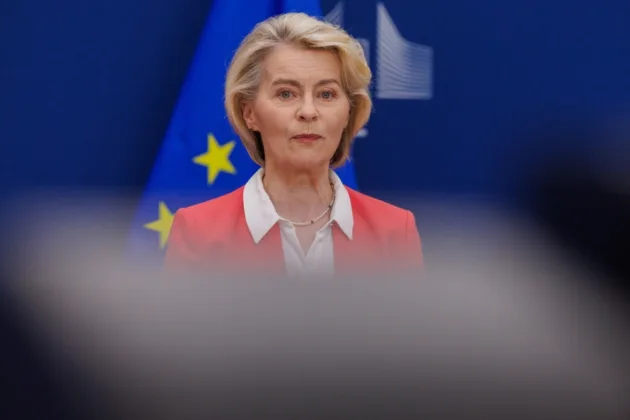
The Greens’ call comes a month after the European Commission faced criticism for switching off air conditioning on the lower floors of its headquarters during a heatwave, while the offices of Commission President Ursula von der Leyen and most commissioners reportedly remained cooled.
Cooling was suspended on floors one to seven of the 13-storey Berlaymont building on June 26, affecting around 3,000 staff.
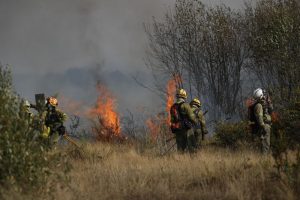
The renewed calls for stronger heat adaptation measures also come as France battles multiple major wildfires fuelled by extreme temperatures, drought and strong winds, prompting Paris to seek additional firefighting assistance through the EU Civil Protection Mechanism.
President Emmanuel Macron requested activation of the mechanism on July 23, securing two Croatian Canadair aircraft, two Portuguese Air Tractors and Czech and Slovak heavy helicopters, alongside three aircraft from the EU’s rescEU fleet.
France has recorded more than 300 wildfires this year against an annual average of 93, according to the European Forest Fire Information System (EFFIS), with close to 100,000 hectares burned by July 25.
Spain declared an emergency of national interest for the Madrid region and the province of Ávila late on July 23, and had recorded 173,651 hectares burned by July 27, six times the figure for the same period of 2025.
In Italy, about 6,000 firefighters, forestry officers and civil protection staff have been deployed against fires on Sicily.
Across Europe, more than 254,000 hectares had already burned by July 22, according to EFFIS, as wildfires also spread across Spain and Italy.
The Greens have separately attacked the Commission’s July 17 proposal to reform the Emissions Trading System, which the group said would let polluting industries emit more, for longer and at a lower price.