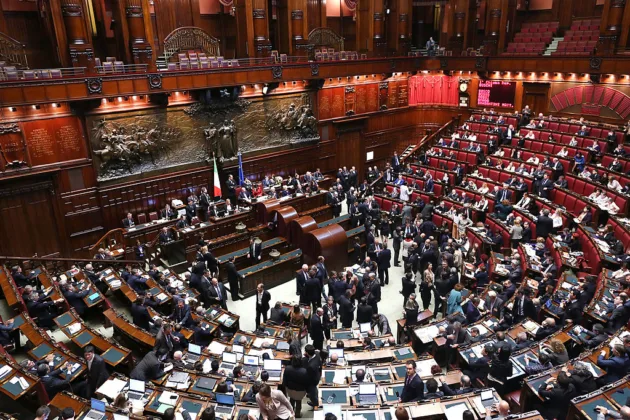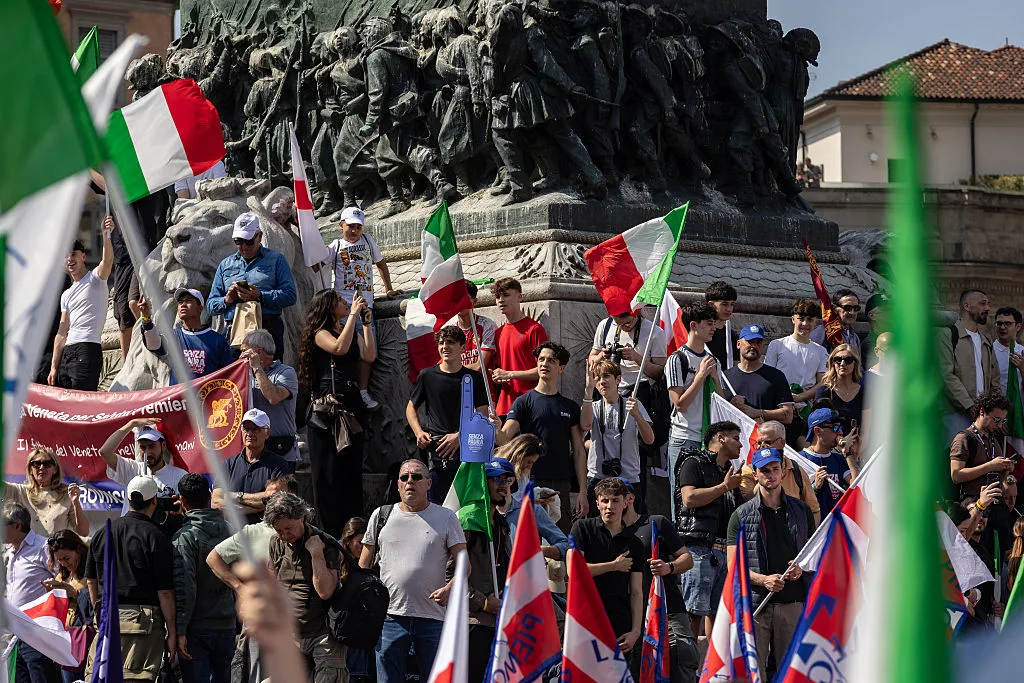



The news that Romania’s Chamber of Deputies quietly adopted a legislative proposal to begin unification negotiations with the Republic of Moldova has triggered a debate across Europe and beyond. Officially, the event is downplayed as a procedural anomaly — a bill that was automatically advanced to the Senate simply because a deadline expired without debate. Both governments remain formally committed to separate integration within the European Union structure. In essence, the news confirms that the nation very much remains history’s driving force.
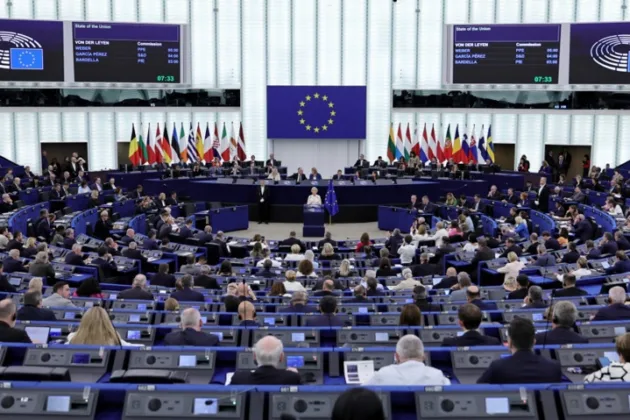
Indeed, treating this event as a mere parliamentary episode misses a much larger, historical truth. For the first time in decades, an EU member state’s legislative chamber has formally advanced a text that raises the prospect of redrawing sovereign borders. In doing so, it has exposed a reality that Eurocratic elites, secluded in their glass palaces, have long tried to ignore: Even in postmodern Europe, nationalism remains a defining, elemental force, silently moving the cogs of history behind the façade of supranational integration.
Legally and morally, two sovereign nations possess the absolute democratic right to unite if their populations choose to do so through referendums. Proponents of pan-Romanian unity view this not as expansionism, but as the peaceful correction of a historical injustice dating back to the 1940 Molotov-Ribbentrop pact. However, the academic and geopolitical challenge lies not in the legitimacy of the act itself, but in the systemic precedents it would establish for a continent built on an almost metaphysical commitment to the lines currently drawn on the map.
If Bucharest and Chisinau prove that post-Cold War borders can be fluidly altered by popular consensus, the architectural stability of modern Europe undergoes a profound shift. The principle of democratic self-determination, once thought to be manageable through carefully constructed institutional checks and balances, suddenly re-emerges as a primary catalyst of geopolitics.
The immediate question is the one about precedents set. If the map can be peacefully redrawn in Eastern Europe, other historical aspirations naturally gain new momentum. Within the EU, in the Eastern Mediterranean, the decades-long partition of Cyprus could beat surprises. A successful, democratic union between Romania and Moldova could legitimise a populist revival of Enosis – the formal unification of Greece and Cyprus. Would it not become a project difficult for international institutions to oppose without being accused of double standards and hypocrisy?
To complicate matters even further, the inversion of this logic presents monumental challenges too. If states can merge by popular will, the moral justification for regional secession grows exponentially stronger. We have already witnessed the immense political trauma caused by the Catalan independence movement in Spain, where the state was forced into a severe constitutional crisis to preserve its integrity. Flanders in Belgium, Scotland in the United Kingdom, and Corsica in France all contain political factions that would view any border fluidity as a green light for their own dissolution projects.
Outside the stabilising framework of the EU, the risks multiply. The Western Balkans remain an incredibly fragile landscape of frozen conflicts. It does not require too much of an imagination to foresee Serbia seeking to formally absorb Bosnia’s Republika Srpska, or Albania aligning with Kosovo and ethnically Albanian enclaves like Tetovo in North Macedonia. One could even look further north, where future shifts could prompt the Slavic populations of North Macedonia to reassess their historical, cultural, and linguistic ties with Bulgaria.
To observe these dynamics is not to condemn them, but to recognise that Europe’s postmodern peace is much more volatile than it appears. The nation-state is not a relic of the past. It remains the ultimate source of political legitimacy. Once the principle of border modification is reintroduced into European mainstream developments, the continent will face a complex, delicate balancing act between the democratic will of nations and the preservation of stability. Interesting times lie ahead.