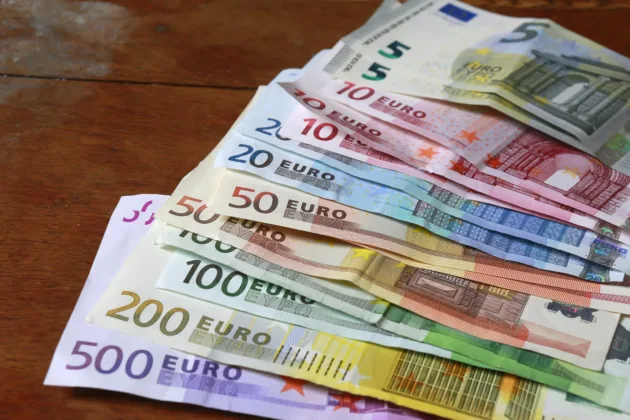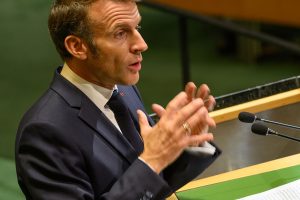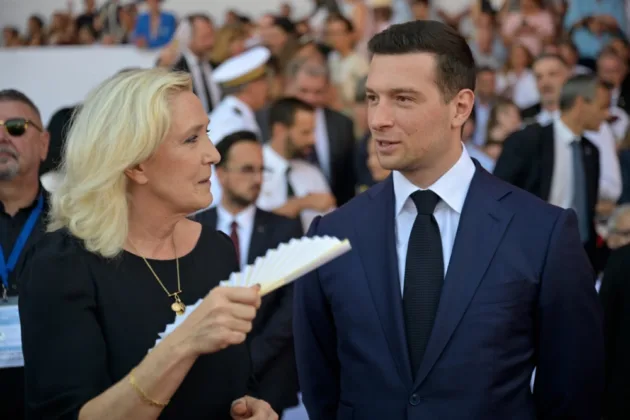


The French Government has opened talks with the country’s largest banks on a system of State-backed loans for presidential candidates, in a move that could resolve the long-running financing difficulties faced by the National Rally (RN) ahead of the 2027 election.
Representatives of the main French lenders met Prime Minister Sébastien Lecornu’s team at Matignon on July 20, according to Le Monde, which first reported the talks. The aim is to ensure that candidates, whatever their political affiliation, can obtain financing from domestic institutions rather than seeking support abroad.
The proposal under discussion would create a pool of banks jointly financing presidential campaigns, with the French State potentially guaranteeing part of the risk if loans are not repaid. The system would resemble syndicated loans used for major industrial projects, spreading both financial and reputational risks among several institutions.
The model would revive the idea of a “bank of democracy” promised by Emmanuel Macron in 2017 and written into the law on confidence in political life of September 15, 2017, drafted under then justice minister François Bayrou. The government abandoned the project in July 2018 after concluding that access to credit was a question of information rather than of supply.
No final decision has yet been announced. A legislative measure could be included in France’s 2027 budget bill later this year.
Though the mechanism under discussion would apply to all candidates, the debate has focused on the National Rally, which has long struggled to secure loans from French banks.
The party turned to a Russian bank to finance its activities in 2014, borrowing €9.4 million from the First Czech Russian Bank, and later obtained €10.6 million from the Hungarian lender MKB for Marine Le Pen’s 2022 presidential campaign. Both cases sparked political controversy and raised questions about foreign influence in French politics.
The RN announced in September 2023 that it had repaid the Russian loan in advance of its 2028 deadline.
In April 2026 French banks again refused to lend money to the right-wing party for the 2027 presidential campaign.
The National Rally (RN) in France is once again facing the same old difficulties in financing its presidential campaign. https://t.co/JGZd4yLQuM
— Brussels Signal (@brusselssignal) April 17, 2026
Party treasurer Kévin Pfeffer said on April 15 that French banks were “no longer playing the game of democracy” after the party received what he described as repeated negative responses. He told AFP that Société Générale and La Banque Postale had issued final refusals, saying they no longer financed political life for any candidate or any election.
The party is seeking up to €10.7 million, the maximum the State reimburses a candidate who reaches the second round. Its debt, made up almost entirely of loans from private individuals, fell from close to €19 million at the end of 2024 to about €8.5 million at the end of March 2026, Pfeffer said.
Under French law, candidates are only fully reimbursed by the State if they receive at least 5 per cent of first-round votes and if their campaign accounts are approved by electoral authorities. Those who clear the threshold recover 47.5 per cent of the spending ceiling, against 4.75 per cent for those who fall short.
Several candidates, including Socialist Anne Hidalgo and centre-right contender Valérie Pécresse in 2022, failed to reach that threshold and later relied on donations to repay debts. Pécresse said she was personally indebted by €5 million and appealed for help from supporters.
There are also legal risks. Former president Nicolas Sarkozy lost public reimbursement for his 2012 campaign after the Constitutional Council rejected his accounts on July 4, 2013, finding that his spending had exceeded the legal ceiling by 2.1 per cent.
Banks are also concerned about reputational damage and possible customer backlash from financing contested political movements. Lenders estimate they could lose between 2 and 5 per cent of their customers by granting the loan, Le Monde reported.
Daniel Baal, president of the French Banking Federation, said on May 4 that public intervention was needed from the outset, suggesting either a first-demand State guarantee allowing banks to be repaid quickly in the event of default or a direct advance to candidates.
Left-wing leader Jean-Luc Mélenchon and other smaller candidates have also encountered financing difficulties in previous elections.
Since a 2017 law banned political parties from borrowing outside the European Economic Area, the options available to parties denied domestic financing have narrowed.
The talks follow the Paris appeal court ruling of July 7, which upheld Le Pen’s conviction for the misuse of European Parliament funds but cut her ineligibility to 45 months, 30 of them suspended, a penalty she has already served. She has appealed to the Court of Cassation and confirmed the same evening that she would stand in the election, whose two rounds are set for April 18 and May 2, 2027.