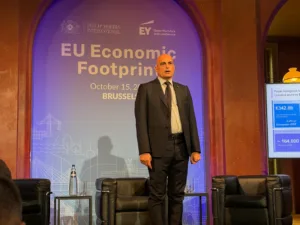



Philip Morris International (PMI) has urged European policymakers to adopt a more consistent regulatory approach and give greater recognition to the economic contribution of businesses, as the tobacco company presented a new report estimating that its activities generated €342.8 billion for the EU economy between 2021 and 2025.
The report, commissioned by PMI, attributes €195.7 billion to tax revenues and €130.5 billion to the wider economic impact of its business activities.
It also estimates that the company invested €27.4 billion across Europe in its own operations and €22.3 billion in suppliers over the five-year period.
The figures include direct, indirect and induced economic effects calculated through economic modelling.
The presentation focused on Europe’s ability to attract investment, sustain industrial activity and develop new products in an increasingly competitive global economy.
PMI’s European region President Marco Hannapel argued that businesses need a more predictable regulatory environment, with greater consistency between EU member states in the application and enforcement of rules.
The company pointed to the fragmented regulatory landscape for smoke-free products, including differences in national rules and taxation.
A more coherent approach, it argued, would help companies invest and innovate across the European single market rather than navigate divergent national requirements.
It was noted that other industries, such as the automobile sector, also suffered from bad regulations.
PMI also highlighted its role in European manufacturing, exports, research and development.
According to the report, the company employed 22,490 people directly in the EU in 2025 and supported approximately 164,000 jobs across its value chain.
Europe has become a major manufacturing and export hub for its smoke-free products, the company said, creating an added value for the economy.
The presentation comes as the EU seeks to strengthen its industrial competitiveness while continuing to regulate tobacco and nicotine products on public-health grounds.
PMI has increasingly sought to position itself as a transformed business, investing in alternatives to conventional cigarettes.
Smoke-free products accounted for more than half of its European net revenues in the fourth quarter of 2025, according to the report.
However, the company’s economic contribution does not settle the public-health debate surrounding its products. The footprint figures are estimates prepared for PMI, rather than an independent assessment of the industry’s overall net benefit to European society.
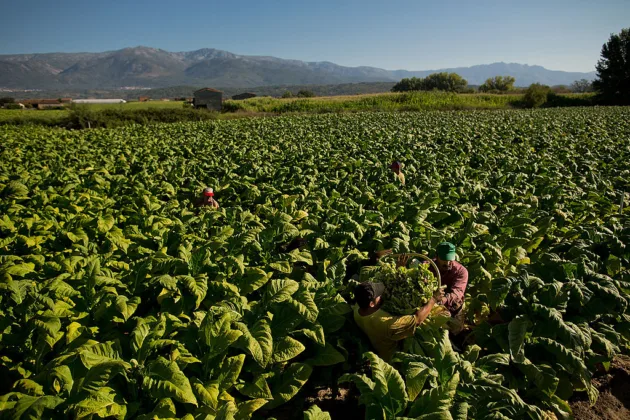
Positive developments, such as the conscious and lowering use of water, the decreasing use of chemicals in the production process (less than in the production of apples allegedly) and the cessation of the use of fossil fuels in the field, were highlighted but fail to leave an impression at the Berlaymont, where anything tobacco or nicotine related is continued to be seen as bad, no matter how you turn it.