










Spain has proposed a European Union borrowing mechanism under which the European Commission could raise as much as €850 billion a year on behalf of member states, according to a discussion paper circulated to European governments.
Spanish economy minister Carlos Cuerpo was due to present the plan on July 9 at a meeting of euro area finance ministers in Brussels. It was expected to run into resistance from Germany and the Netherlands, the two governments that have most consistently blocked further common debt.
At the centre of the proposal is what Madrid calls a European Sovereign Facility. The Commission would centralise part of the funding programmes now run separately by national treasuries, issuing bonds and passing the proceeds back to participating countries as loans.
Participation would be voluntary and confined to states that comply with EU fiscal rules. Spain argues the scheme would not in itself create additional public debt, since it would replace borrowing that governments already carry out on their own.
Annual issuance would reach the €850 billion figure only if all 27 member states took part alongside the European Stability Mechanism and the European Financial Stability Facility. That would build a stock of about €5 trillion within five years.
Should some capitals refuse, the document envisages starting with a “coalition of the willing”. It states that the five largest euro area issuers would have to join for the initiative to carry weight, together accounting for roughly €540 billion to €550 billion of issuance each year.
Cuerpo has argued for months that pooling issuance would cut borrowing costs because the Commission holds a triple-A credit rating, with savings he has put at €25 billion annually. Speaking in Washington in April, he told an audience that Europe needed “an anchor”, according to Reuters.
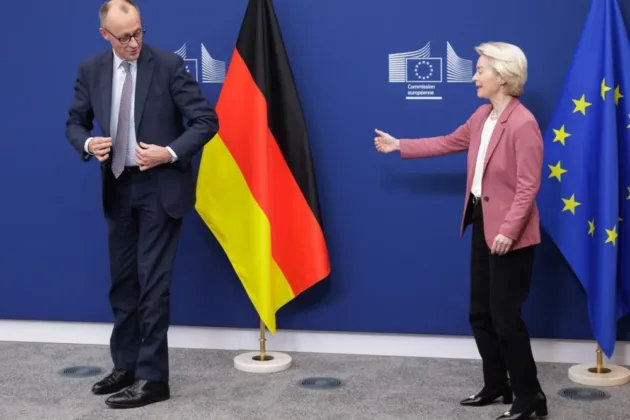
German Chancellor Friedrich Merz has repeatedly rejected the idea. “I will not support the idea of euro bonds,” he said in February, citing constraints imposed by Germany’s constitutional court.
German finance minister Lars Klingbeil has echoed that position, telling Frankfurter Allgemeine Zeitung there were sufficient funds available. France and Greece have publicly backed new common borrowing.
The timing is deliberate. Member states are negotiating the EU’s long-term budget for 2028-2034, due to be agreed by the end of 2026, and have yet to settle how the roughly €750 billion of debt raised for the pandemic recovery programme will be repaid.
Spain, the second-largest recipient of that money, is not expected to win a decision this week. Its aim, officials indicated, is to force the question of a permanent EU safe asset into the budget talks.