

As Brussels prepares negotiations for a substantially larger long-term budget, Germany’s ambassador to the EU has warned that Berlin’s contributions to the European Union budget could potentially rise by around 80 per cent in net terms.
Discussions regarding the European Commission proposals for the next Multiannual Financial Framework (MFF) are causing national governments to brace themselves.
The European Commission is advancing plans for the 2028-2034 period, with reports of a framework that could approach €2 trillion over seven years to fund priorities including competitiveness, defence, cohesion policy and support for Ukraine. By comparison, the current MFF covering 2021 to 2027 totals around €1.2 trillion, rising to roughly €2 trillion once the €800 billion NextGenerationEU pandemic recovery instrument is included.
Net contributor countries, led by Germany, are signalling strong reservations amid domestic budgetary pressures. Berlin remains by some distance the bloc’s largest net contributor, providing between €19 billion and €25 billion more than it received back in recent years, according to Commission data.
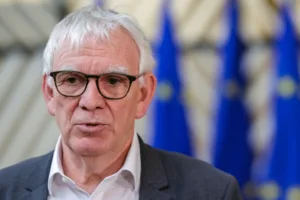
Thomas Ossowski, the Permanent Representative of the Federal Republic of Germany to the EU, warned of an “immense growth” of Germany’s contributions to the EU budget after a Council of the European Union meeting in Brussels on Tuesday.
Ossowski said he was concerned and that the proposed increase was “simply not affordable” for Germany.
European Commission President Ursula von der Leyen would like to have more than €2 trillion at her disposal between 2028 and 2034, a record amount.
According to the outlet The Pioneer, representatives of “equal-minded states” met in the run-up to the Council meeting, opposing an increase in contributions.
Among them reportedly were Finland, Denmark, the Netherlands, Austria, Ireland, Belgium and (as an observer) France. German Ambassador Ossowski was also present, according to The Pioneer.
Part of the high demand of the EC is the repayment of the joint pandemic-era debt, a reference to the NextGenerationEU borrowing programme that funded post-Covid recovery and whose reimbursements are due to begin in 2028, weighing on the next budget cycle.
Brussels not only wants to receive more money from member states, but it also wants to generate more revenue from new taxes that would be European themselves, such as new green taxes and a new tax on tobacco products.
Berlin has repeatedly emphasised the need for spending restraint, prioritisation and efficiency in the next MFF, particularly as national budgets face constraints from defence increases, debt servicing and economic challenges. Germany’s coalition government, led by Chancellor Friedrich Merz, has signalled fresh defence spending of more than €100 billion in the years ahead, leaving little room for higher transfers to Brussels.
Belgian Prime Minister Bart De Wever also reacted to the demand for more EU funds. He described the prospective EU invoice as “quite dizzying”.
Under the Commission’s ideas, Belgium’s annual contribution could increase by up to €2.5 billion on top of its current roughly €4 billion to €4.5 billion per year, while Belgium is grappling with one of the highest debt-to-GDP ratios in the eurozone — above 105 per cent — and a deficit that has already triggered an excessive deficit procedure from Brussels itself.
De Wever stressed that formal negotiations are only beginning and voiced opposition to specific proposals, such as raising the EU’s share of customs revenues.
Referring to Germany, he said that “the Commission is asking Germany for an extra contribution equivalent to the full contribution of France. I don’t think I’m revealing a great secret when I say that Germany is not prepared to do that.”
Aligned against the frugal bloc, though, are others. According to Euractiv, 16 countries launched an initiative to ramp up the Union’s next long-term budget and persuade the EU to approve new joint debt.
This group includes Poland, Italy, Spain and Portugal.
They want more money for agriculture, infrastructure and cohesion policy.
The European Commission wants to have an agreement on the new multiannual budget by the end of the year.
Swedish Finance Minister Elisabeth Svantesson has come out aggressively against Brussels’ new Tobacco Tax Directive, calling it “completely unacceptable”. https://t.co/3PviVi2n24
— Brussels Signal (@brusselssignal) July 10, 2025