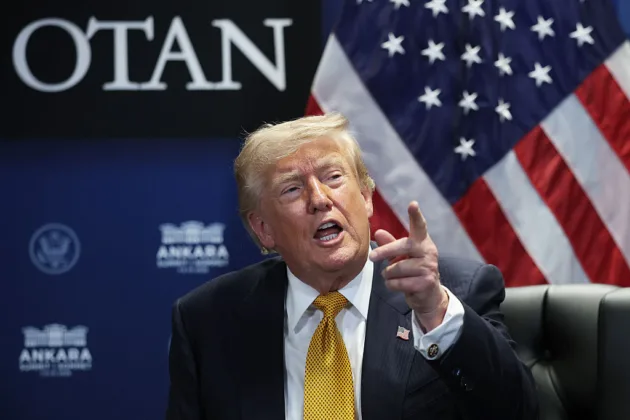



US President Donald Trump has declared that his ceasefire with Iran is “over”, telling a NATO summit in Ankara that Washington was wasting its time in negotiations after the two sides traded fire overnight.
Speaking alongside NATO Secretary General Mark Rutte, Trump disparaged the Iranian leadership in blunt personal terms and accused it of misrepresenting the truce signed on June 17. He said his negotiators, Steve Witkoff and Jared Kushner, could keep talking but that it was for Tehran to return to the table.
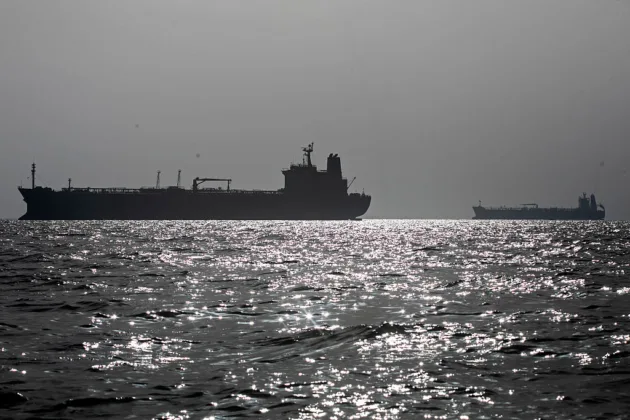
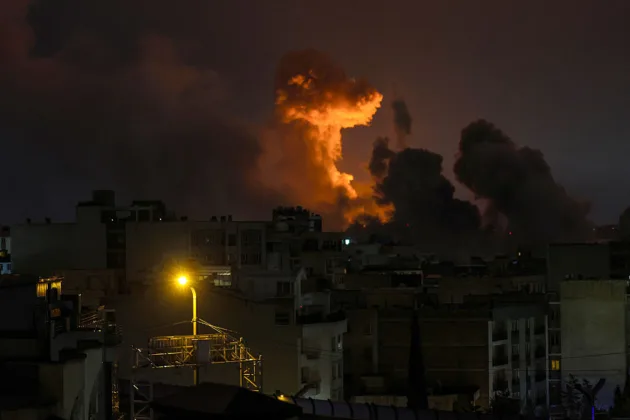
The rupture followed a night of strikes. The US military said it had hit more than 80 targets in Iran, including speedboats and coastal sites at Sirik, Qeshm and Bandar Abbas, in response to Iranian attacks on shipping in the Strait of Hormuz.
Iran retaliated with drone and missile strikes on Bahrain and Kuwait, both home to US forces, sending air raid sirens sounding across the two Gulf states on Wednesday morning. Iran’s Islamic Revolutionary Guard Corps said it had struck US bases, though Washington reported no significant damage.
Rutte backed the American action, telling reporters the overnight strikes had been “absolutely necessary” and describing them as a strong response to Iranian provocation.
Trump nonetheless rebuked the alliance for declining to join his campaign against Iran, which he called the world’s foremost state sponsor of terrorism. He said the leaders of the United Kingdom, Germany and France had all refused to help while the fighting continued.
Oil prices jumped about 5 per cent after his remarks, as investors weighed the risk of a lasting disruption to Gulf energy supplies. Washington had already revoked a waiver that allowed Iran to sell crude openly on international markets under the June agreement.
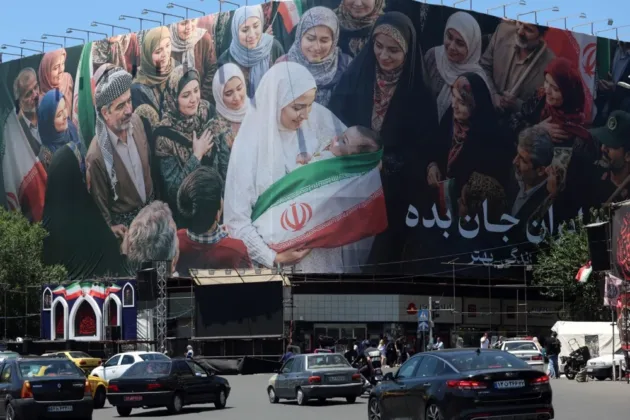
The United States and Israel have been at war with Iran and its regional allies since late February, when air strikes killed the Iranian supreme leader Ali Khamenei. The truce has since frayed amid repeated clashes over shipping in the Strait of Hormuz, through which a large share of the world’s oil once passed.
For European governments, largely absent from the diplomacy and now openly chided by Washington, the escalation has laid bare the continent’s exposure to a conflict on its southern flank.